
Garage Door Repair in Cambridge
Garage Door Repair for Cambridge's Older Housing Stock
Cambridge homes mostly went up before 1948, older than the surrounding area. That means older spring setups and narrower single doors. Here's what fails and why.
- Licensed & Insured
- Same-Area Service Calls
- Upfront Pricing
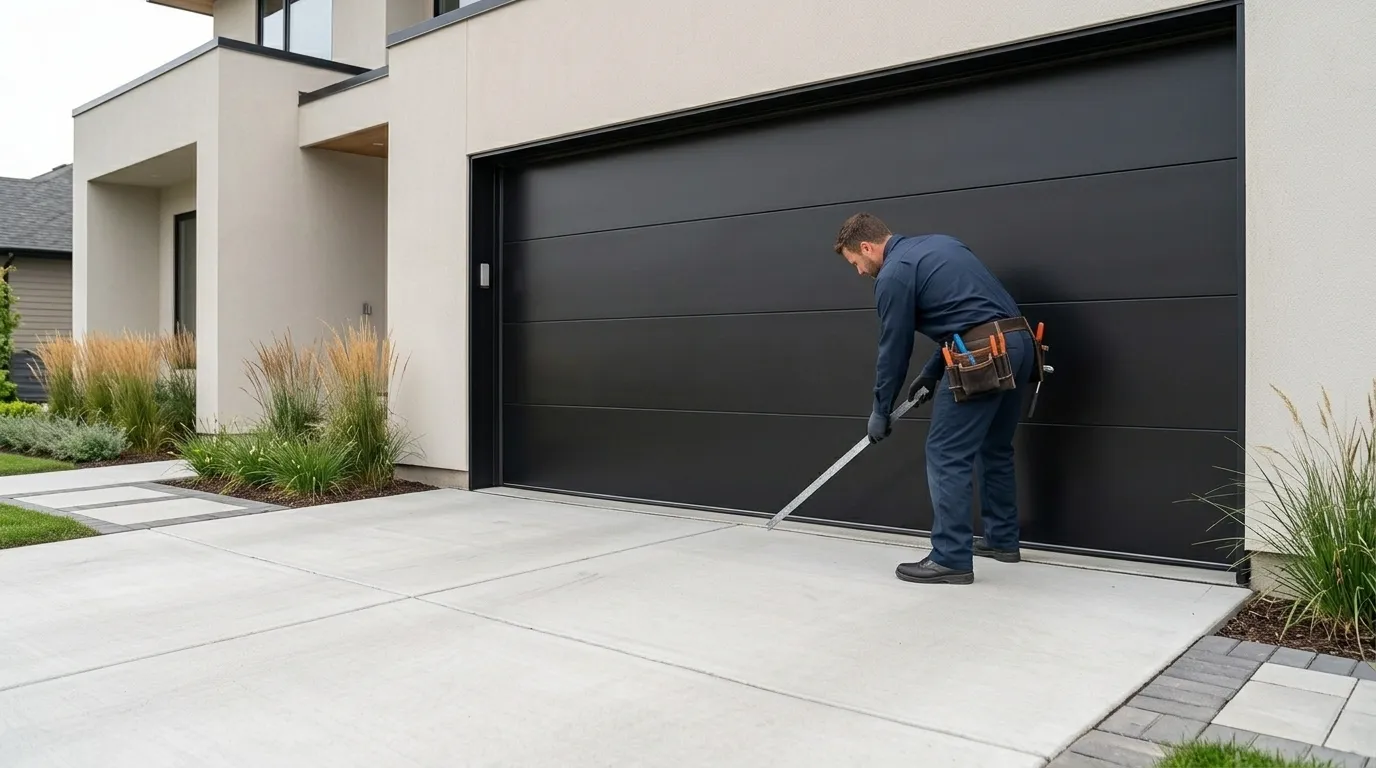
What Happens When You Call
-
1
Call or Request a Quote
Tell us what the door is doing and roughly how old the house is - that alone points us toward the likely part before a truck leaves.
-
2
On-Site Diagnosis
A tech checks the spring, cables, tracks, and opener in person and tells you plainly what is actually wrong.
-
3
Straight Price, No Surprises
You get a number before any work starts. It covers parts and labor, nothing added after the fact.
-
4
Fixed the Same Visit
Most repairs are done in one trip. If a part needs sourcing, we tell you that upfront instead of guessing.
How to Book
We run this call from our Boston base, about 6 miles out to Cambridge, so we're not sitting on a truck three streets over waiting for the phone to ring. You call, tell us what the door is doing, and we get a truck routed your way. Because Cambridge sits closer in than a lot of the towns we cover, it's rarely the longest leg of the day.
What we need from you up front: whether the door moves at all, whether it's a screech or a dead stop, and roughly how old the door is if you know it. On a lot of Cambridge houses the door predates the current owner by decades, so "I don't know" is a fine answer too. We'll figure it out from the hardware once we're standing in front of it.
We don't quote a fixed response window here because we're not a local depot with a shop around the corner. We tell you honestly where the truck is in its day when you call, and you decide if that works. If it doesn't, no hard feelings - we'd rather you know that up front than have us guess wrong.
What Is on the Truck
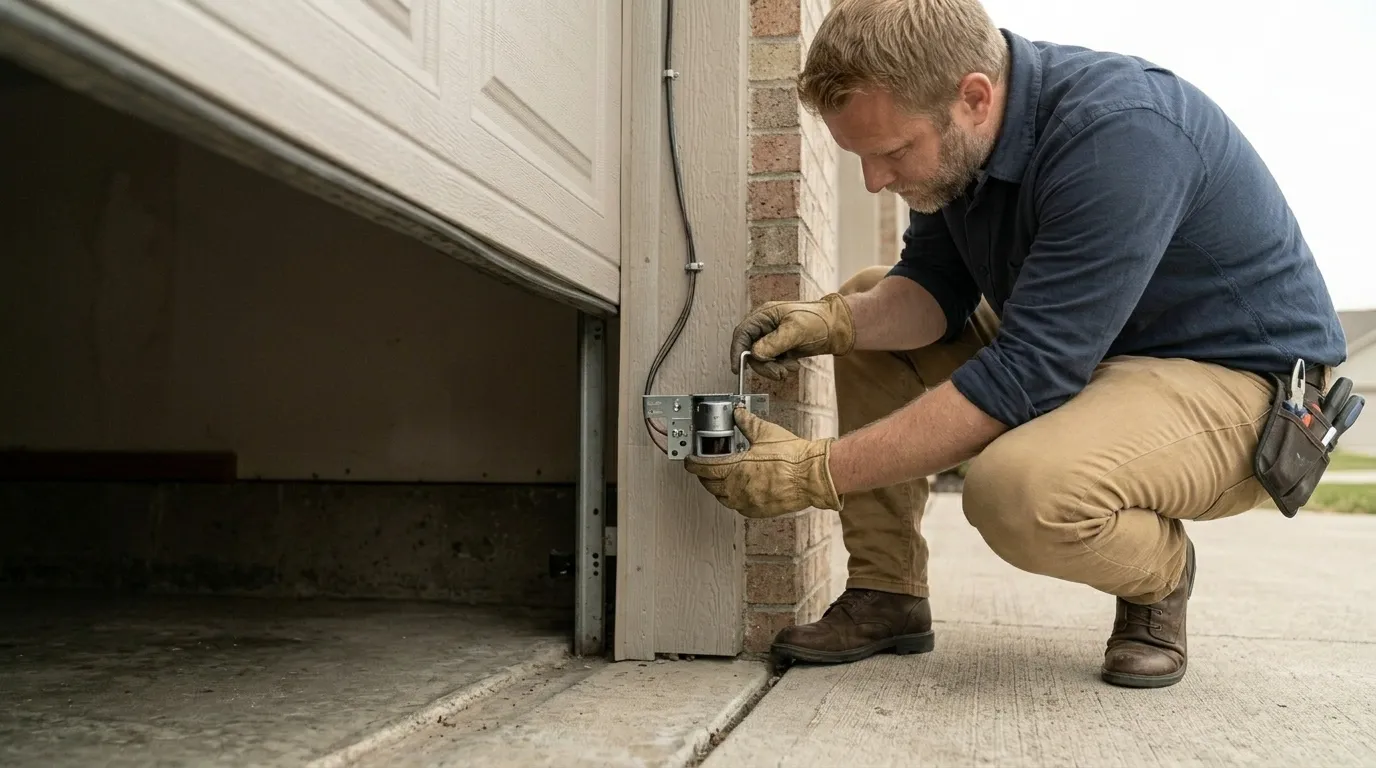
The truck carries torsion springs in the common residential sizes, extension springs, standard-width rollers, and the cable and hinge stock that covers most single and double doors built from the 1940s through the 1980s. Given that Cambridge's housing runs older than the median across our whole service area - 1948 here versus 1960 broadly - we stock heavier on parts for older extension-spring setups and narrower single-car doors, because that's what we actually find on these streets.
What we don't carry: oddball custom panel sizes, discontinued opener control boards, or anything that has to come from a manufacturer on special order. If your door needs one of those, we'll tell you on the spot rather than have you wait on a truck that isn't coming. Most of what breaks on a house from this era, though, is standard hardware - springs, rollers, cables, the stuff that wears out on a schedule regardless of the house.
The DIY Question
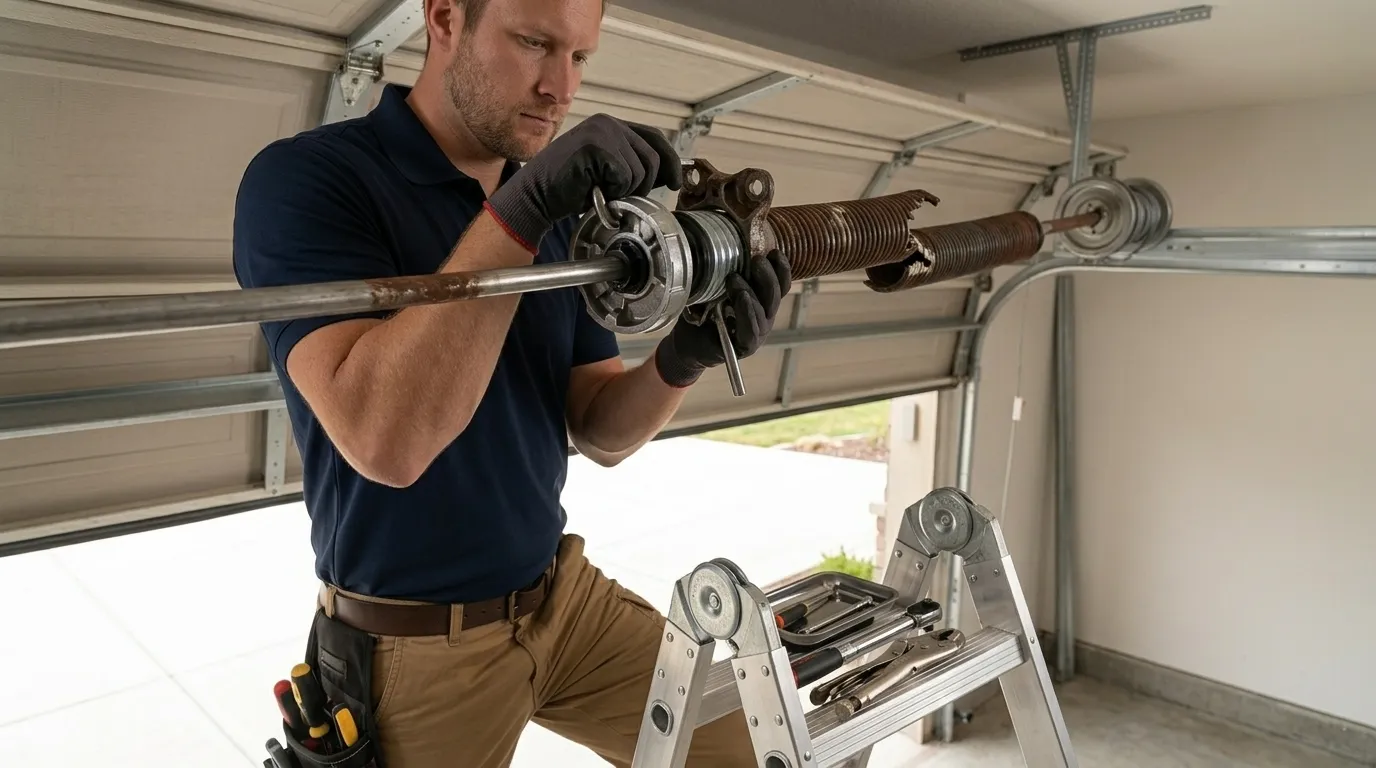
A door that's slow, noisy, or sagging on one side is usually a spring or roller job, and that's not a DIY repair - torsion springs are under enough tension to break a bone or worse, and on the older extension-spring setups common in Cambridge there often isn't a safety cable running through the spring at all, which is exactly why letting it go wrong is a bad idea. If it's an extension spring, don't touch it. If it's a torsion spring, definitely don't touch it.
That said, some things ARE reasonable to check yourself first: is the opener plugged in, are the photo-eye sensors aligned and clean, is something physically blocking the track. That takes five minutes and saves you a call for nothing.
What's honestly not worth fixing: a door that's been painted over dozens of times, has a bowed panel, and runs on hardware you can't get parts for anymore. At that point you're paying repair money toward a door that's going to need replacing in a year or two anyway. We'll say so instead of nickel-and-diming a patch job.
What Can Go Wrong
On houses from this era, the two failures we see most are broken extension springs and worn-out rollers grinding in a track that's slightly out of true after decades of settling. Cambridge's housing stock, older than the 1960 median across our broader area, tends to run original hardware longer than newer construction does - nobody's replaced the springs since 1975 because nobody's had a reason to, until the day it snaps.
Cables fray at the drum end from the same age and use. Openers bolted on in later decades don't always match the door's actual weight, especially on a single door that was resized or reframed at some point - that mismatch burns out gears early. And in a cold, damp winter, steel hardware that's already tired seizes up faster than it would in a milder month.
How It Shows Up
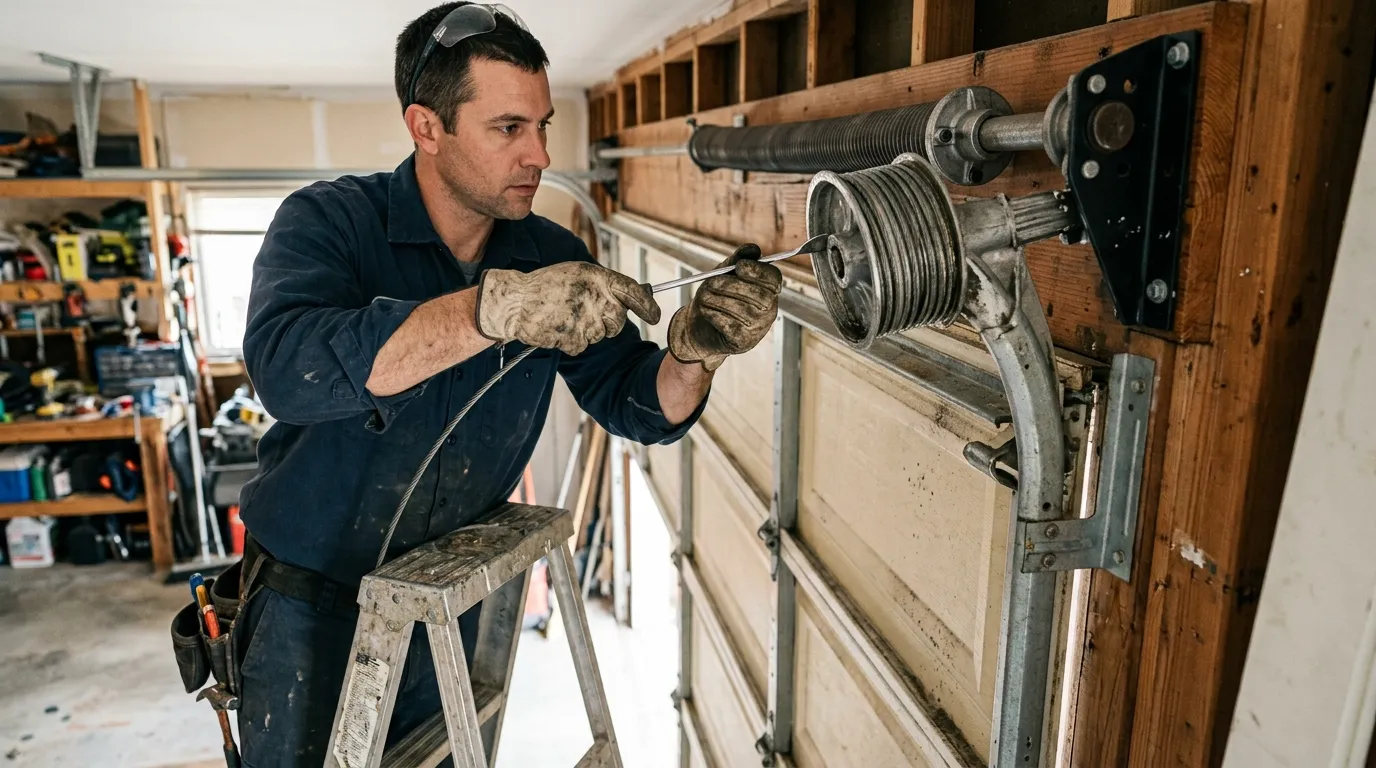
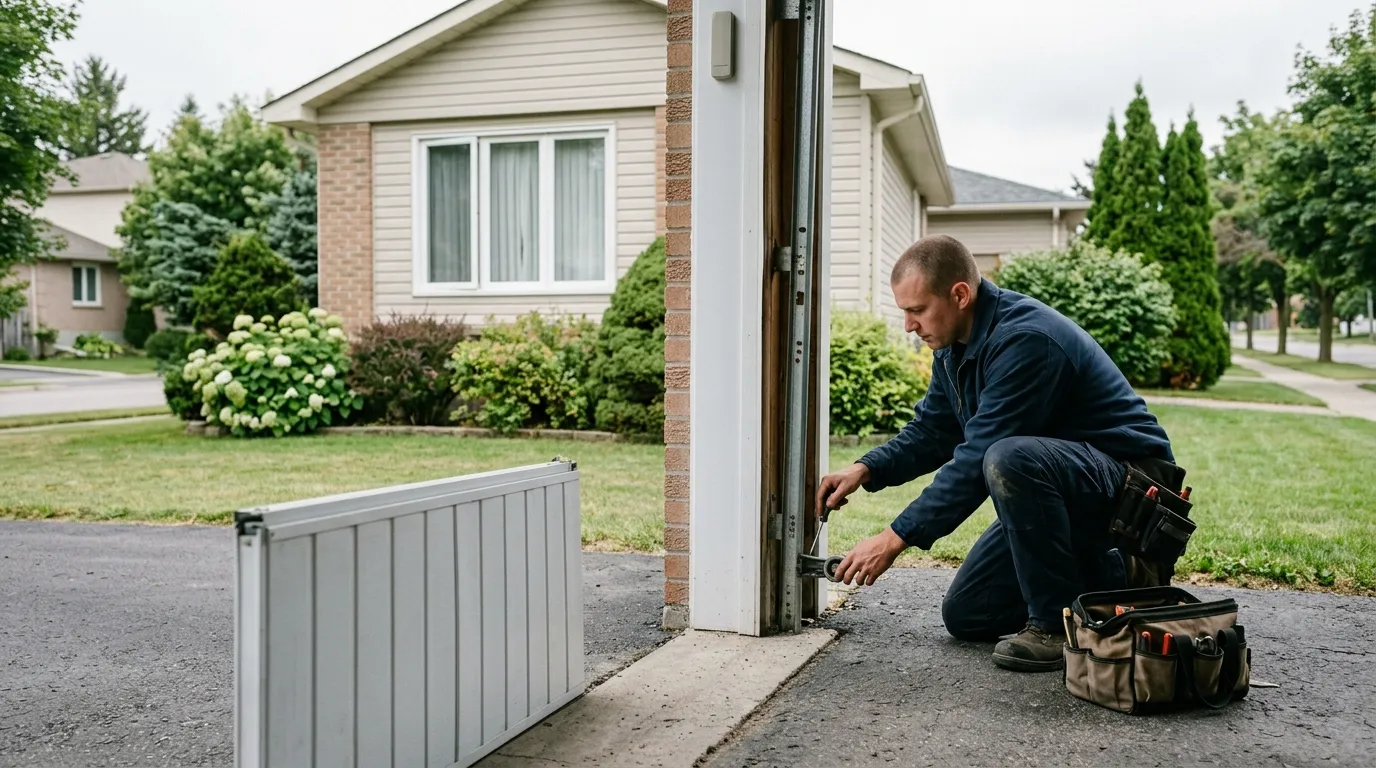
You'll usually notice it as a specific complaint, not a vague one. The door jerks partway up then stalls - that's a spring losing tension unevenly.
One side drops faster than the other on the way down - that's a cable or a roller giving out on that side. A grinding sound that gets louder over weeks, not days, is a roller in a track that's worn a groove.
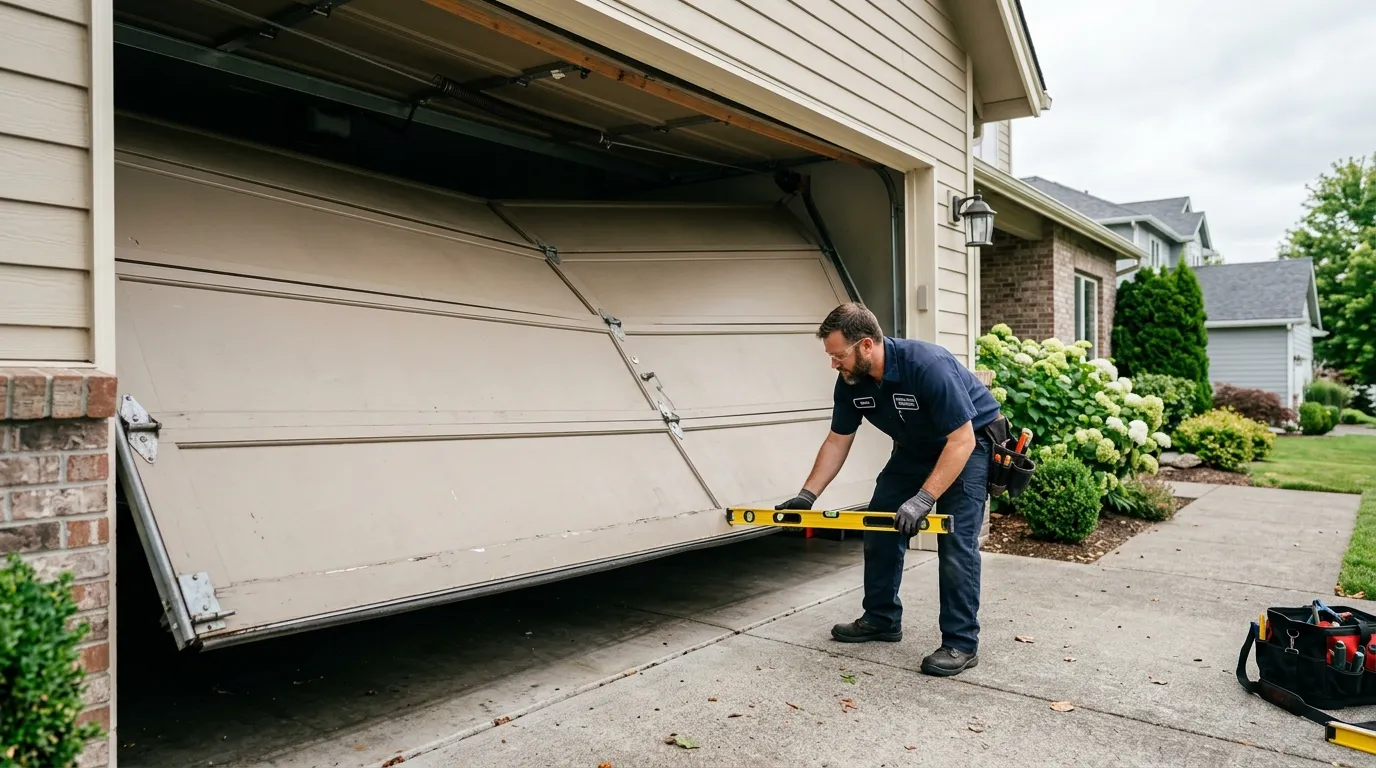
On Cambridge's older single-car doors specifically, we also see doors that visibly rack - the whole panel twisting slightly instead of tracking straight - which is what happens when track hardware installed decades ago has shifted with the house itself. That's a structural fix, not a lubrication job, and it's worth flagging early before a cable goes with the door halfway up.
What Causes It Around Here
It comes down to age and climate stacking on each other. A door and hardware set installed when the house went up around 1948 is now pushing 75 years old in a climate band that runs cold and severe - freeze-thaw cycles work on steel fasteners and torsion bar mounts every winter, and Cambridge doesn't get a pass on that just because it's closer to the water than some of the towns further out.
The other factor is simply density and age of the stock itself: houses built this early were often built with single-car doors sized for cars from that decade, then never widened, which means original narrow hardware nobody makes on the same spec anymore. Combine 75 years of cold-weather cycling with hardware that was never upgraded, and the fault isn't random - it's overdue.
Talk to a Cambridge Technician First
Describe what the door is doing and get a straight answer on what it likely needs.
Other Garage Door Services in Cambridge
Recent Work in Cambridge
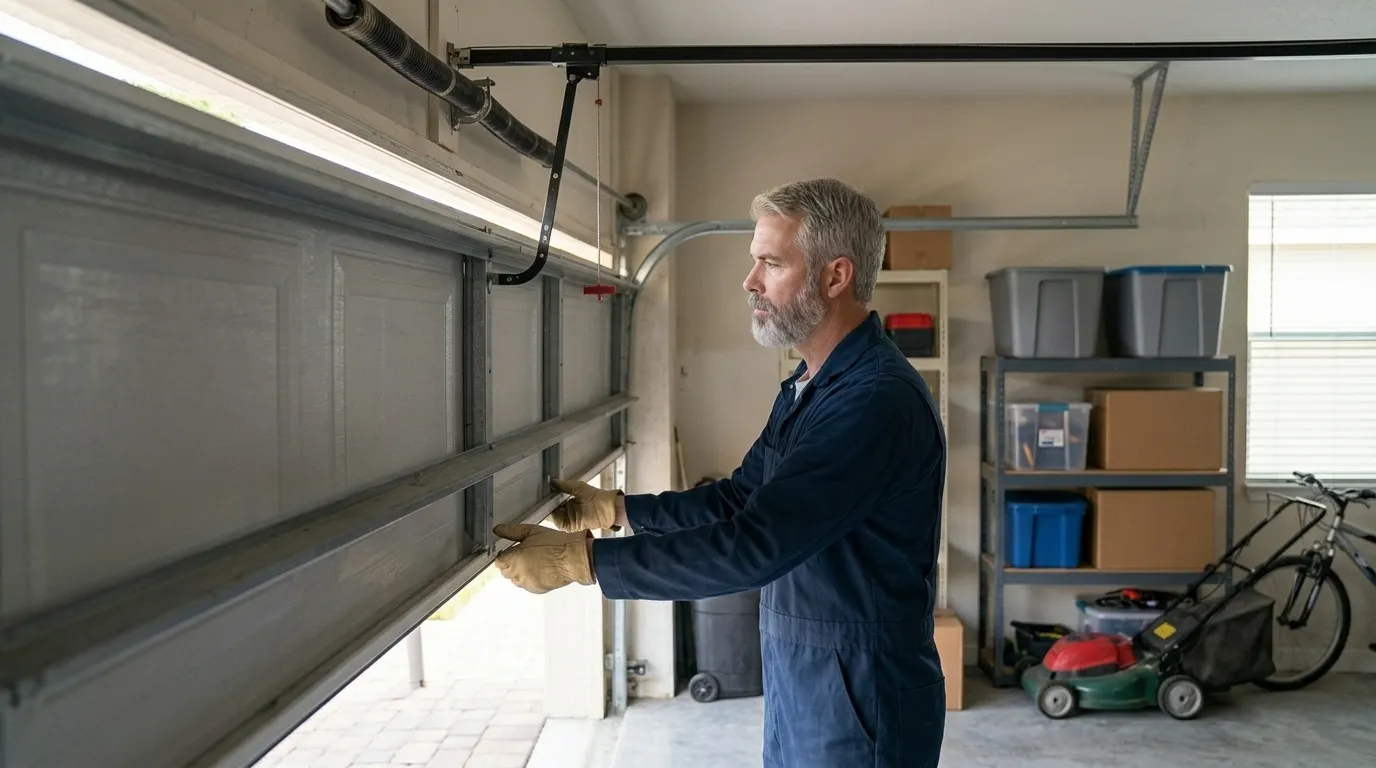
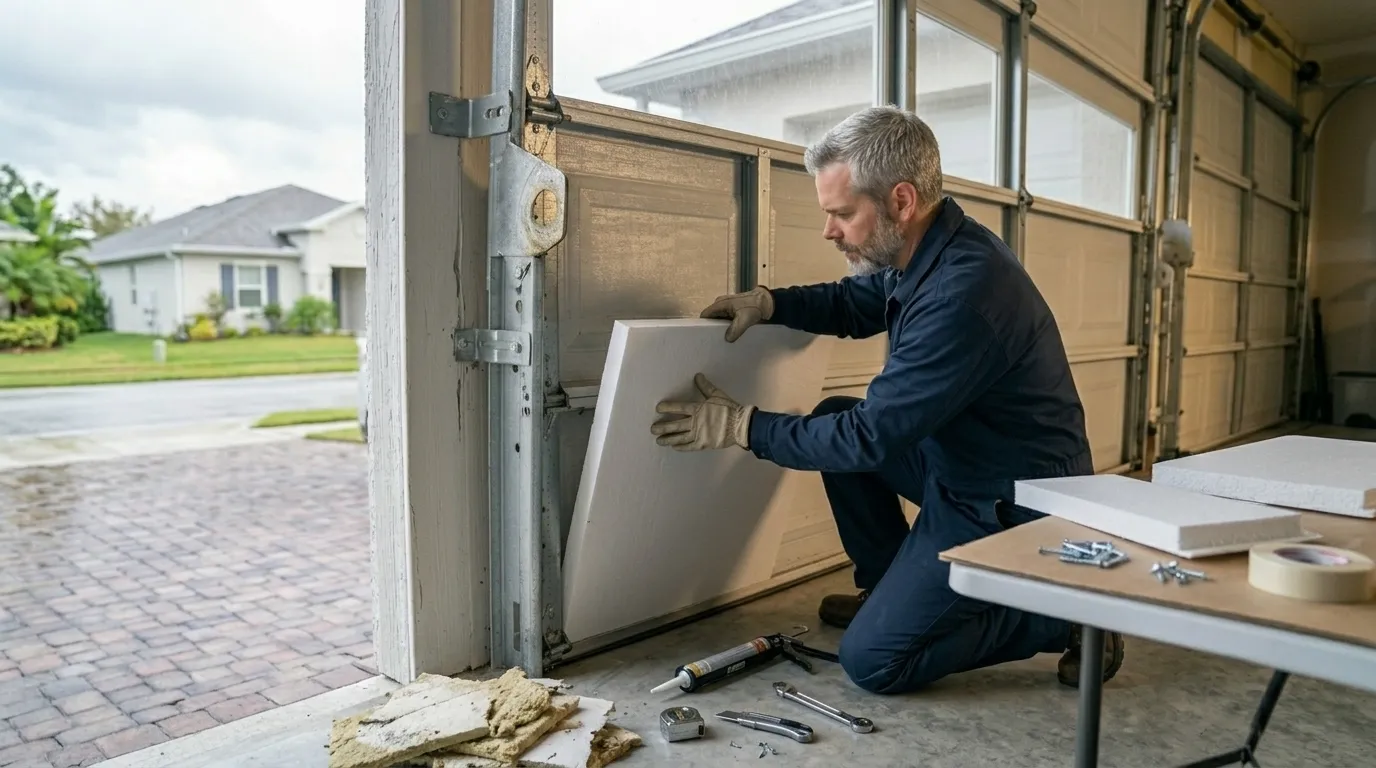
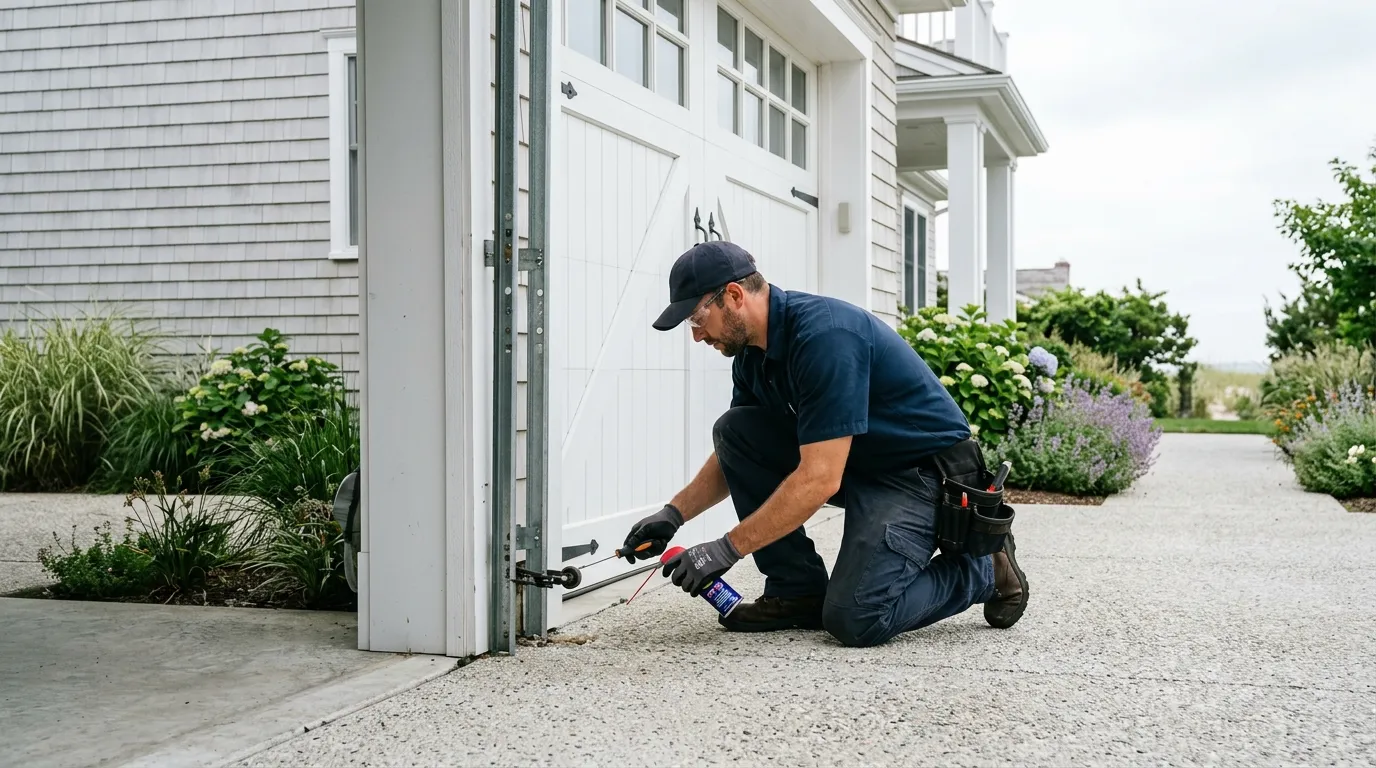
A look at jobs our crew has been on nearby.
Why Cambridge Calls Us
Frequently Asked Questions
Why does my Cambridge garage door feel older than my neighbor's opener?
Because it probably is. A lot of Cambridge housing dates to around 1948, older than the median across the wider area we cover, and original hardware from that era - extension springs, narrow single doors - often just keeps running until it doesn't. Openers get added later, but the door and track underneath can still be original.
Do you have a branch in Cambridge?
No. We run out of Boston, about 6 miles from Cambridge, and route a truck out when you call. We're upfront about that rather than implying a local depot we don't have.
Is it safe to replace an extension spring myself?
No. Extension springs are under heavy tension, and on older setups common in Cambridge there's often no safety cable through the spring, which means a break can send it flying. This is a job for someone doing it with the right tools and clamps, every time.
My door is original from the 1940s-50s - is it worth repairing?
Sometimes. If it's a spring, cable, or roller problem, that's a normal fix regardless of age. If the panel is bowed or warped and the hardware is discontinued, you're often better putting that money toward a replacement door instead of patching one that's on its way out.
Need Garage Door Repair in Cambridge?
Call now for straight answers on cost and timing.