
Roller Replacement in Cambridge
Roller Replacement for Cambridge's Older Garage Doors
Cambridge homes built around 1948 still run original steel rollers. See what a roller job costs at local income levels and what causes failure here.
- Licensed & Insured
- Same-Area Service Calls
- Upfront Pricing
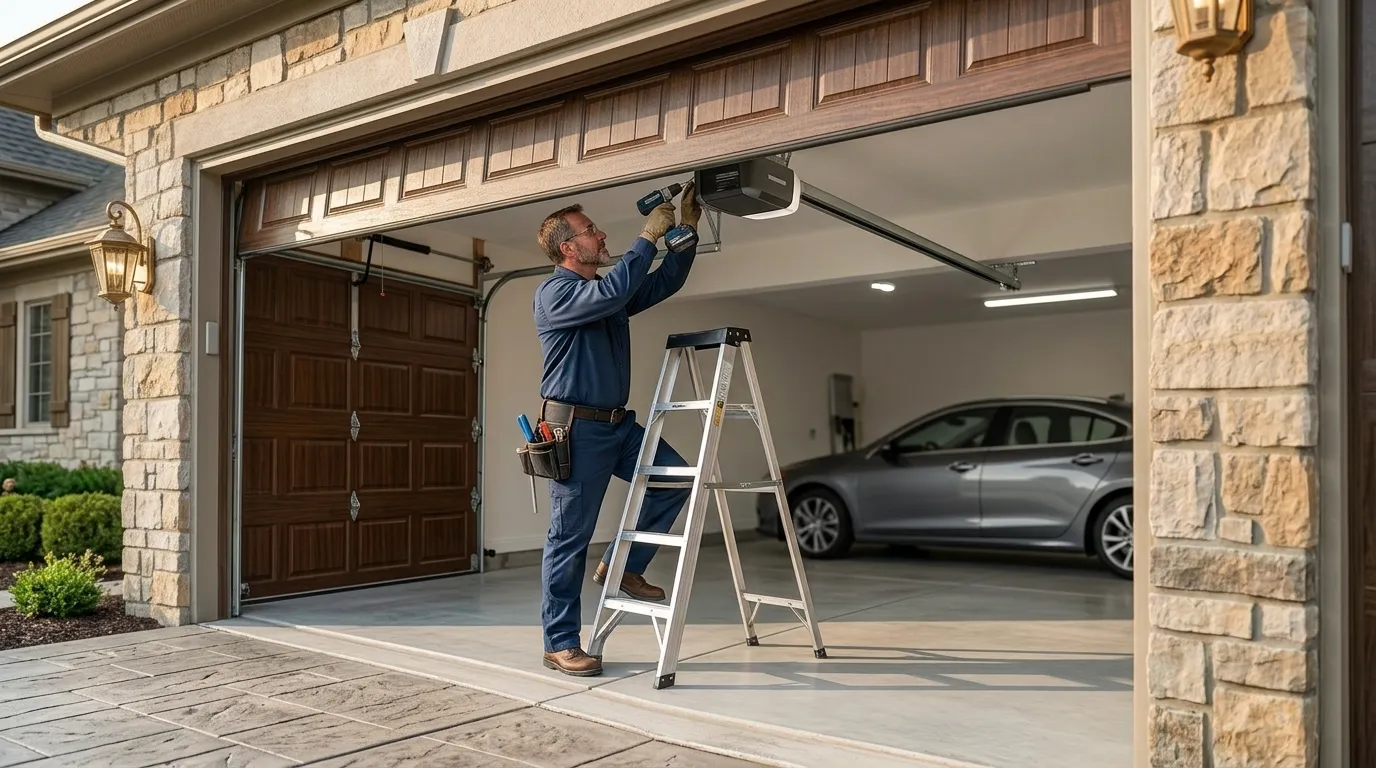
What Happens When You Call
-
1
Call or Request a Quote
Tell us what the door is doing and roughly how old the house is - that alone points us toward the likely part before a truck leaves.
-
2
On-Site Diagnosis
A tech checks the spring, cables, tracks, and opener in person and tells you plainly what is actually wrong.
-
3
Straight Price, No Surprises
You get a number before any work starts. It covers parts and labor, nothing added after the fact.
-
4
Fixed the Same Visit
Most repairs are done in one trip. If a part needs sourcing, we tell you that upfront instead of guessing.
How to Book
At a median household income of $126,469, Cambridge sits a little below the wider service area's $135,498, and that number matters more than it looks like it should. Roller replacement is one of the cheapest repairs a garage door ever needs, and at this income level it's almost always the right call over a full door swap. The crew works out of Boston and treats Cambridge, six miles out, as a standard call rather than a special trip, so there's no travel premium baked into the visit.
Book by describing what the door is doing - grinding, catching, jumping the track on the way up - rather than guessing at the part. That's enough for the crew to bring the right roller stock and skip a second trip. If the opener is also acting up, say so; a roller job and an opener check are two different diagnoses even when they show up as the same noisy door.
What Is on the Truck
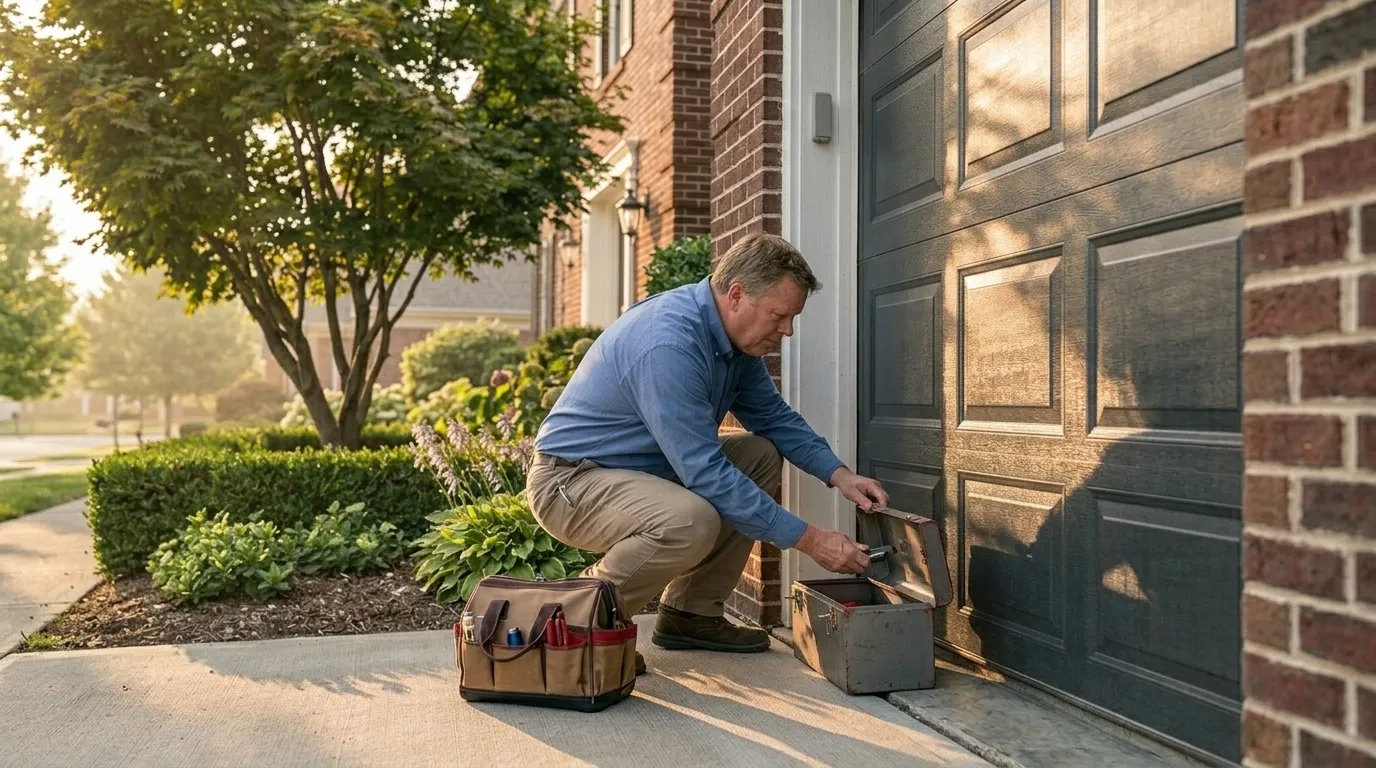
For a neighborhood built around 1948, the truck carries both nylon rollers with sealed ball bearings and the older steel roller-and-stem combination that some original doors still use. Steel rollers on a house this age often ride in tracks that were never widened for nylon, so swapping styles isn't always a straight substitution - sometimes the track has to come with it. The crew also carries the stems and cotter clips that hold rollers in place, since a roller that's failed from age has usually taken its stem down with it, not just the wheel.
What's not on the truck: full replacement doors or custom panel matches for older Cambridge builds. That's a separate estimate, not a same-visit fix, and it's worth saying plainly so nobody expects a full door swap to happen on a roller call.
The DIY Question
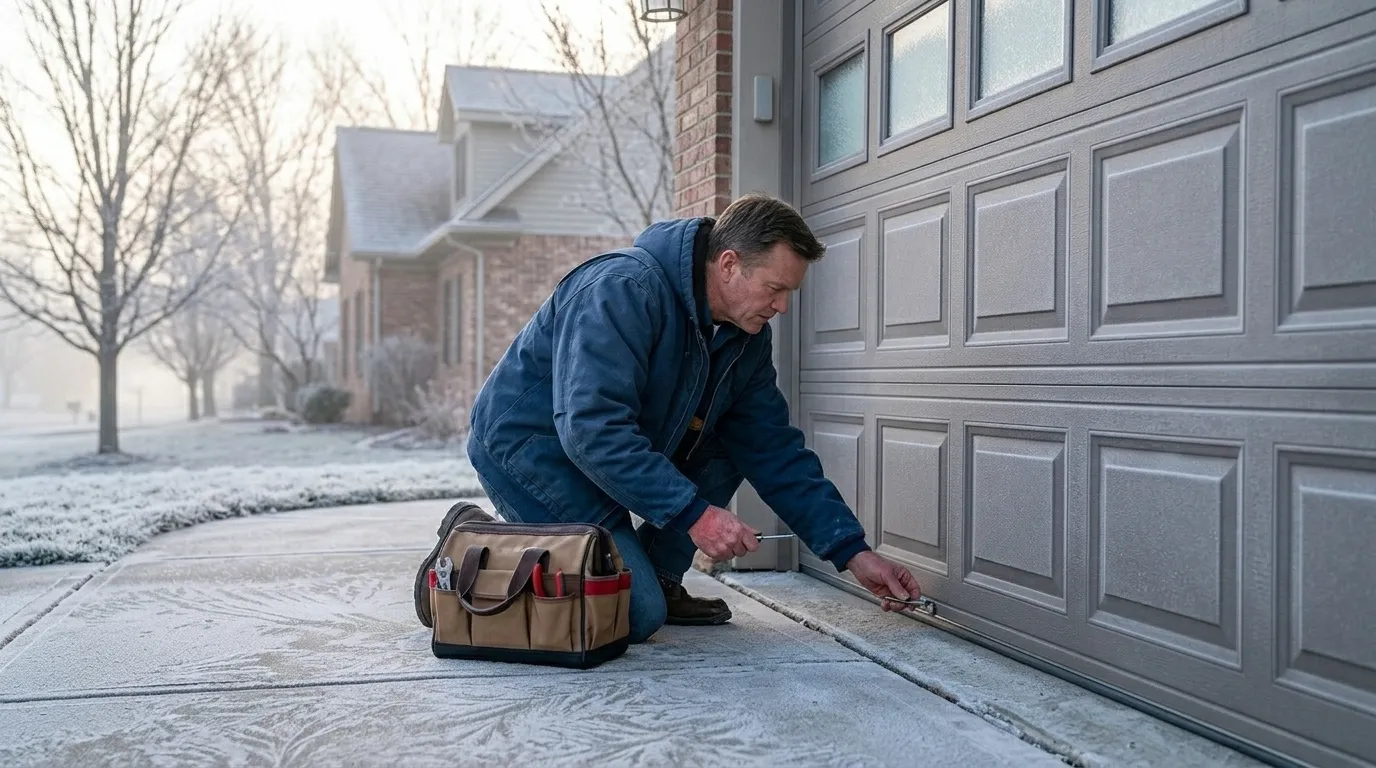
A single bottom roller on a light door is within reach for a careful owner with basic tools and no cables under tension near where they're working. Anything on the top three rollers of a door built in the 1940s-60s range, though, usually means working near a spring-loaded track section, and that's where a DIY attempt turns into an ER visit rather than a Saturday project.
The honest limitation here: this crew doesn't walk people through phone-based DIY roller jobs, because the failure mode - a track that pops loose while someone's hand is still in it - isn't something to advise on remotely. If the door is stiff, off-track, or grinding on both sides, that's a call, not a YouTube afternoon.
What Can Go Wrong
Rollers on Cambridge's older housing stock tend to fail in a specific order: the bottom rollers go first from ground-level moisture and grit, then the top rollers seize from decades of dried grease, and somewhere in between the track itself bends from a roller that's been dragging sideways for months. Left long enough, a seized roller puts uneven load on the cable and spring system, which turns a $200-ish roller fix into a spring job too.
The other failure specific to this cold-severe climate band: a nylon roller that's gone brittle from repeated freeze cycles can shatter rather than wear down, so the door drops suddenly instead of slowing. That's the case where waiting a season isn't neutral - it's the difference between a roller swap and a door that comes off the track.
How It Shows Up
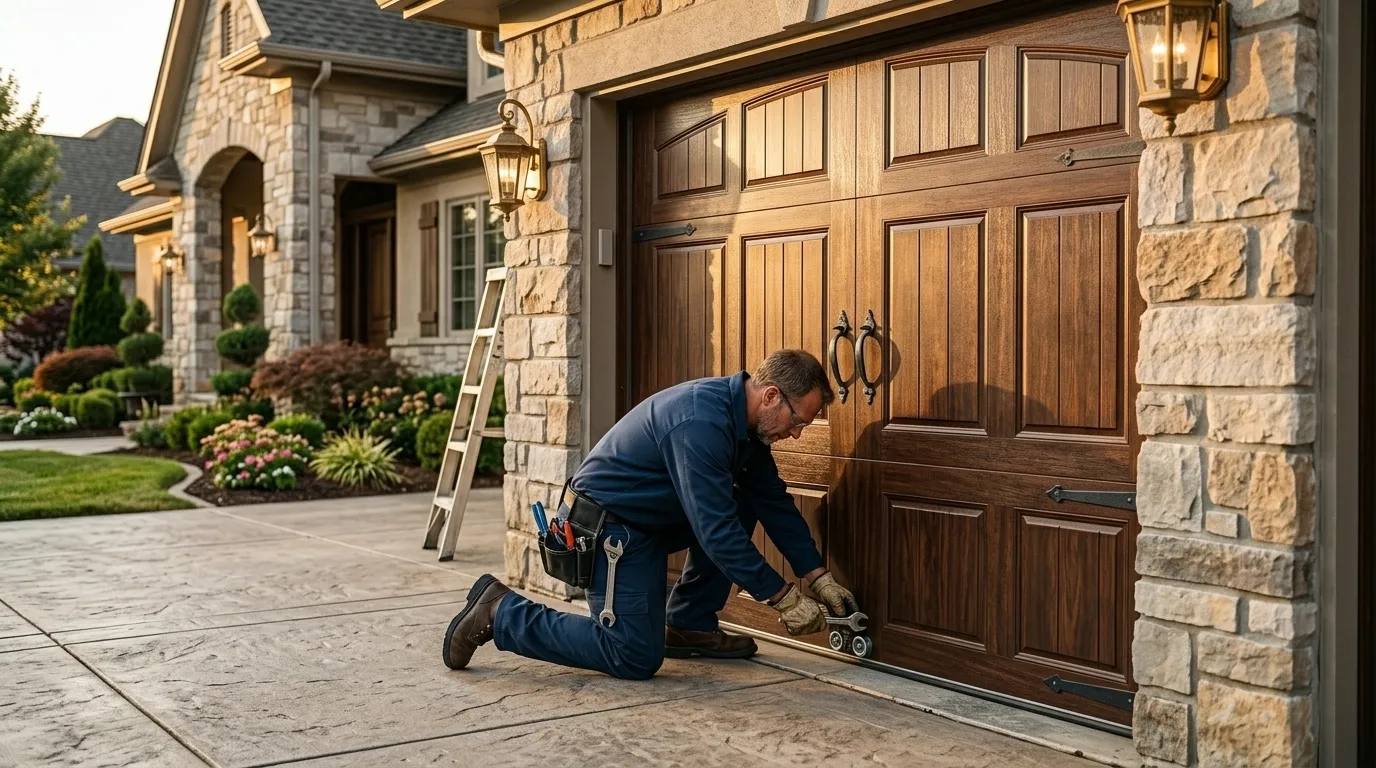
The first sign in Cambridge is almost always noise before it's function - a grinding or clacking on the way up that owners often blame on the opener chain instead of the roller itself. Next comes the door catching at the same spot in the track every time, usually where a bent roller stem has worn a groove into the rail.
By the time a roller has fully seized, the door either refuses to move past that point or jumps the track entirely on that side, which is the point where it's no longer safe to keep opening it by remote. On a house with the original steel hardware, this progression can take years; on a door that's had a nylon roller retrofit already, it moves faster because the softer wheel wears down instead of just binding.
What Causes It Around Here
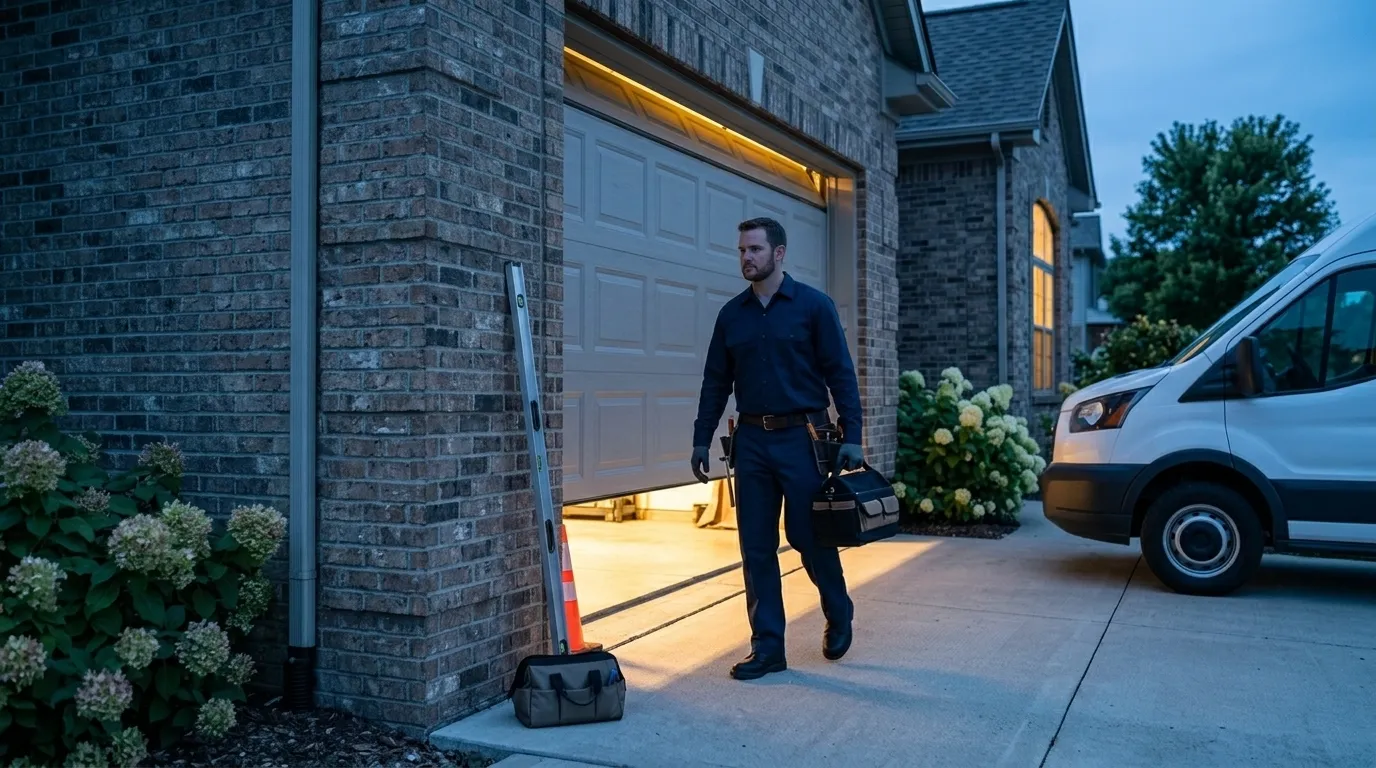
Cambridge's housing stock centers on 1948, which means original steel rollers on doors that have never had the track adjusted since installation. In this cold-severe climate band, grease left in cheap nylon rollers stiffens hard enough by January to crack the roller stem, and that cold-to-warm swing every winter is harder on rollers than steady heat or steady cold would be.
With 49,592 households in Cambridge, a large share of them still running the two-piece steel roller that shipped standard on houses built before 1960, roller wear isn't an edge case here - it's close to the default failure for a door this age. Garage floors that see road salt tracked in over a winter add a second stressor: salt residue works into the roller bearing faster than plain grit does, on top of the freeze-thaw cycling the climate band already puts on the hardware.
Talk to a Cambridge Technician First
Describe what the door is doing and get a straight answer on what it likely needs.
Other Garage Door Services in Cambridge
Recent Work in Cambridge
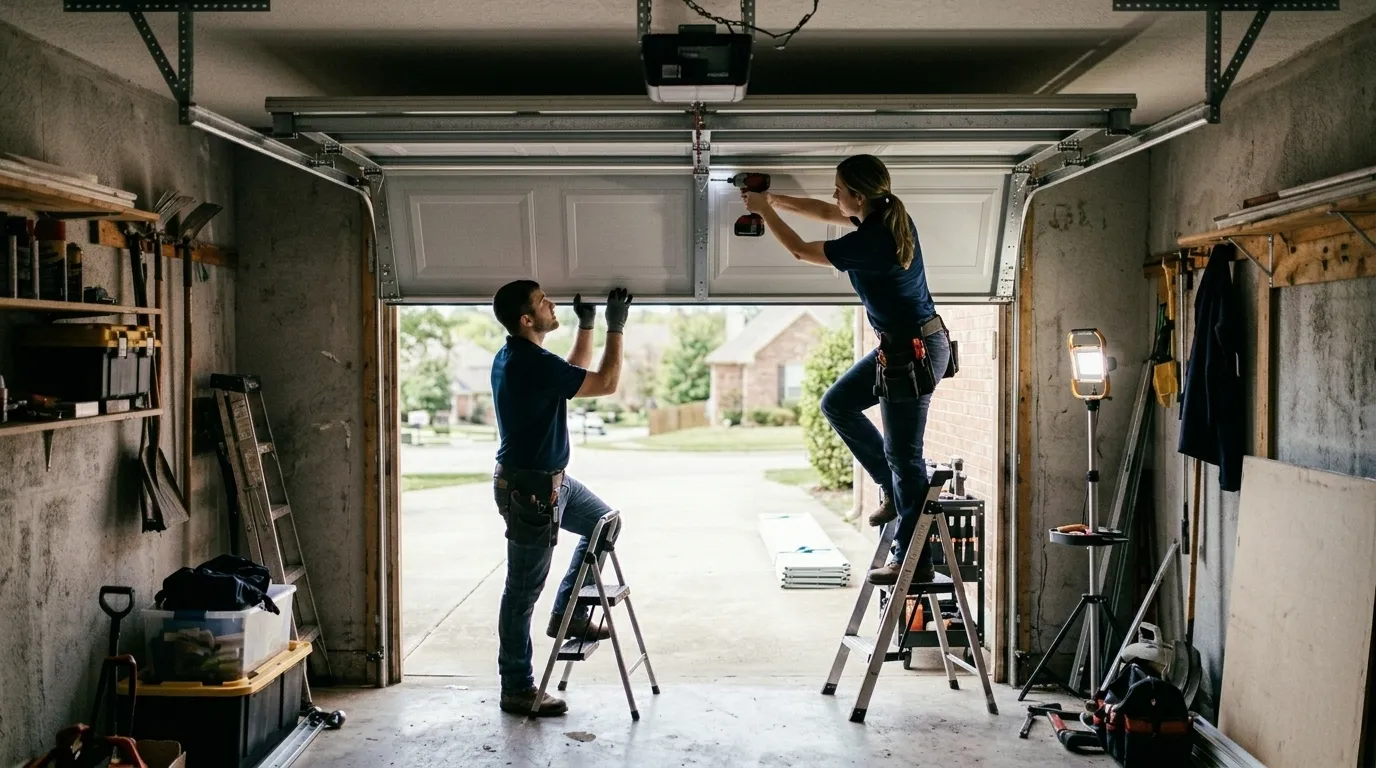
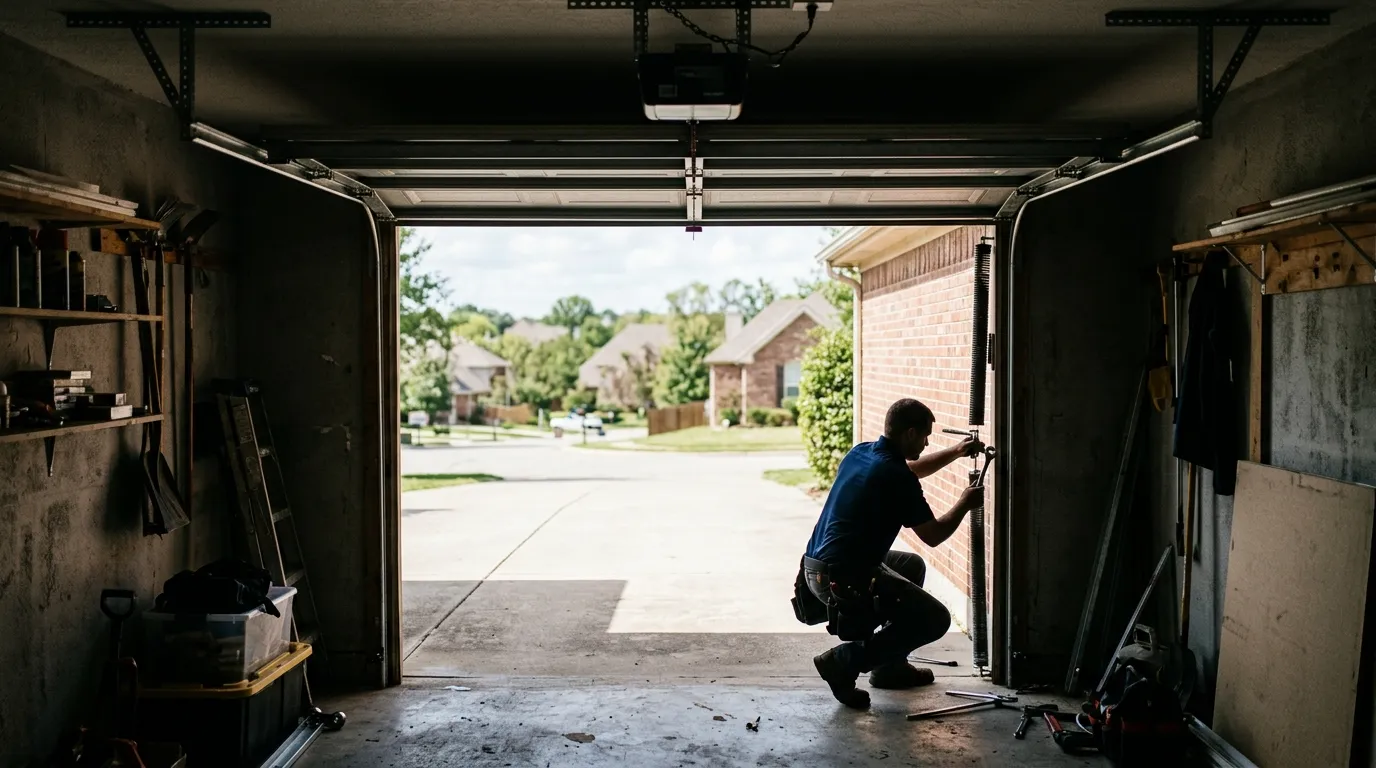
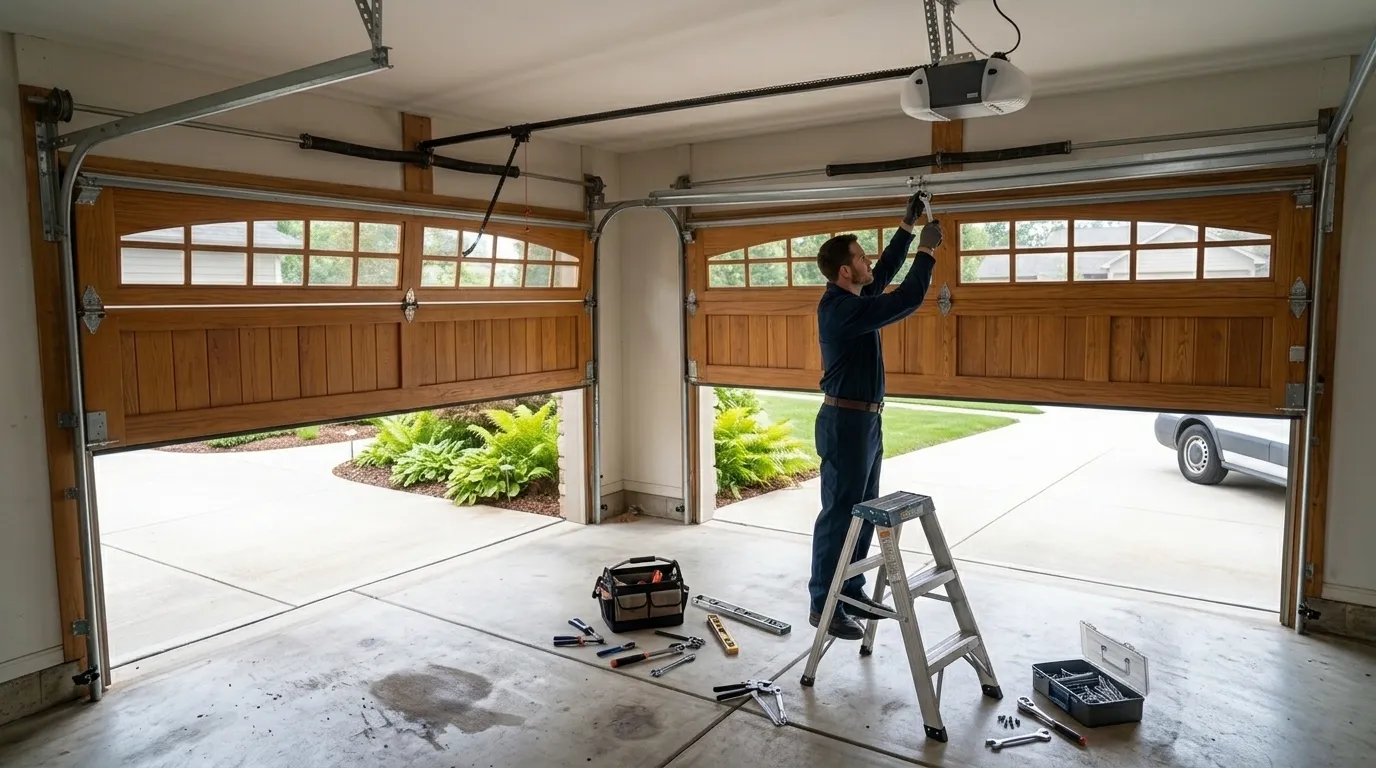
A look at jobs our crew has been on nearby.
Why Cambridge Calls Us
Frequently Asked Questions
Is roller replacement worth it on a door this old, or should I just replace the whole door?
On most Cambridge houses from the 1948 era, roller replacement alone fixes the noise and catching without touching the panels or track structure. Full replacement only makes sense if the track is bent beyond adjustment or the door itself has rusted through. At local income levels, roller-only is the far cheaper and more common outcome.
Why do my rollers seize up every winter?
This area sits in a cold-severe climate band, and grease inside nylon rollers thickens in the cold, then thins again when temperatures swing back up. That repeated freeze-thaw cycle stresses the roller stem and bearing more than a steady cold climate would, which is why seizing tends to show up seasonally rather than gradually.
Can one bad roller really cause the whole door to jump the track?
Yes. A seized or bent roller drags sideways instead of rolling straight, and over weeks that wears a groove into the track rail. Once the groove is deep enough, the roller can pop free of the rail entirely, especially on the top section where the door is under the most spring tension.
Need Roller Replacement in Cambridge?
Call now for straight answers on cost and timing.