
Opener Installation in Cambridge
Opener Installation for Cambridge's Older Housing Stock
Cambridge's housing runs older than most of the metro - that changes what an opener install actually needs. Boston Garage Door Pros drives out to handle it.
- Licensed & Insured
- Same-Area Service Calls
- Upfront Pricing
What Happens When You Call
-
1
Call or Request a Quote
Tell us what the door is doing and roughly how old the house is - that alone points us toward the likely part before a truck leaves.
-
2
On-Site Diagnosis
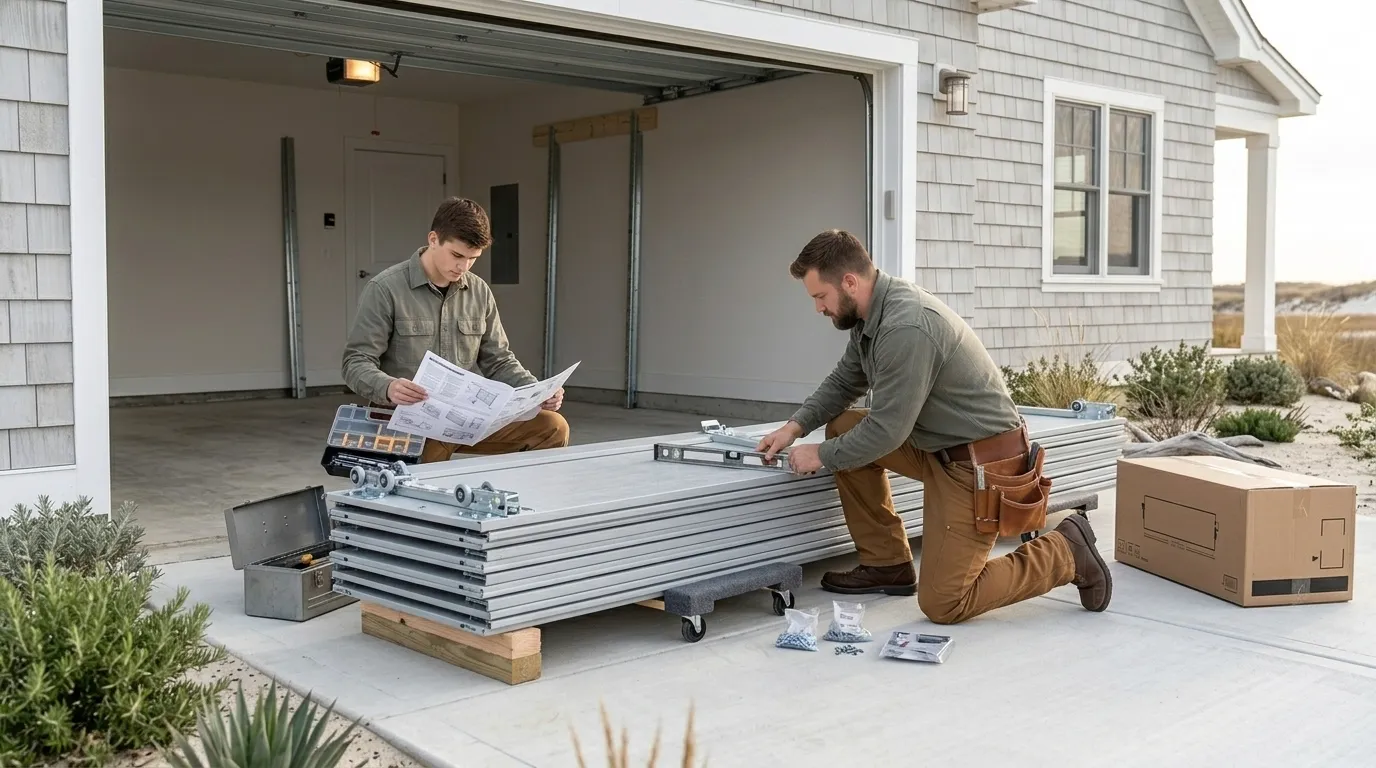
A tech checks the spring, cables, tracks, and opener in person and tells you plainly what is actually wrong.
-
3
Straight Price, No Surprises
You get a number before any work starts. It covers parts and labor, nothing added after the fact.
-
4
Fixed the Same Visit
Most repairs are done in one trip. If a part needs sourcing, we tell you that upfront instead of guessing.
How to Book
We're based in Boston and drive out to Cambridge for opener jobs - six miles, so getting a crew to your door isn't the hard part. What takes a few extra minutes on the phone is figuring out what's actually on the door before anyone loads a truck. Cambridge's housing runs older than the metro median, and a lot of the openers we pull out here were bolted onto doors and track that were never built with a modern opener in mind.
Tell us the age of the house if you know it, whether the door is original, and whether you've had any opener work done before. That's enough for us to bring the right rail length, the right mounting hardware, and a bracket kit in case the header needs reinforcing. We don't quote a same-day window here - we're not stationed in Cambridge, so we book the visit and give you a realistic day, not a promise we can't back from across the river.
What Is on the Truck
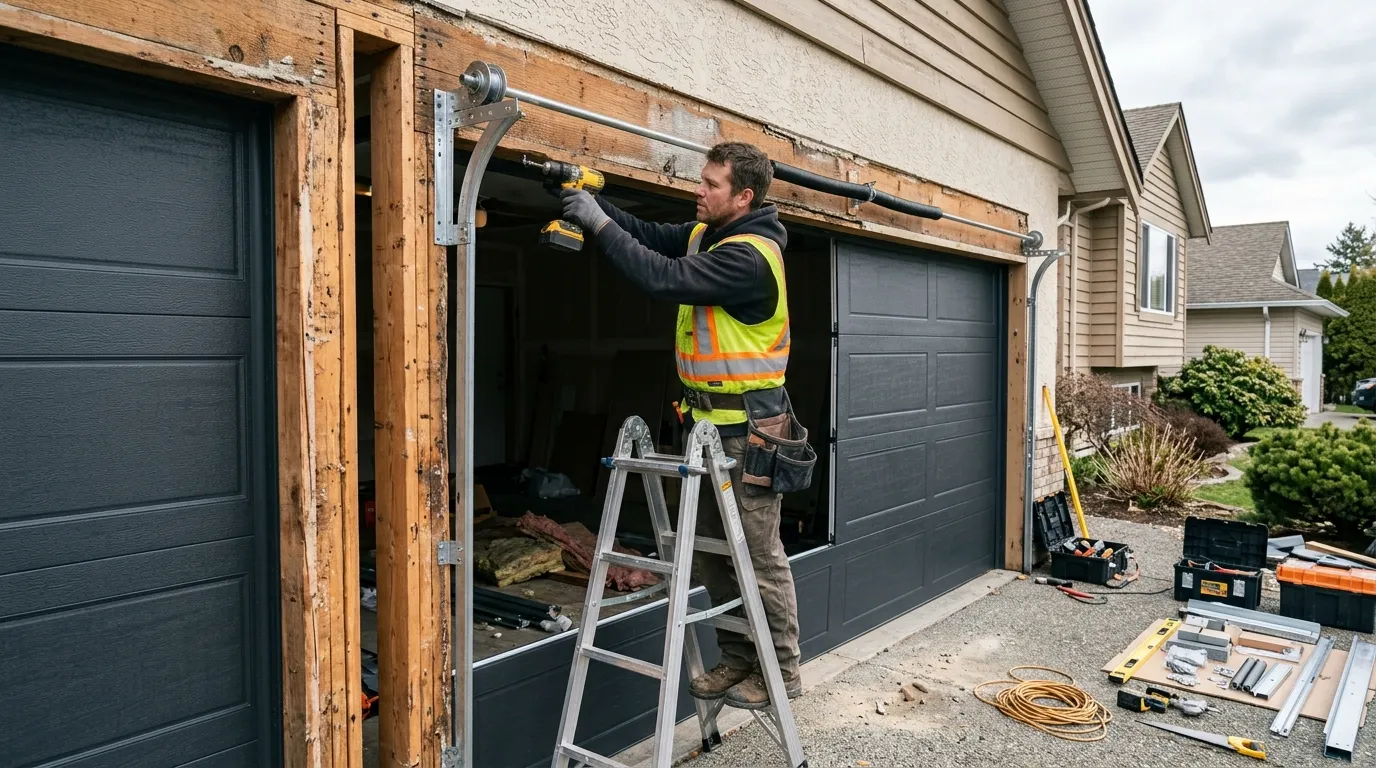
For a town where a lot of doors predate the opener itself, the truck carries more than the opener box. We bring header reinforcement brackets, because houses built before openers were standard often have a door frame that was never sized to take the pull of a motor unit - the old one-piece or early sectional doors relied on spring balance alone, no bracket load. We carry belt-drive and chain-drive units both, plus battery backup units, since a cold-climate installation without backup means a dead opener the first time the power drops during a hard freeze.
We also carry longer rail sections for garages with less headroom than what you'd find in newer construction, which is common in blocks built close to the street on smaller lots. What we don't carry is a universal bracket that fits every 1940s header - some of those need a look before we know which kit goes on the truck for the second trip, if there is one.
The DIY Question
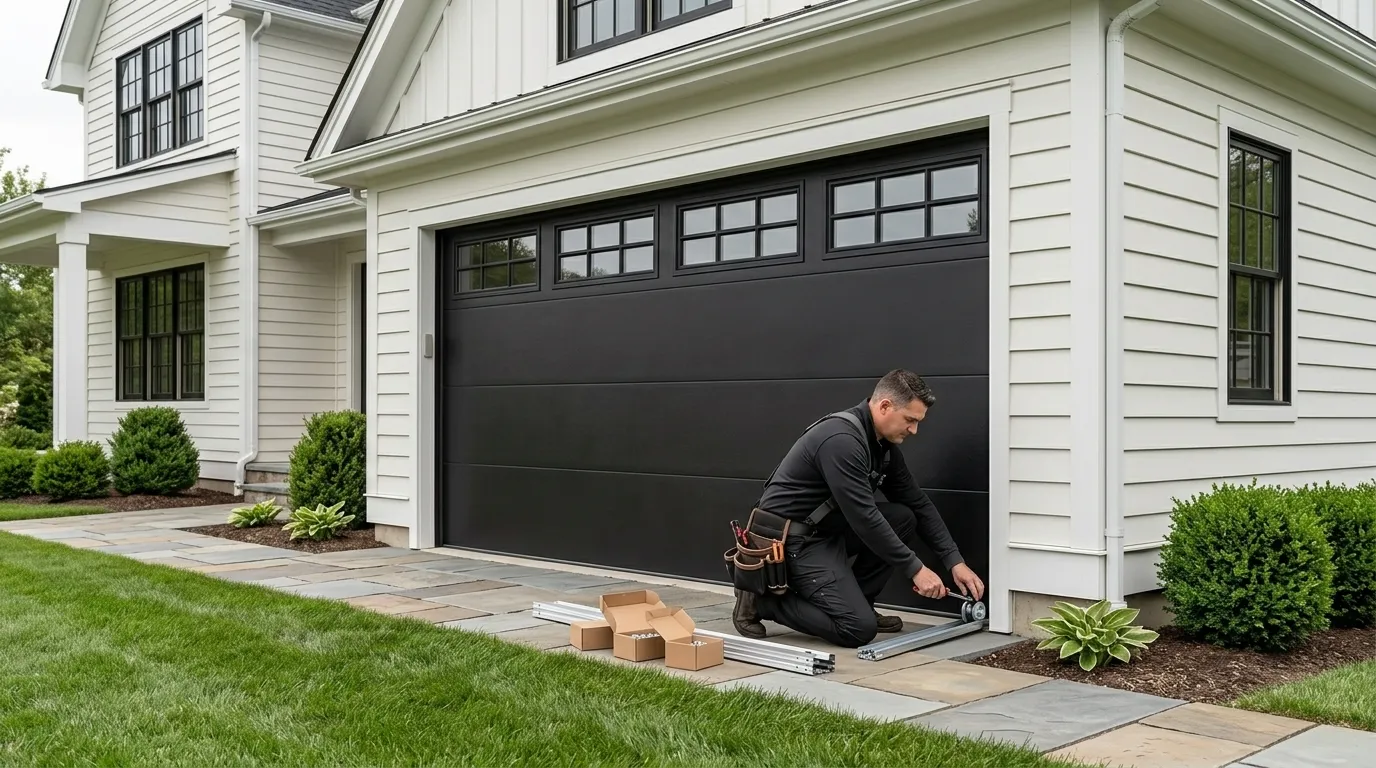
An opener kit from a hardware store comes with a rail, a motor head, and instructions written for a door and header that match nothing built when a lot of Cambridge's housing went up. If your garage was built around the postwar years, the header framing and the track spacing may not match what the kit assumes, and a homeowner working from a printed diagram has no way to know that until the bracket won't sit flush. We'll also say plainly: a straightforward swap on a door with modern track and a code-height header is a job plenty of handy owners can do safely on a weekend.
Where it gets risky is the safety sensor alignment and the travel-limit setting - get those wrong and the door either won't reverse on an obstruction or slams reverse constantly. If you're not confident checking those two things with a level and a multimeter, that's the part worth paying for, even if you install the rest yourself.
What Can Go Wrong
The failure we see most in this housing stock is a header that flexes under the pull of a new opener because it was framed for a hand-lifted door, not a motorized one. Without a reinforcement bracket, the wood works loose from the fasteners over months, and the door starts to sag on one side every time it opens. Cold-climate installs bring a second problem: a chain-drive opener with no lubrication schedule seizes stiff on the first sub-freezing morning, and a belt-drive with a worn belt stretches until the travel limits drift and the door won't seat all the way down.
We also see openers wired straight into circuits with no surge protection, which matters more here given how often winter storms in this climate band knock out and restore power in the same hour. None of these are dramatic failures - they're slow ones, which is why they usually show up as an annoyance for weeks before someone calls.
How It Shows Up
Usually it starts small: the door hesitates for a second before it moves, or it stops a few inches short of the floor and reverses back up. On the older headers we see around Cambridge, you'll sometimes notice the trim board above the door flexing slightly when the opener kicks on - that's the reinforcement bracket doing a job it was never given, or not doing it at all.
In winter, the complaint is usually that the door worked fine yesterday and won't budge today; that's a chain or belt gone stiff with cold, or a battery backup unit that's finally dead after carrying the load through a power blip. On the newer end of the stock, the symptom is more often a remote that stops working from the driveway but still works standing at the door - a range problem, not a mechanical one, and a different fix entirely.
What Causes It Around Here
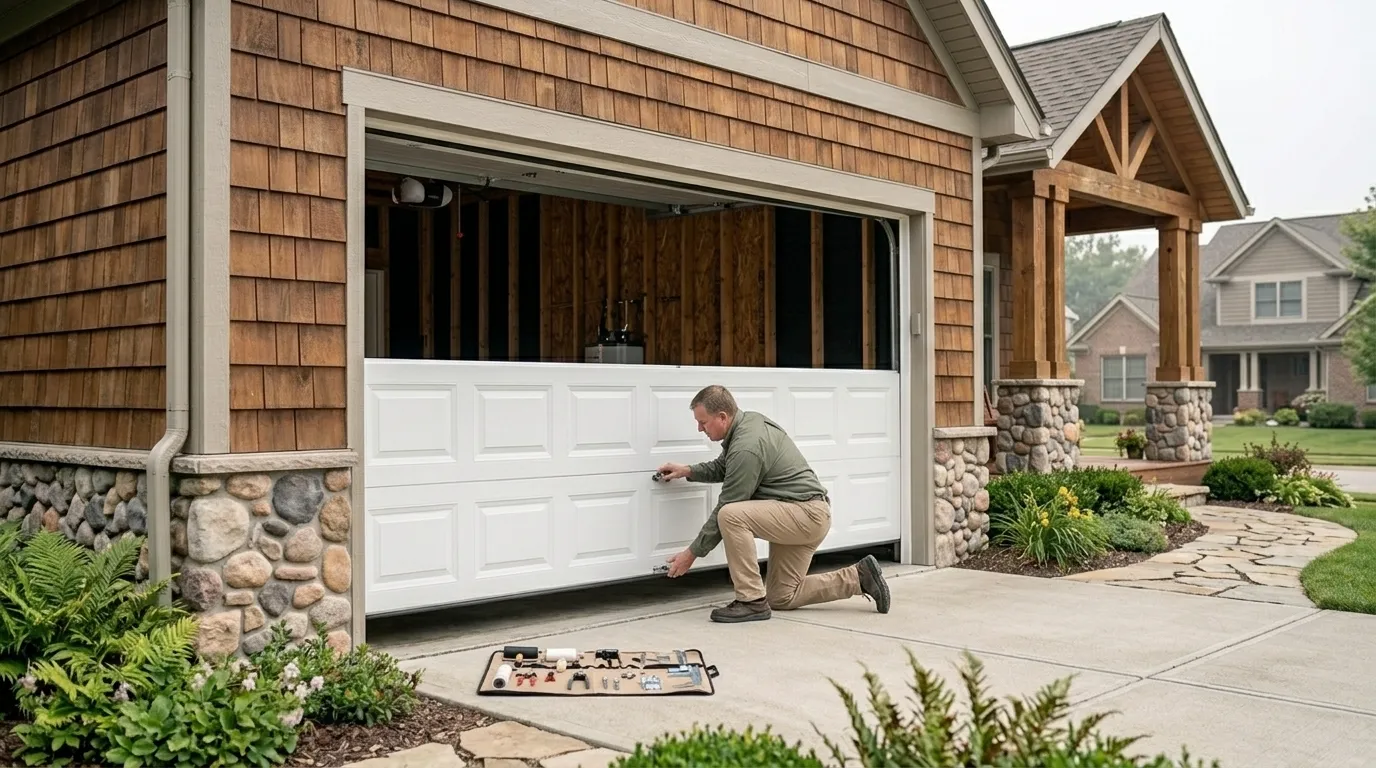
Cambridge's median build year sits notably earlier than the metro's already-old median of 1960 - a lot of the housing here went up before openers were something a builder planned for. That means headers framed for hand-operated doors, track spaced for lighter panels, and in some cases wiring runs that were never meant to carry a motor circuit.
Add in a cold-climate band with real winter severity, and you get openers doing double duty: pulling against structure that resists the load, in temperatures that stiffen chain and belt alike. It's not a defect in the house - it's a mismatch between 1940s framing and 2020s hardware, and it's the single biggest reason opener installs here take longer to spec than the same job in a newer subdivision.
Talk to a Cambridge Technician First
Describe what the door is doing and get a straight answer on what it likely needs.
Other Garage Door Services in Cambridge
Recent Work in Cambridge
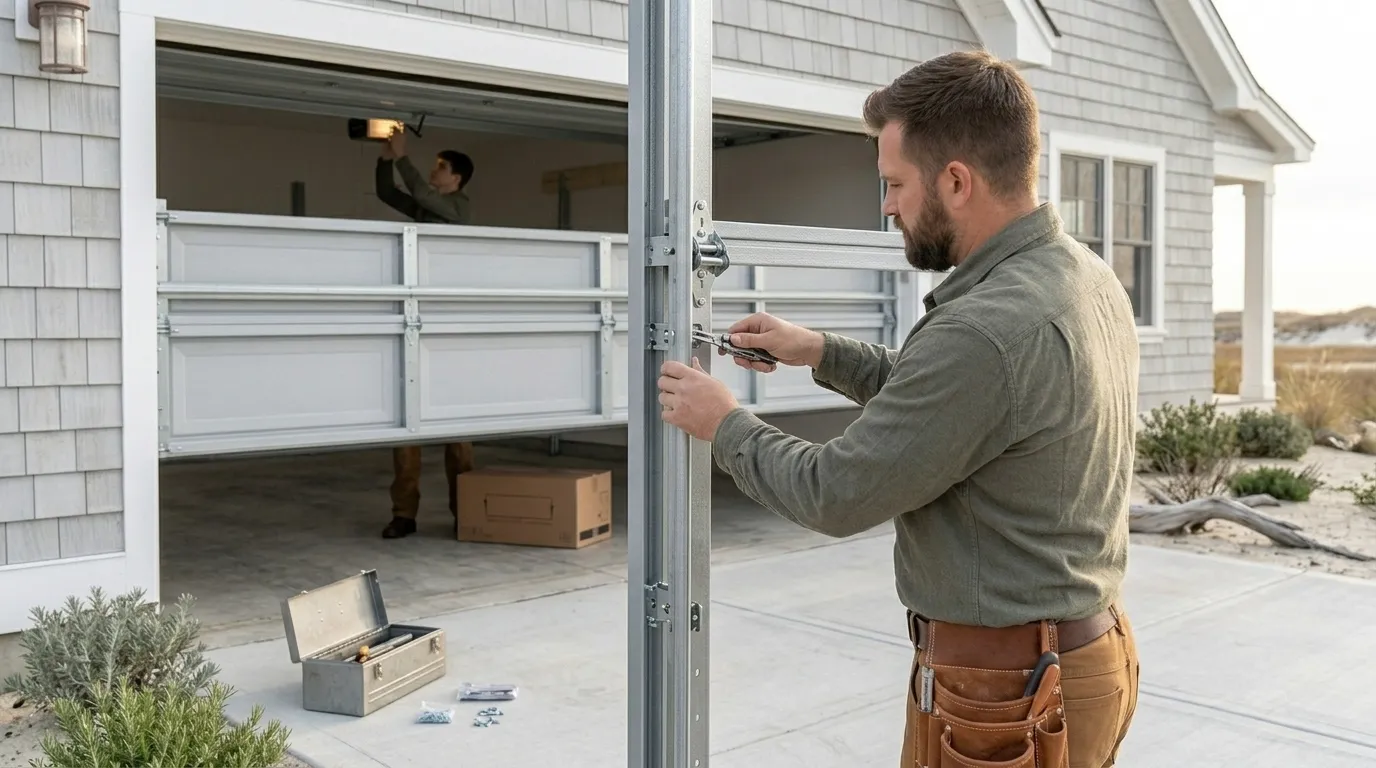
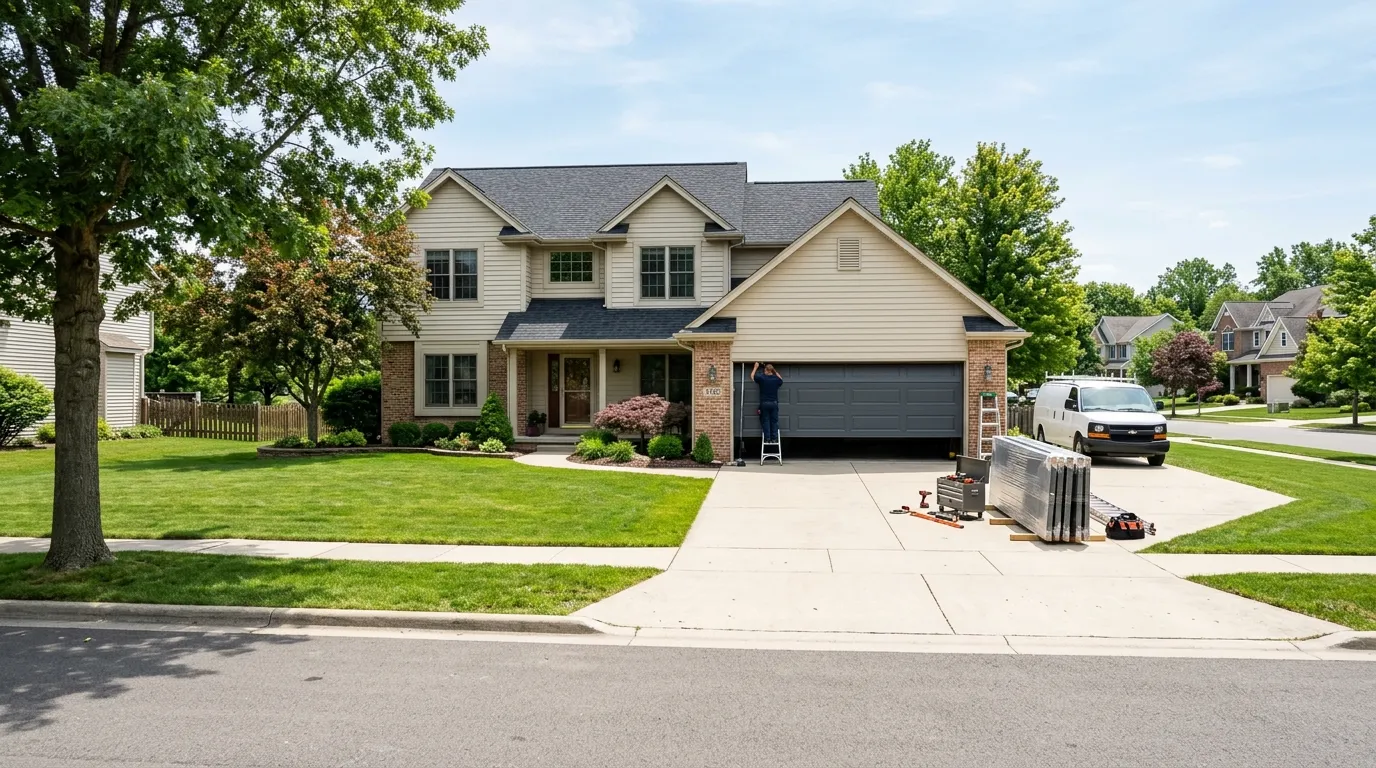
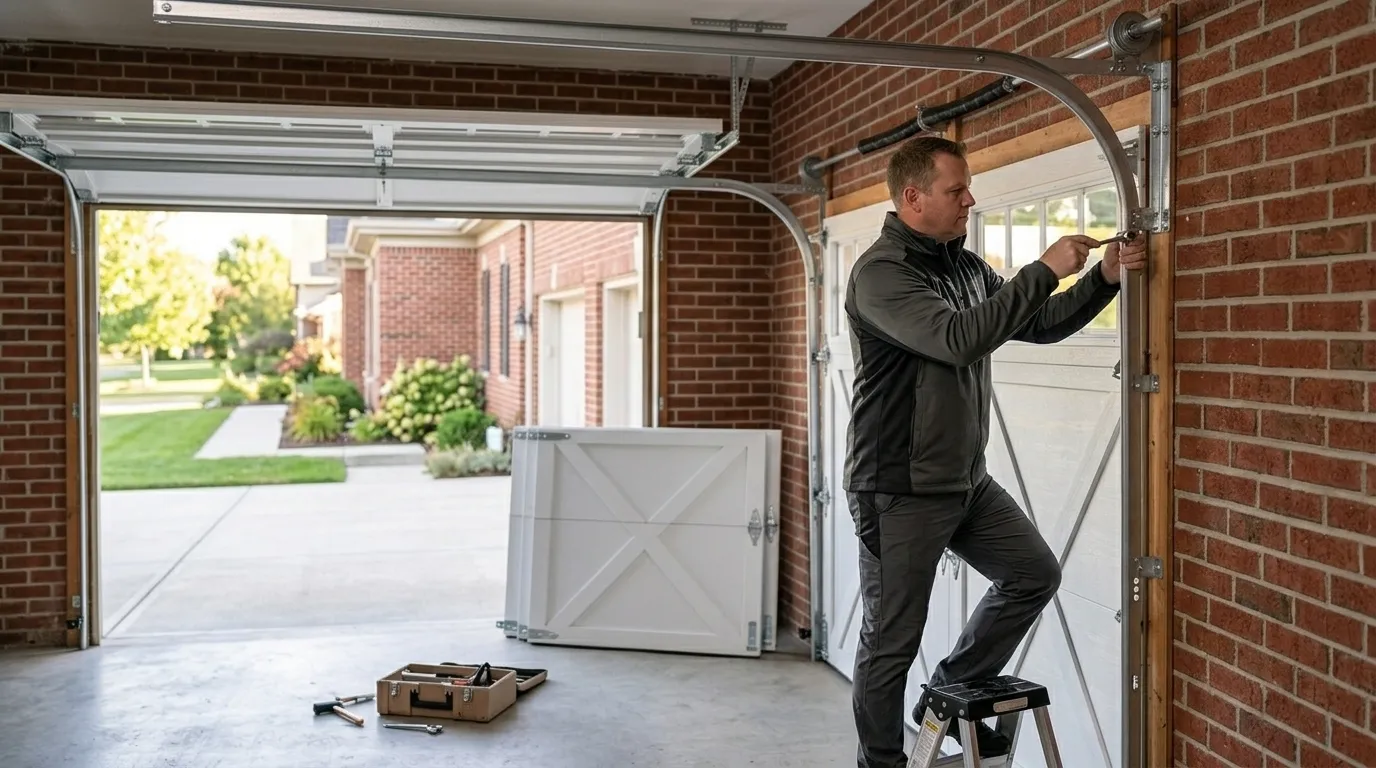
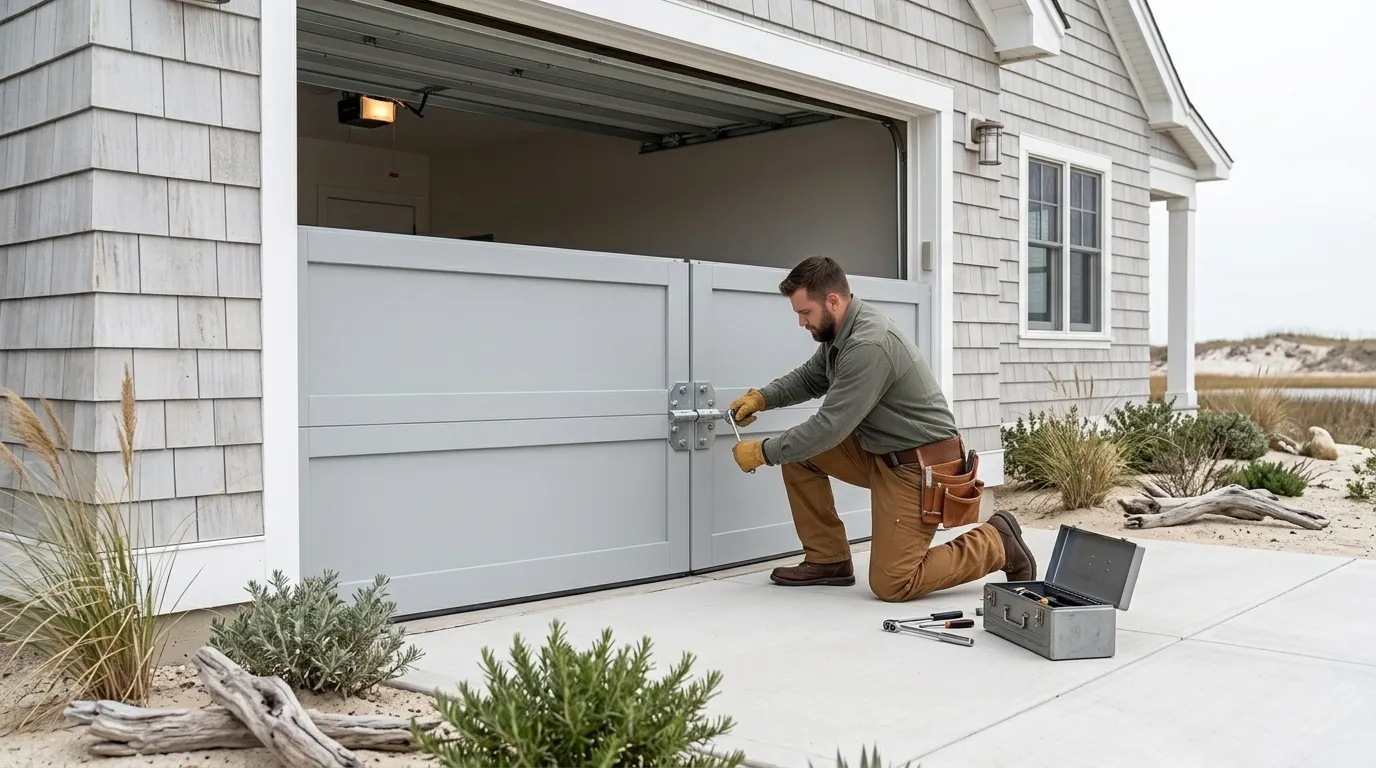
A look at jobs our crew has been on nearby.
Why Cambridge Calls Us
Frequently Asked Questions
Will a new opener fit my garage if the house is from the late 1940s?
In most cases yes, but the header may need a reinforcement bracket first. Houses from that era were framed for hand-lifted doors, not motorized ones, so the frame sometimes needs extra support before the opener bracket goes on. We check this before quoting the job, not after.
Do you carry battery backup openers for Cambridge installs?
Yes. Given how often winter weather here knocks power out and back on in the same event, we generally recommend a battery backup unit so the door still opens and closes during an outage rather than being stuck in whatever position it was in when the power dropped.
Is a belt-drive or chain-drive opener better for the cold?
Belt-drive tends to hold up better in cold weather since there's no metal-on-metal chain to stiffen up, but a well-lubricated chain-drive still works fine. The bigger issue in this climate band is skipping lubrication and backup power altogether, not which drive type you pick.
Can I install the opener myself and just have you set the safety sensors?
We don't usually split the job that way - once we're on site, aligning sensors and setting travel limits takes the same time whether we mounted the rail or you did, and we'd still want to check the header bracket before signing off on it.
Need Opener Installation in Cambridge?
Call now for straight answers on cost and timing.