
Spring Repair in Cambridge
Spring Repair for Cambridge's Older Housing Stock
Cambridge homes mostly date to 1948, a decade before the rest of the service area's median year. That older stock means different spring hardware. Here's what our truck carries for it.
- Licensed & Insured
- Same-Area Service Calls
- Upfront Pricing
What Happens When You Call
-
1
Call or Request a Quote
Tell us what the door is doing and roughly how old the house is - that alone points us toward the likely part before a truck leaves.
-
2
On-Site Diagnosis
A tech checks the spring, cables, tracks, and opener in person and tells you plainly what is actually wrong.
-
3
Straight Price, No Surprises
You get a number before any work starts. It covers parts and labor, nothing added after the fact.
-
4
Fixed the Same Visit
Most repairs are done in one trip. If a part needs sourcing, we tell you that upfront instead of guessing.
How to Book
We run this job out of Boston, six miles down the road, so there's no local branch to call and no separate Cambridge crew - just the same truck and the same stock of springs that goes out across the service area. When you call, tell us the door's age if you know it and whether it's making noise, sagging on one side, or simply refusing to move.
Cambridge's housing skews older than the rest of the area we cover (median build year 1948, versus 1960 for the wider service area), so knowing the rough vintage helps us pull the right spring size and shaft diameter before the truck leaves. We don't quote a fixed arrival window here since we're traveling in from Boston, not sitting in a Cambridge yard - ask when you call and we'll give you what we can see for that day.
What Is on the Truck
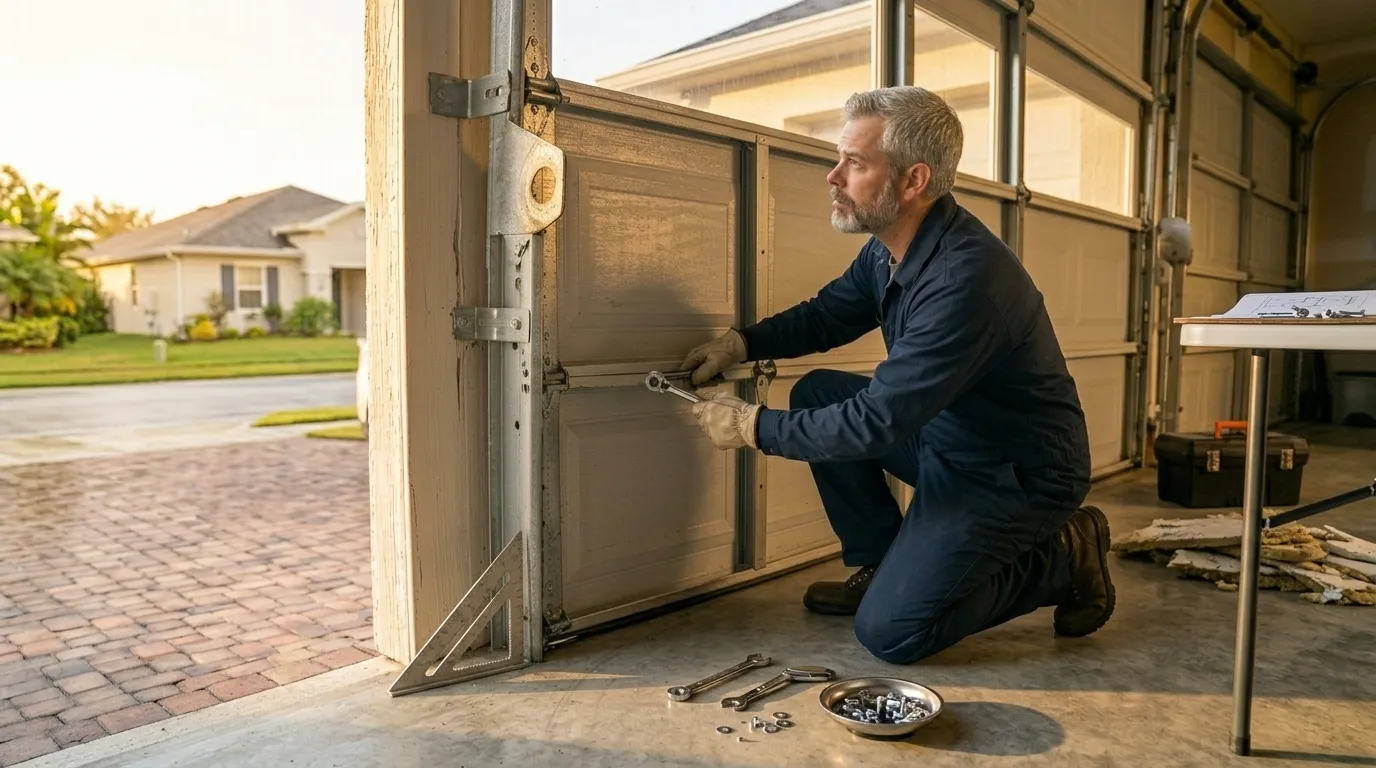
Because so much of Cambridge went up before 1950, the springs we pull most often here are older-style torsion units on narrower shafts, plus the occasional extension spring setup on a side-mounted track - hardware that newer suburbs built in the 60s and 70s mostly don't have anymore. We carry a range of wire gauges to cover both, along with the drums, cables, and end bearing plates that tend to wear out alongside a spring on a door this old. What we don't stock on the truck are obsolete OEM parts for doors that haven't been made in decades; if a Cambridge door needs a specific vintage bracket we don't carry, that's an honest lead-time conversation, not a same-visit fix.
The DIY Question
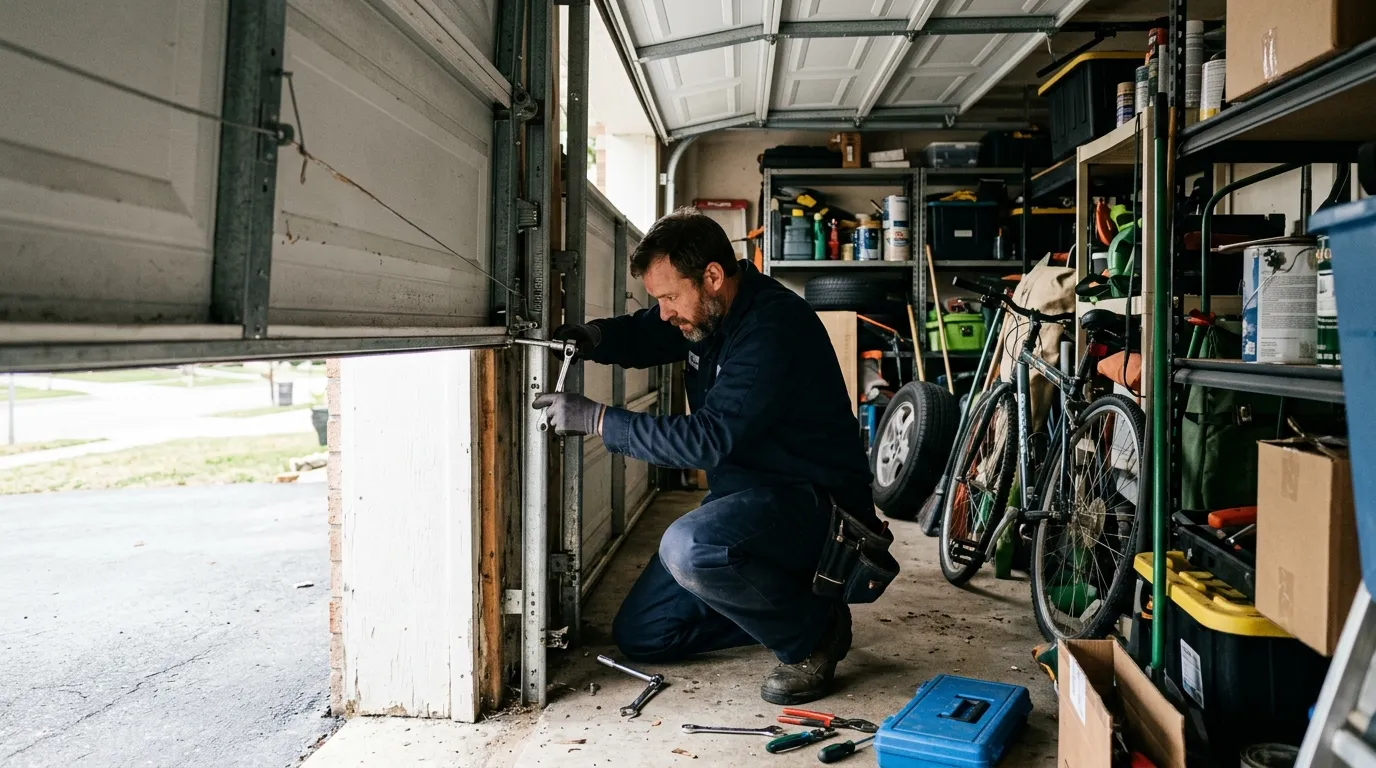
A torsion spring holds enough tension to break a wrist or worse, and that doesn't change because the door is old or new. What does change in a city like Cambridge, where a lot of the housing is original to the late 1940s, is that the spring and drum setup may not match anything you'll find instructions for online - those guides assume a modern double-spring torsion system, not a single older-style spring on a shaft this age. If you're not sure which type you're looking at, that uncertainty alone is the reason to leave it.
Lubricating hinges and rollers, sure, do that yourself. Touching the spring or the cable under it, don't.
What Can Go Wrong
On a door with hardware this old, a spring failure rarely arrives alone. When a spring this age finally lets go, the sudden slack often reveals a worn cable or a bent drum that was masking the real problem - the spring was carrying weight the door's other worn parts should have shared.
We also see brackets that have loosened over seventy-plus years of seasonal expansion and contraction, which in a cold-climate area like this means real freeze-thaw cycling every winter. Replacing just the spring on a door with those secondary issues gets you a door that fails again within a season, which is why we look at the whole assembly, not just the coil that broke.
How It Shows Up
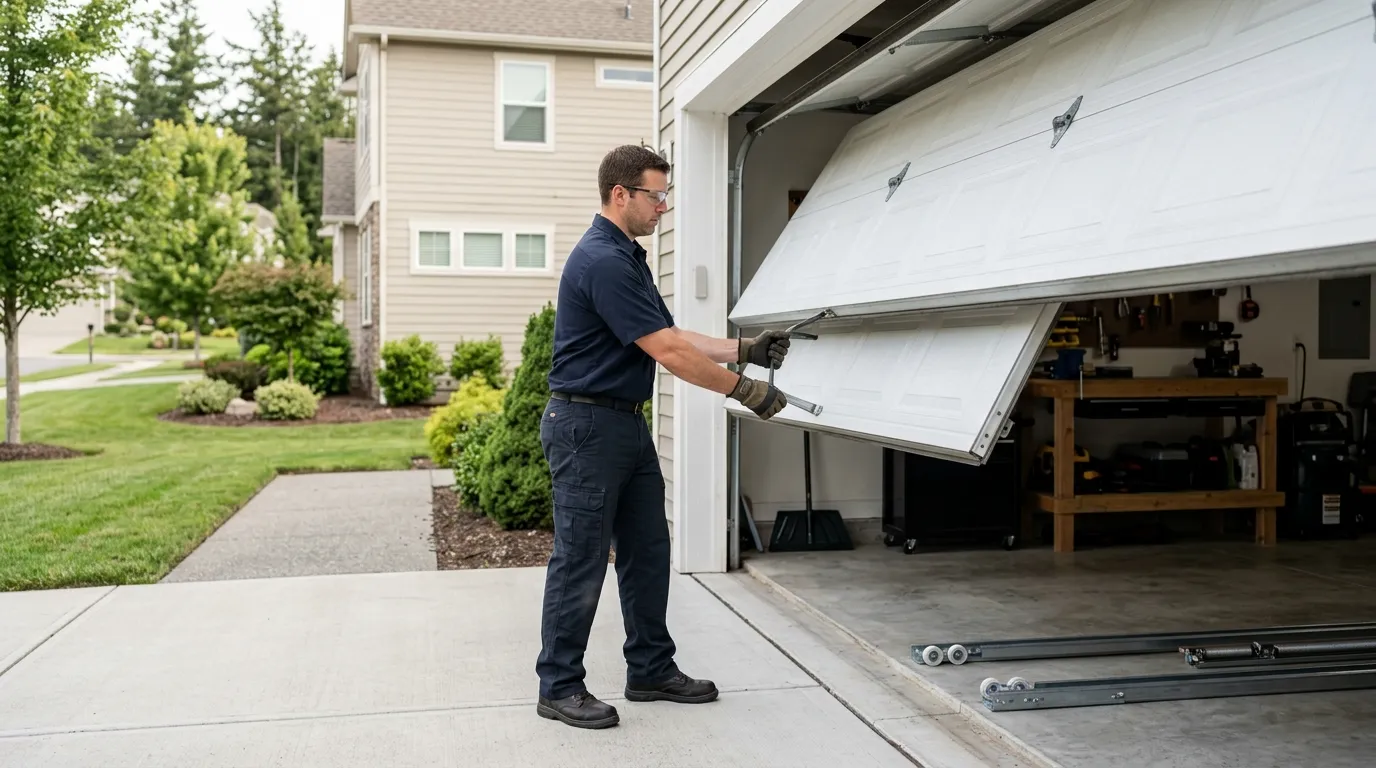
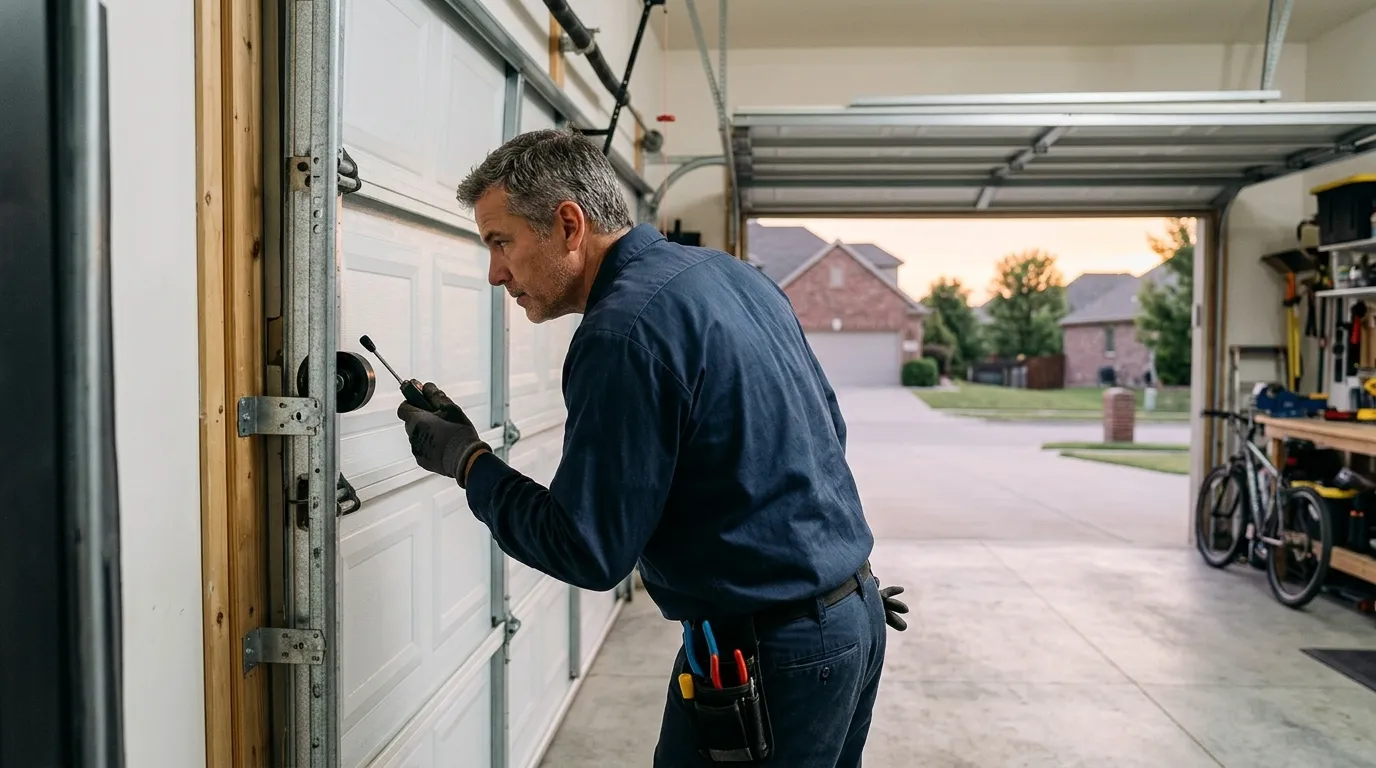
Most calls start the same way: the door won't lift, or it lifts a few inches and stalls, or the opener strains and clicks off. On older Cambridge doors specifically, we also see uneven lift - one side rising faster than the other - because a single aging spring is doing work two newer springs would split evenly.
Sometimes it's a loud bang from the garage, which is usually the spring itself snapping under tension rather than a slow leak of strength. If your opener suddenly seems weaker than it used to be but nothing looks visibly broken, that's often the earliest sign, before the spring fully goes.
What Causes It Around Here
Cambridge's median build year of 1948 puts a lot of its garage doors and their original hardware well past the working life anyone should expect from steel under constant tension. Add a cold-severe climate band with real winter freeze-thaw swings, and metal fatigue accelerates faster here than it would in a milder region - contraction in January, expansion in July, year after year, on hardware that was never built with a service life in mind.
Springs in this area also see more cycles than average simply because household density is high; more households means more doors opening and closing daily relative to newer, more spread-out suburbs. That combination - old hardware, harsh winters, heavy use - is the pattern we see over and over on Cambridge calls.
Talk to a Cambridge Technician First
Describe what the door is doing and get a straight answer on what it likely needs.
Other Garage Door Services in Cambridge
Recent Work in Cambridge
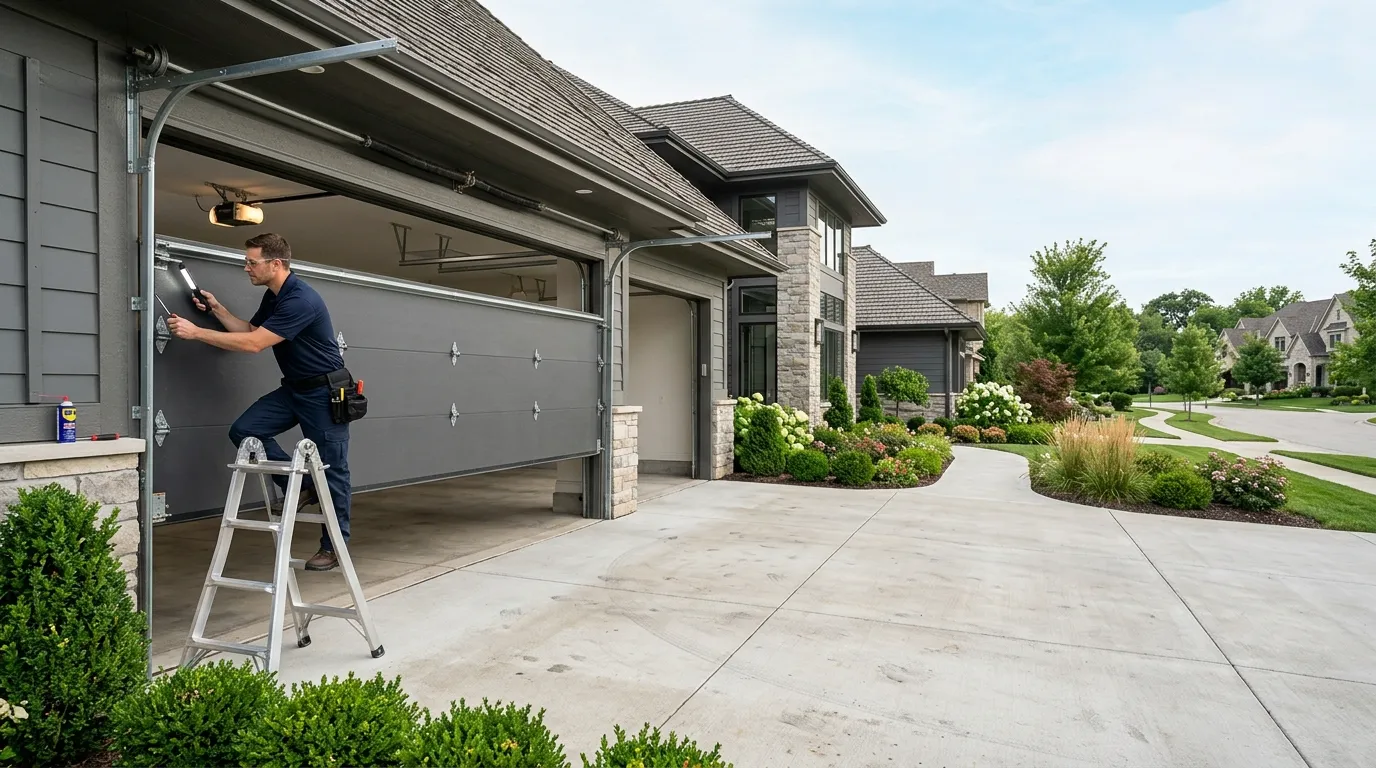
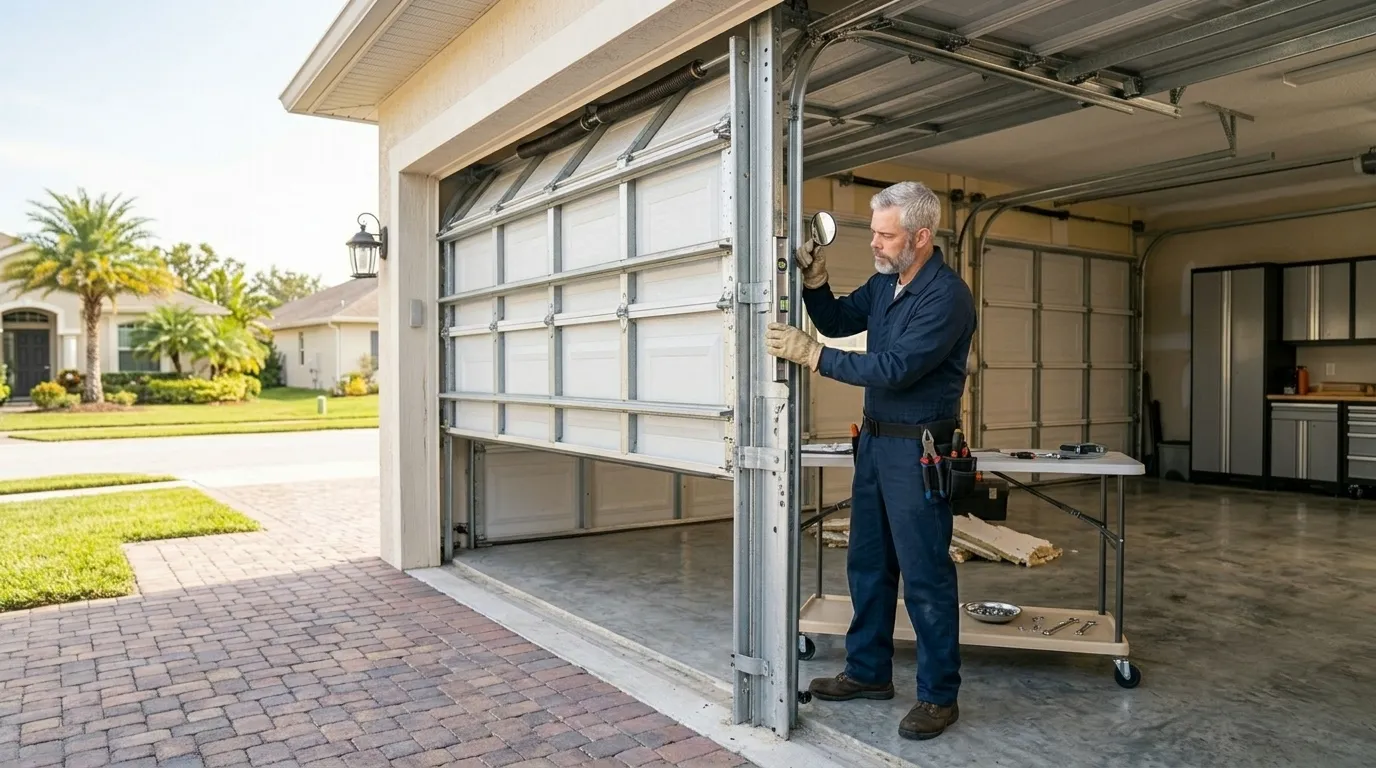
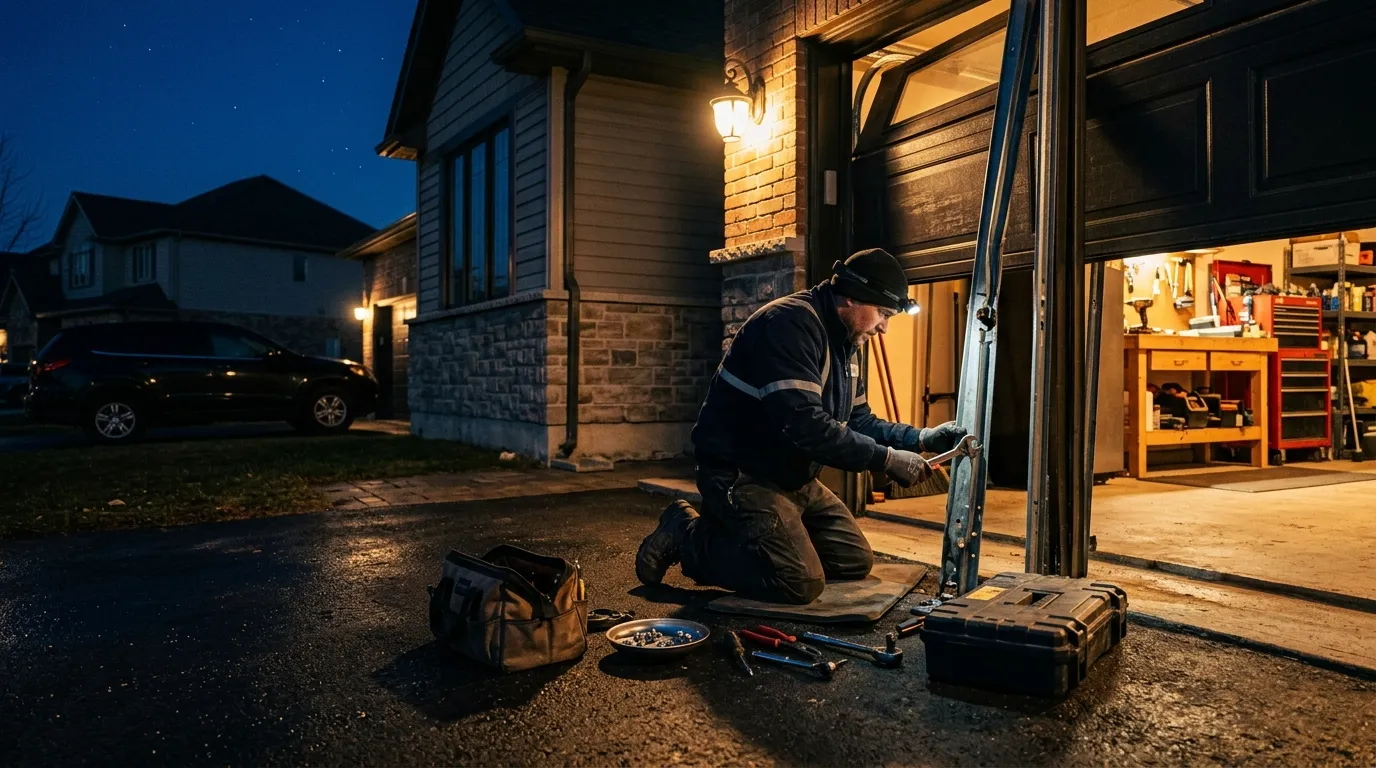
A look at jobs our crew has been on nearby.
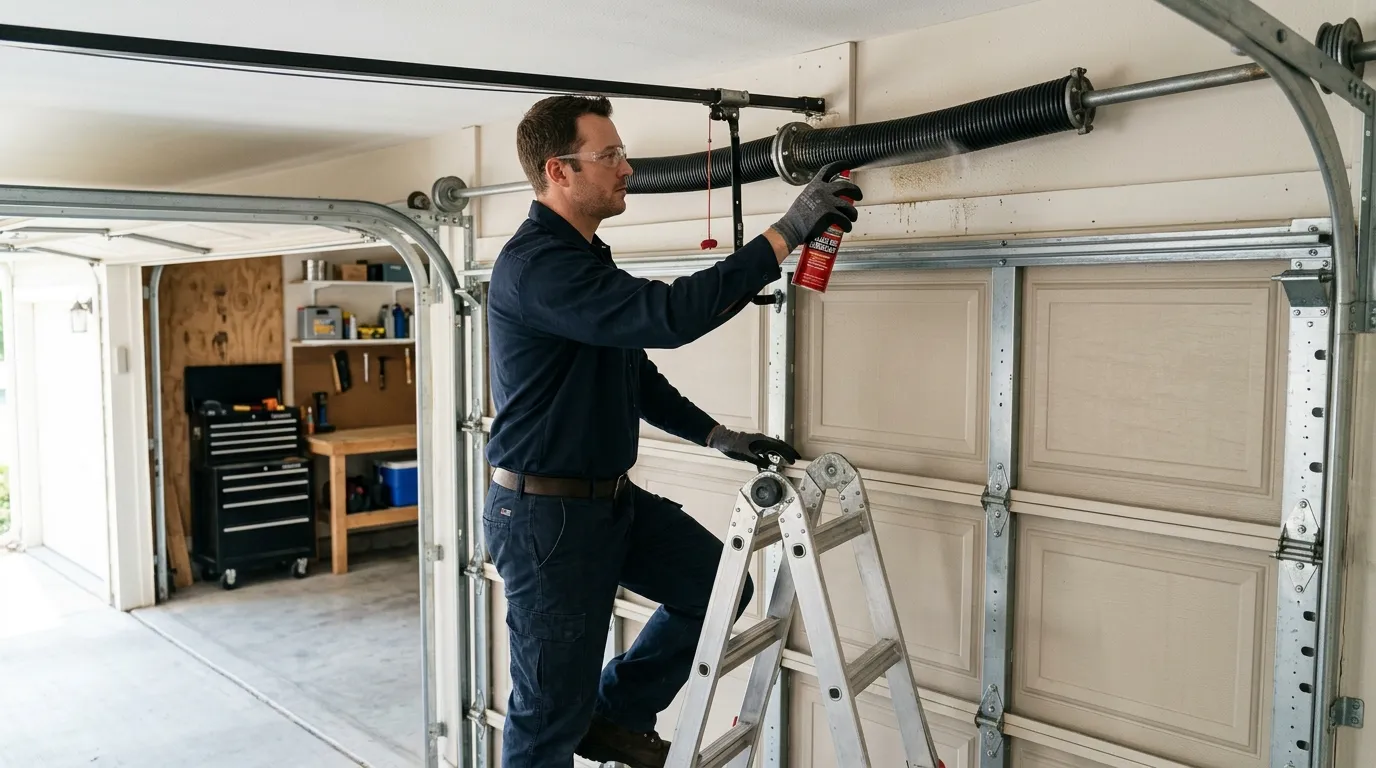
Why Cambridge Calls Us
Frequently Asked Questions
Why does the age of my Cambridge house matter for a spring repair?
Cambridge's median home dates to 1948, over a decade earlier than the broader area's median of 1960. Older doors often carry original single-spring torsion setups or extension springs on side tracks, not the double-torsion systems common in newer suburbs, so the replacement part and the approach differ.
Do you have a branch in Cambridge?
No. We work out of Boston, about six miles away, and travel to Cambridge for calls. There's no separate local yard or crew here - just the same truck and stock that serves the rest of the area.
Can I replace just the spring and skip the rest of the hardware?
Sometimes, but on a door this old we usually check the drums, cables, and brackets too. A spring that's failed on a seventy-plus-year-old assembly often took a worn part down with it, and replacing only the spring can mean a repeat call within months.
Why did my spring snap without warning?
Cold-climate freeze-thaw cycling puts real stress on aging steel, and Cambridge's older housing stock means a lot of springs have already outlived a normal service life. The break itself is usually sudden, but the fatigue behind it built up over many winters.
Need Spring Repair in Cambridge?
Call now for straight answers on cost and timing.