
Boston Garage Door Guide
What It Takes to Replace a Garage Door in Boston, MA
See what drives replacement garage door cost in Boston, MA: 1960s-era openings, cold-climate hardware, and when repair still beats replacing it for good.
- Licensed & Insured
- Same-Area Service Calls
- Upfront Pricing
The Cost of This Job
We're not going to quote you a number here, and that's on purpose. Housing across this service area went up mostly between 1938 and 1985, with the typical build year sitting around 1960, and that spread means garage openings vary more than they do in a subdivision built all at once.
A single-car opening cut for a 1960s ranch in one of the outer towns isn't the same width as a rowhouse bay in South Boston or a converted carriage entry in Dorchester. That variation drives cost more than the door panel itself does - custom framing, header work, and track clearance can all be in play before you even get to insulation or opener choice.
What we can tell you is what moves the number: the width and height of your existing opening, whether the jamb needs rebuilding, insulation rating (worth asking about given the climate here), and whether your opener and track hardware carry over or need replacing too. The honest limitation is that we won't give you a firm figure over the phone. On a house from this era, the only way to price it right is to measure the actual opening and look at what's behind the trim.
When to Get Help
Call before the door fails all the way, not after. A door that's heavy to lift by hand, drifts back down after you stop it partway, or makes a bang when it closes is telling you a spring or cable is close to done. On houses from the 1938-1985 stock that makes up most of this area, the other thing to watch is the jamb itself - original wood framing that's been through decades of Boston winters can be soft or shifted enough that a new door won't seat square against it, even if the door itself is fine.
Replacement usually makes more sense than another repair when the door is original to a house from that era and the track, springs, and panel are all showing wear at once - patching one part just means the next one goes within a season. If it's a single failed part on an otherwise sound door, repair is the right call and we'll say so. We don't push a replacement on a door that doesn't need one.
The Situation
This service area runs from close-in neighborhoods like South Boston a mile out and Charlestown four miles northwest, through Dorchester, Roxbury, and the Fenway - Kenmore area, out to towns eight to fourteen miles off like Melrose, Lexington, and Lynnfield. Across all 66 of those named areas, the housing is overwhelmingly 1960s and 70s construction, built on top of an older base that goes back to 1938. That combination means two very different garage situations show up on the same street: an attached garage poured with the house in the 60s, and an older single-bay structure retrofitted onto a house built decades earlier.
With 241,531 owner-occupied houses among 740,033 households in this area, most of the calls we get are from the owner making the decision directly, not a property manager. Median household income here runs $135,498, which is part of why insulated doors with heavier-duty hardware are a normal request rather than something nobody asks for. None of that changes the basic fact that the door has to fit the opening you actually have, and on housing this old, that opening is rarely a standard size.
What the Weather Here Does to It
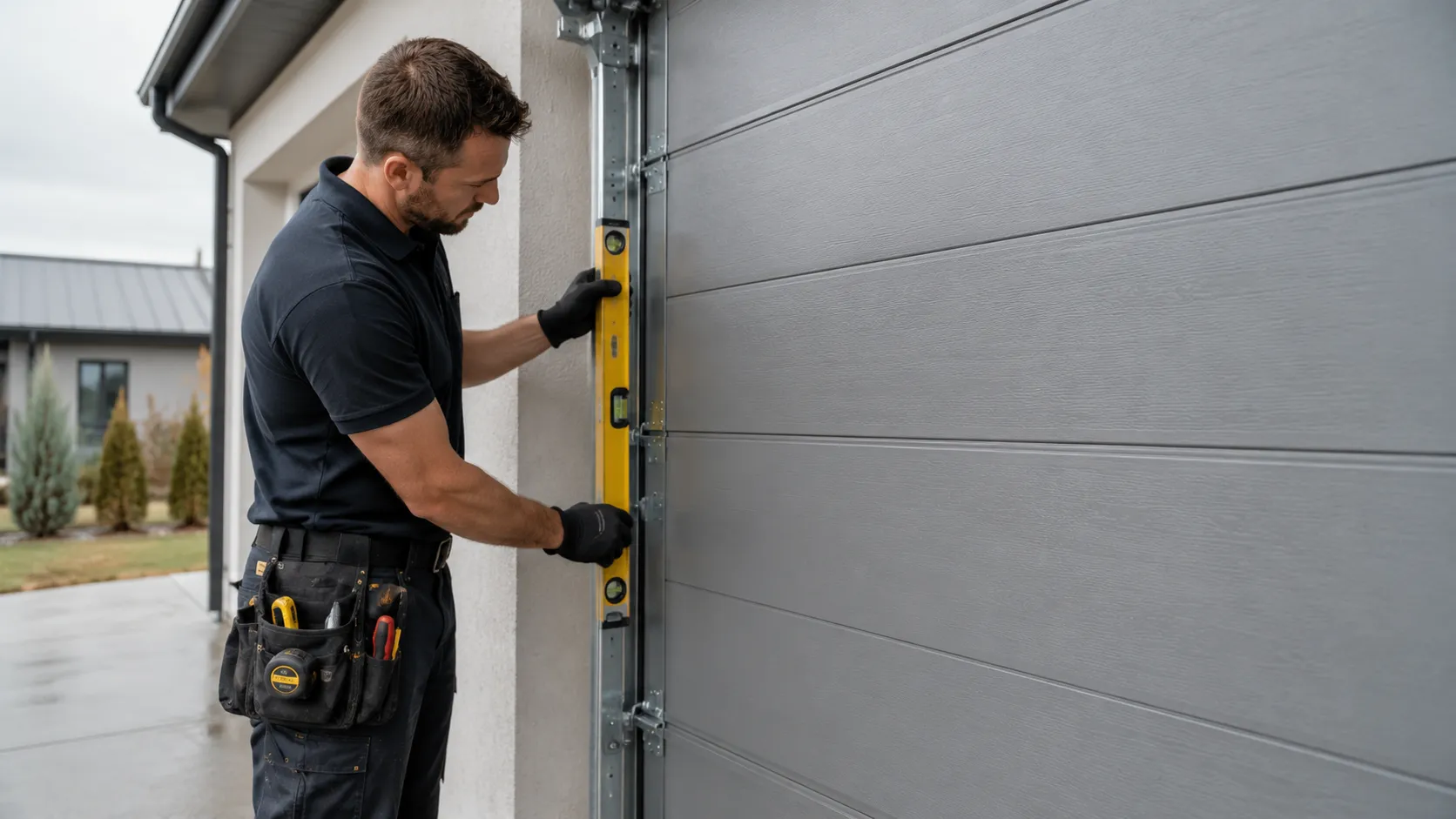
This area sits in a COLD-severe climate band, and that matters more to a garage door than most owners expect. Steel panels contract in the cold, which can be enough to make a door that fit fine in August start binding on its track by January. Torsion springs also lose some lift capacity as the temperature drops, so a door that felt normal to open in fall can suddenly feel heavy in the dead of winter - that's not the spring failing, that's the spring doing less work in the cold, right up until it does fail.
Condensation and ice on the track are the other issue. A door that sits closed through a cold snap can pick up a thin layer of ice at the bottom seal, which then tears the seal or throws off the roller alignment when the door opens. On the older housing stock in this area, original tracks and hardware from the 1960s and 70s weren't built with today's weatherstripping in mind, so a mismatch between an old track and a new insulated door is something we check for, not something we assume works.
How We Can Help
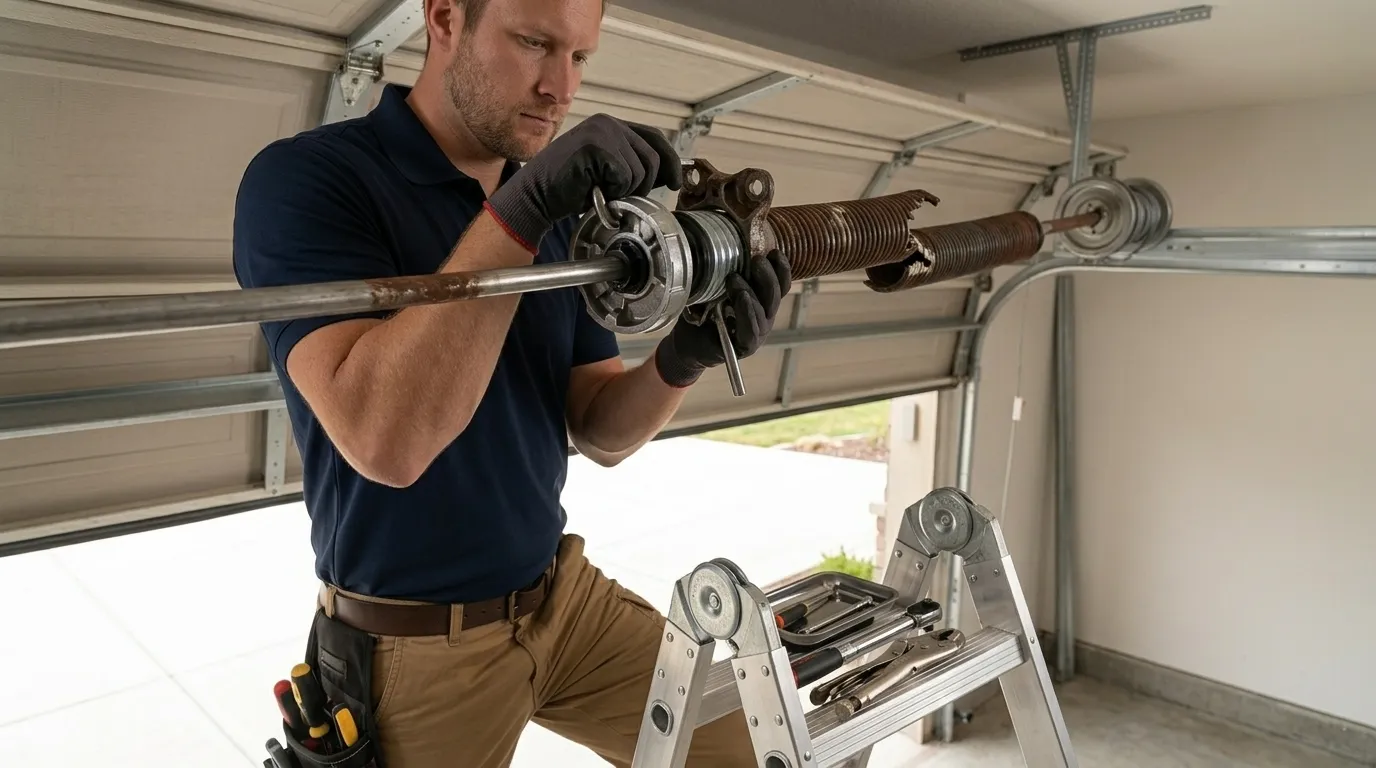
Garage Door Repair
Springs, cables, tracks, rollers, and openers fixed by a tech who explains the problem before touching anything.
Learn more →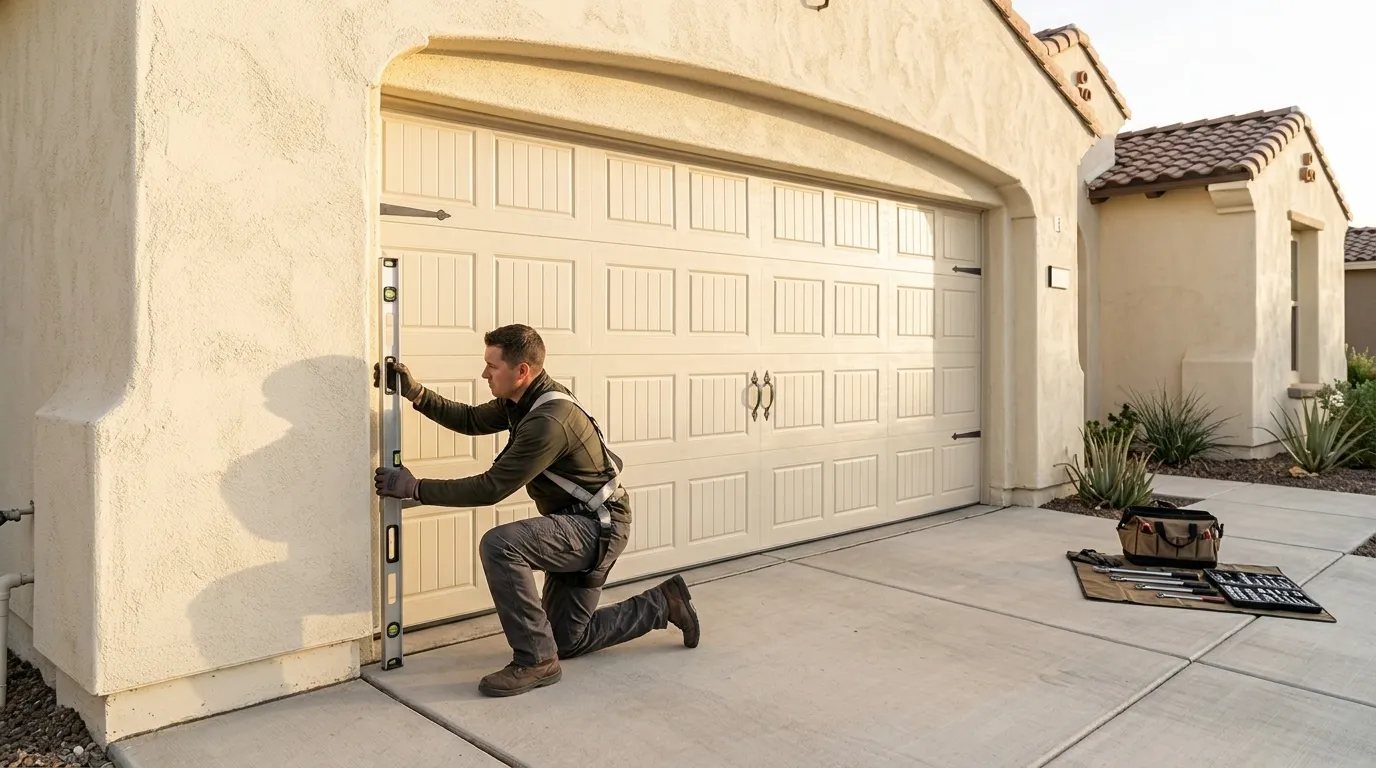
Garage Door Installation
New sectional doors sized and installed for the housing stock actually built in this area.
Learn more →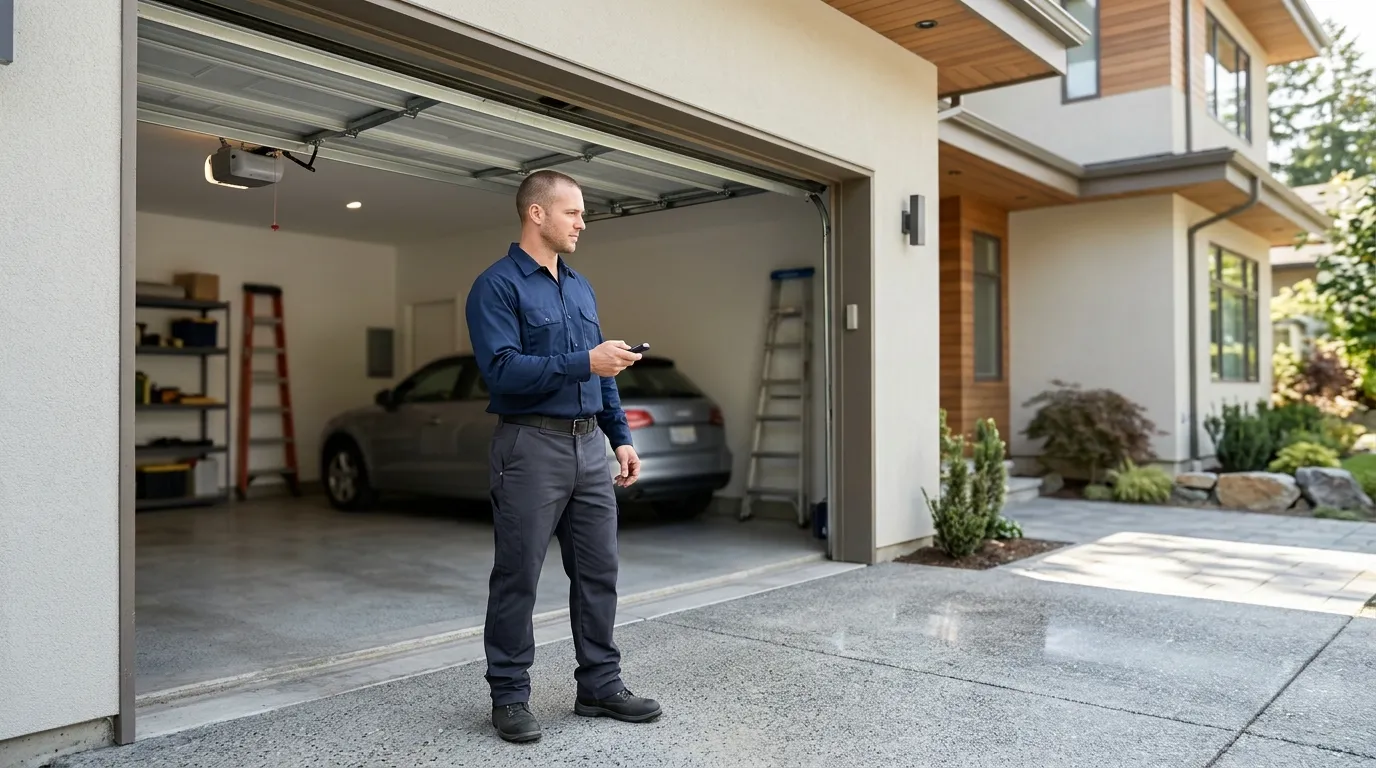
Garage Door Service
Tune-ups, lubrication, and safety checks that catch a small problem before it becomes a service call.
Learn more →Frequently Asked Questions
How do I know if my garage door needs replacing instead of repair?
If it's one part failing - a cable, a roller, a single spring - repair is usually the right call. If your door is original to a house from the 1938-1985 stock common in this area and several parts are wearing out at once, replacement tends to cost less over time than repeated fixes on an old frame.
Why won't you give me a price over the phone?
Housing here spans decades of construction with openings cut to different standards. On a house from this era we need to measure the actual opening and check the jamb before we can price the door accurately, so we don't quote sight unseen.
Does cold weather actually affect how a garage door works?
Yes. This area sits in a severe cold climate band, and steel panels contract in low temperatures, which can bind a door on its track. Torsion springs also lose some lift in the cold, so a door can feel heavier in January than it did in October without anything being broken yet.
Will a new door fit my old opening without extra framing work?
Not always. A lot of the housing in this area was built between 1938 and 1985, and openings from that period often don't match today's standard door sizes. We check the frame before ordering so you're not stuck with a door that doesn't seat square.
Have a Door That Needs a Second Opinion?
Call and describe what it is doing - we will tell you what it likely is.