
Boston Garage Door Guide
Garage Doors on Boston's Pre-1980s Housing Stock
Boston Garage Door Pros repairs doors on Boston homes built 1938-1985, where severe cold exposes doors built before insulation rules were common today.
- Licensed & Insured
- Same-Area Service Calls
- Upfront Pricing
The Cost of This Job
Most of the houses we get called to in Boston went up between 1938 and 1985, with the median build year landing around 1960. That's the number that drives cost more than anything else.
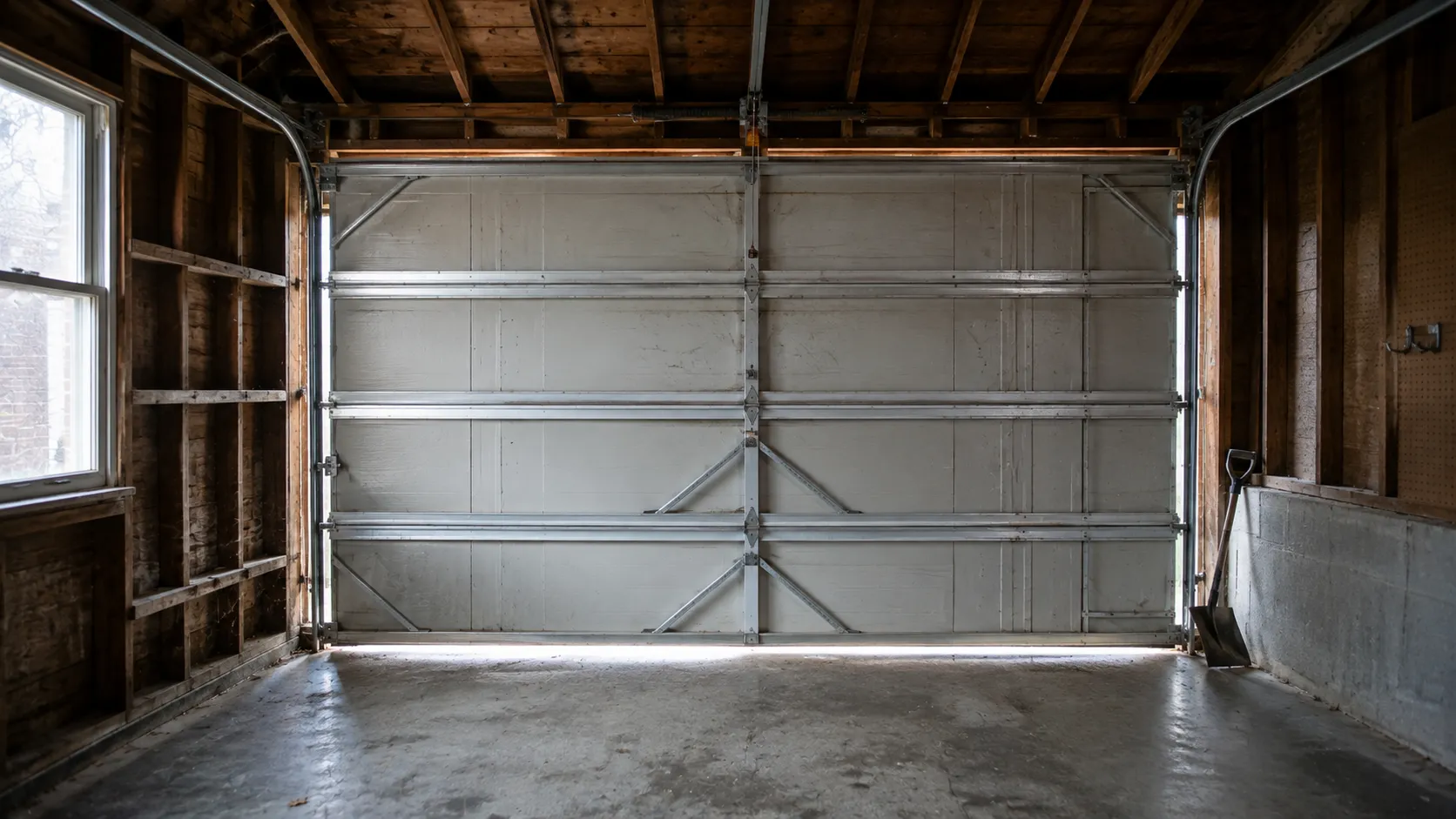
A door from that era is rarely a standard modern size, so a straight swap-in replacement panel often isn't on the shelf - someone has to order it, and that adds time before it adds a dollar figure. Torsion hardware installed in a 1960 build was sized for the door that shipped with the house, not for whatever's available now, so a spring replacement on an original setup sometimes means replacing the whole shaft, not just the springs.
We won't quote you a number here, because we haven't seen your door, and two houses on the same block built the same year can have completely different hardware depending on what got swapped out in the decades since. That's the honest limit of what we can tell you without a look. What we can say is that jobs on original 1960s-70s stock - which covers most of what's out there across Boston's neighborhoods - tend to run longer than a same-day parts-store fix, simply because the parts aren't a same-day item.
When to Get Help
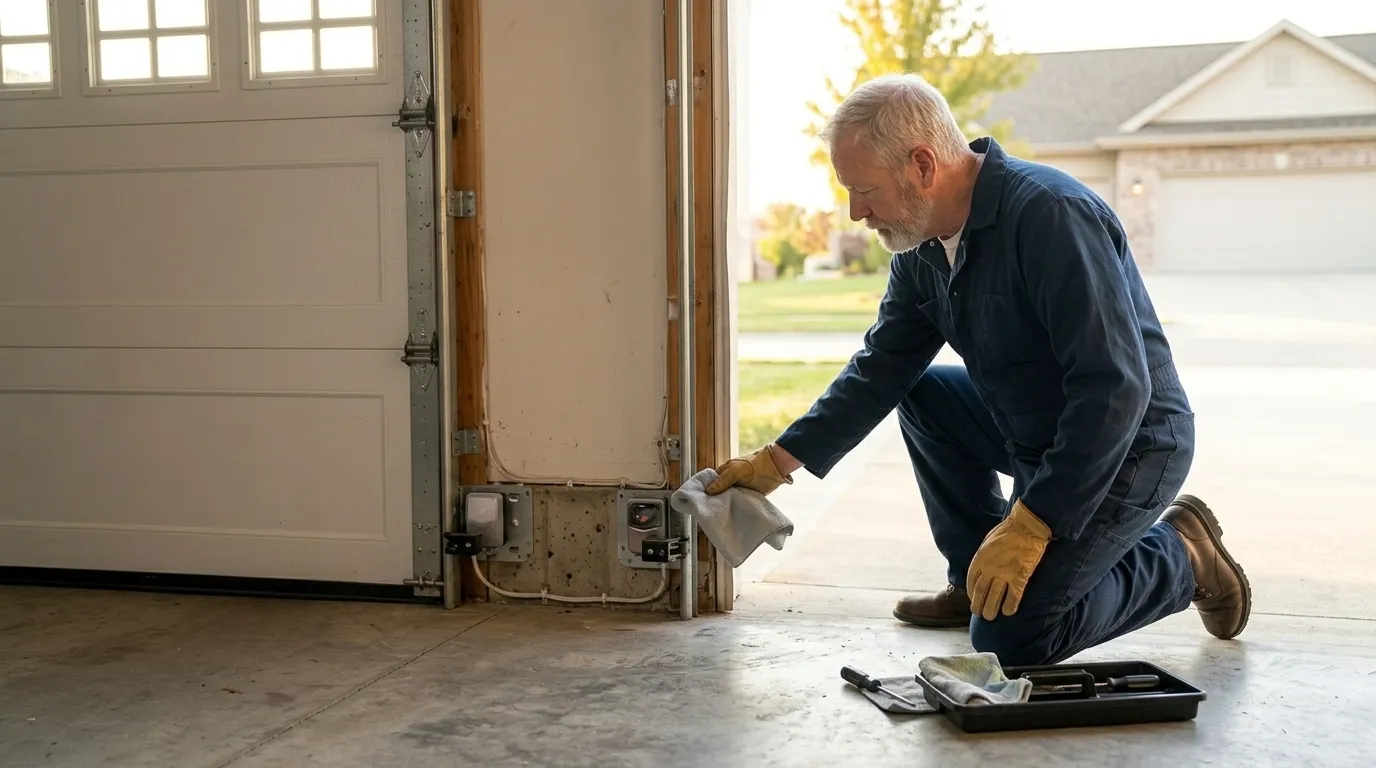
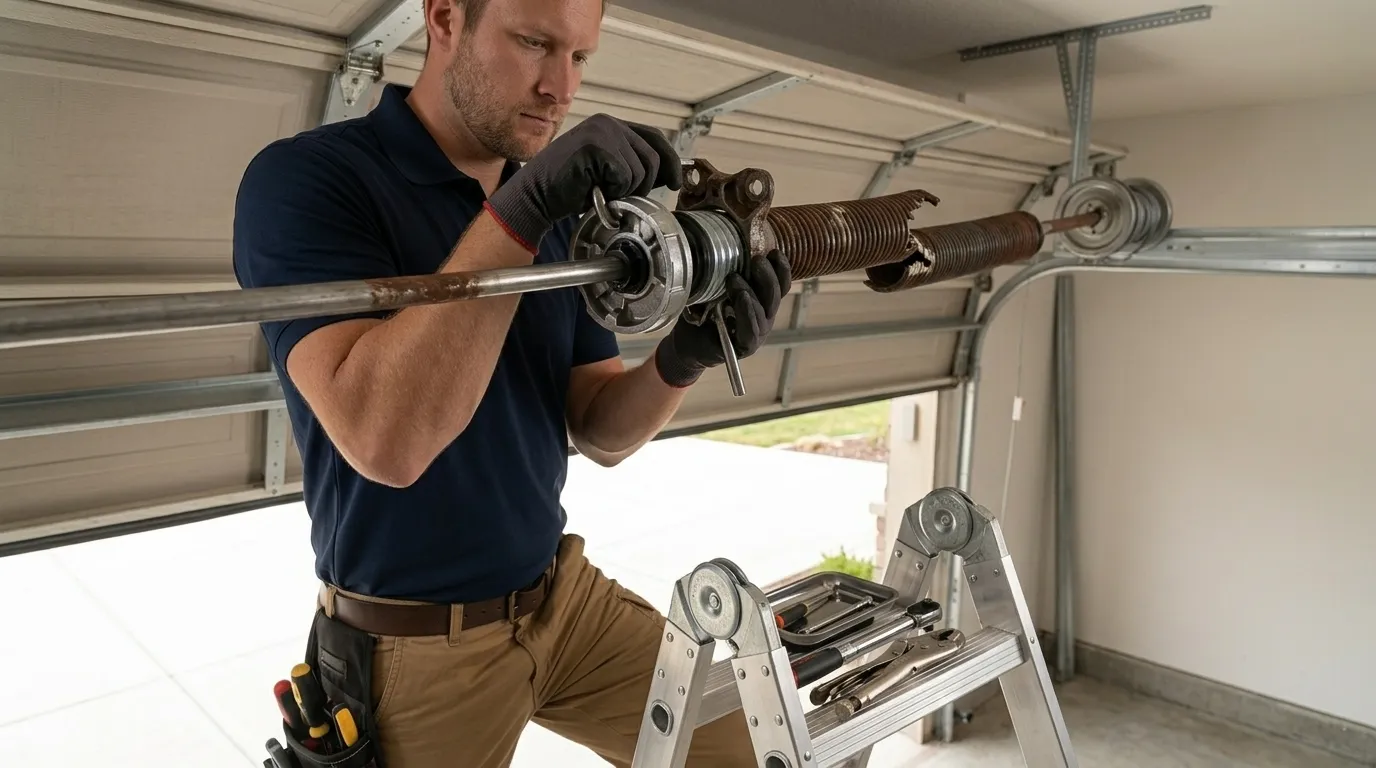
A torsion spring on an original 1960s installation doesn't fail gently. It goes on a cold morning, usually the first hard cold snap of the season, because steel contracts and a spring that was already fatigued from thirty-plus winters finally lets go. If your door won't lift, or lifts a few inches and drops, don't keep hitting the opener button - that's the opener motor trying to do a spring's job and it will burn out trying.
If the door came with the house - meaning nobody's told you it's been replaced - and the house dates to that 1938-1985 build window that covers most of the area, treat any sudden stiffness or grinding as a hardware-age issue, not a lubrication issue. WD-40 won't fix a track built for a door frame that's shifted slightly over sixty-plus years of Boston winters. Call before the spring fully lets go, not after - a controlled service call on a weakening spring costs less trouble than an emergency call after it snaps with the door halfway up.
The Situation
Boston's housing stock is old by national standards - F1 puts the median build year at 1960, with most homes going up between 1938 and 1985, and that pattern holds across the roughly 66 named neighborhoods and nearby communities we cover, from the dense rowhouse blocks near Downtown and the South End out to Dorchester, Roxbury, and East Boston. Original garage construction from that period, where it exists at all, is almost always a single-car bay with hardware nobody's touched since installation.
Across the wider service area there are about 241,531 owner-occupied houses among 740,033 households, and a median household income of $135,498 - which tells us that when a door fails here, most owners are in a position to fix it right rather than patch it. We don't see a lot of brand-new garage construction in this market; what we see is decades-old hardware on well-kept houses, which is a different job than what you'd find in a newer suburb built after 1990.
What the Weather Here Does to It
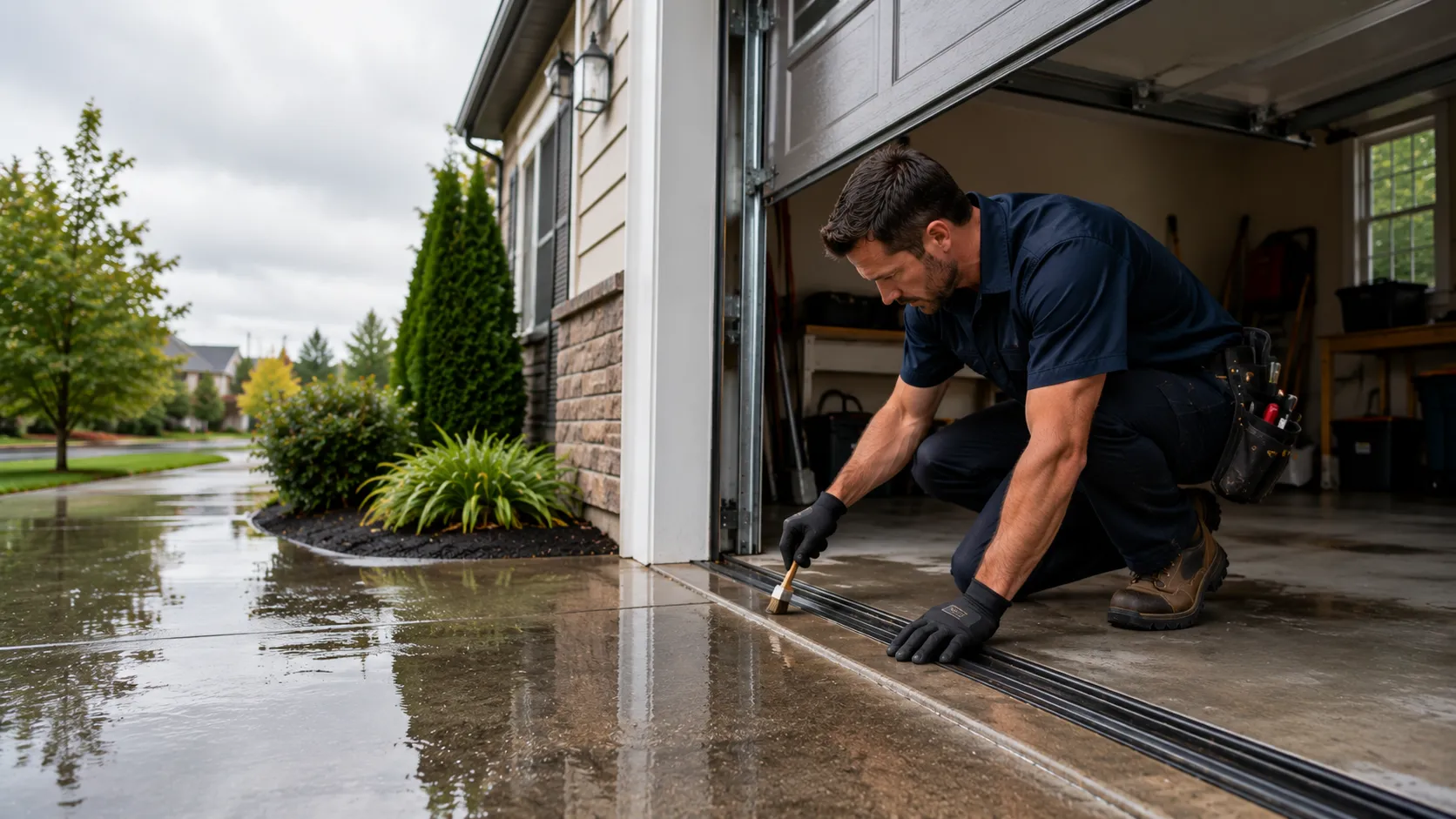
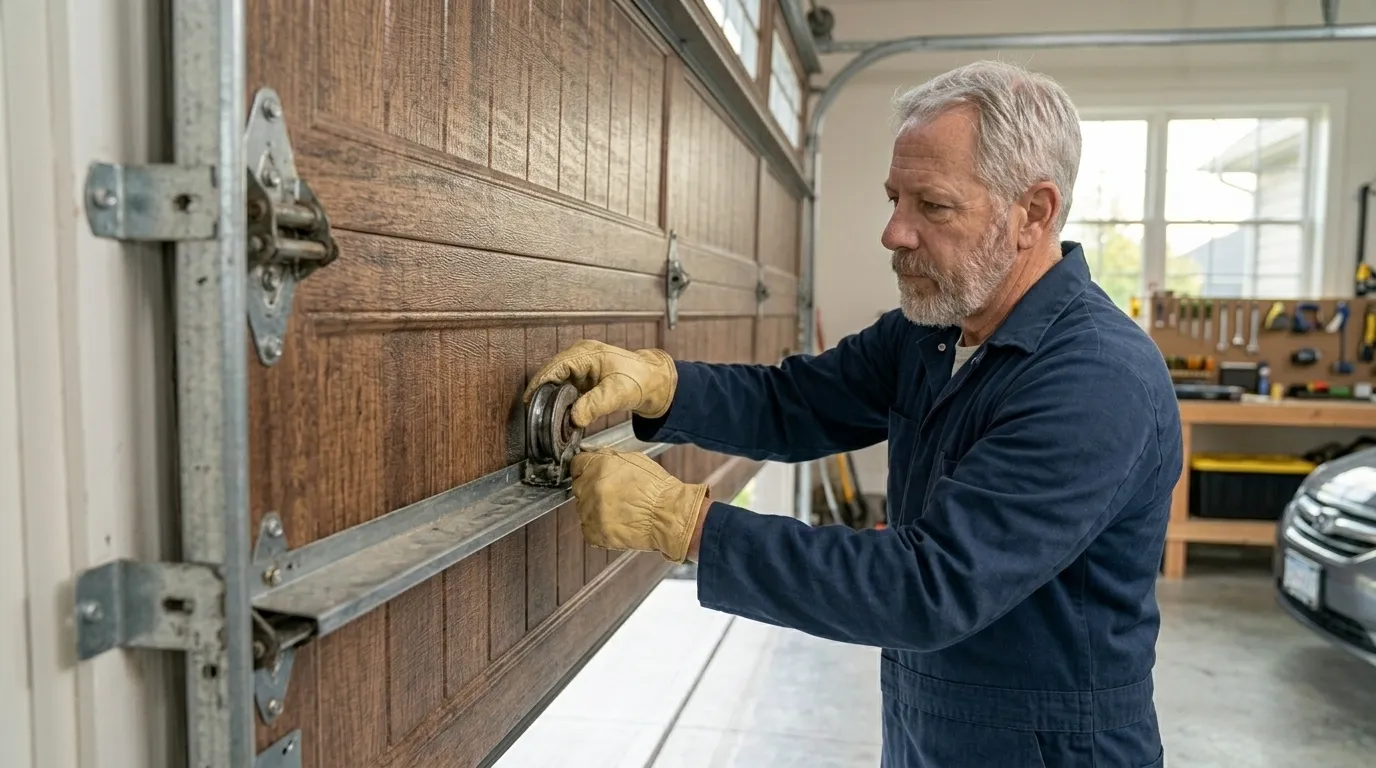
Boston sits in a severe cold climate band, and that's not a small detail for a garage door - steel contracts in the cold, and a torsion spring that's been cycling for fifty-plus years on a 1960-era door has less give left in it exactly when the temperature drop asks the most of it. Cold also stiffens track lubricant and shrinks weatherstripping, so a door that seals fine in October can have a visible gap by January.
On houses from that 1938-1985 window, insulation wasn't part of the original garage door spec - doors on houses built before insulation rules were common were single-layer steel or wood, with no thermal break. That means the door itself does almost nothing to hold heat in an attached garage, and in severe cold that shows up as condensation on the inside face of the door and, over years, rust at the bottom panel and hinges. We can add weatherstripping and, on some doors, panel insulation kits, but we can't retrofit a thermal break into an original single-layer steel panel - at some point replacement makes more sense than patching an old door for one more winter.
How We Can Help
Garage Door Repair
Springs, cables, tracks, rollers, and openers fixed by a tech who explains the problem before touching anything.
Learn more →
Garage Door Installation
New sectional doors sized and installed for the housing stock actually built in this area.
Learn more →
Garage Door Service
Tune-ups, lubrication, and safety checks that catch a small problem before it becomes a service call.
Learn more →Frequently Asked Questions
Why doesn't my garage door seal well in winter?
If your house dates to the common 1938-1985 build window here, the original door was likely single-layer steel or wood with no insulation, since that wasn't standard on doors built before insulation rules existed. In a severe cold climate that means the door does little to block heat loss, and you'll see gaps and condensation once temperatures drop hard.
Can you give me a price over the phone?
Not honestly, no. Houses from Boston's 1960s-era housing stock often have non-standard hardware from replacements over the decades, so two similar-looking doors can need very different parts. We'd rather look at the actual spring, track, and panel before naming a number than guess and be wrong.
How do I know if my spring is original to the house?
If nobody's mentioned a door replacement and the house was built in that 1938-1985 window most of the area falls into, the hardware is likely original or close to it. Original torsion setups from that era were sized for the door that shipped with the house, which is often why replacement parts don't fit off the shelf.
Is it worth repairing an old door or replacing it?
Depends on the door. A single-layer steel panel from the 1960s with no thermal break, rusting at the bottom from years of condensation in severe cold, usually isn't worth patching again. A door with solid panels but a failed spring or worn rollers is a straightforward repair. We'll tell you which one you have rather than default to a full replacement.
Have a Door That Needs a Second Opinion?
Call and describe what it is doing - we will tell you what it likely is.