
Service
Garage Door Service Built for Boston's Older Housing Stock
Serving Boston's 1938-1985 housing stock, from Southie to East Boston, with repairs built for cold-band winters and original torsion hardware.
- Licensed & Insured
- Same-Area Service Calls
- Upfront Pricing
The DIY Question
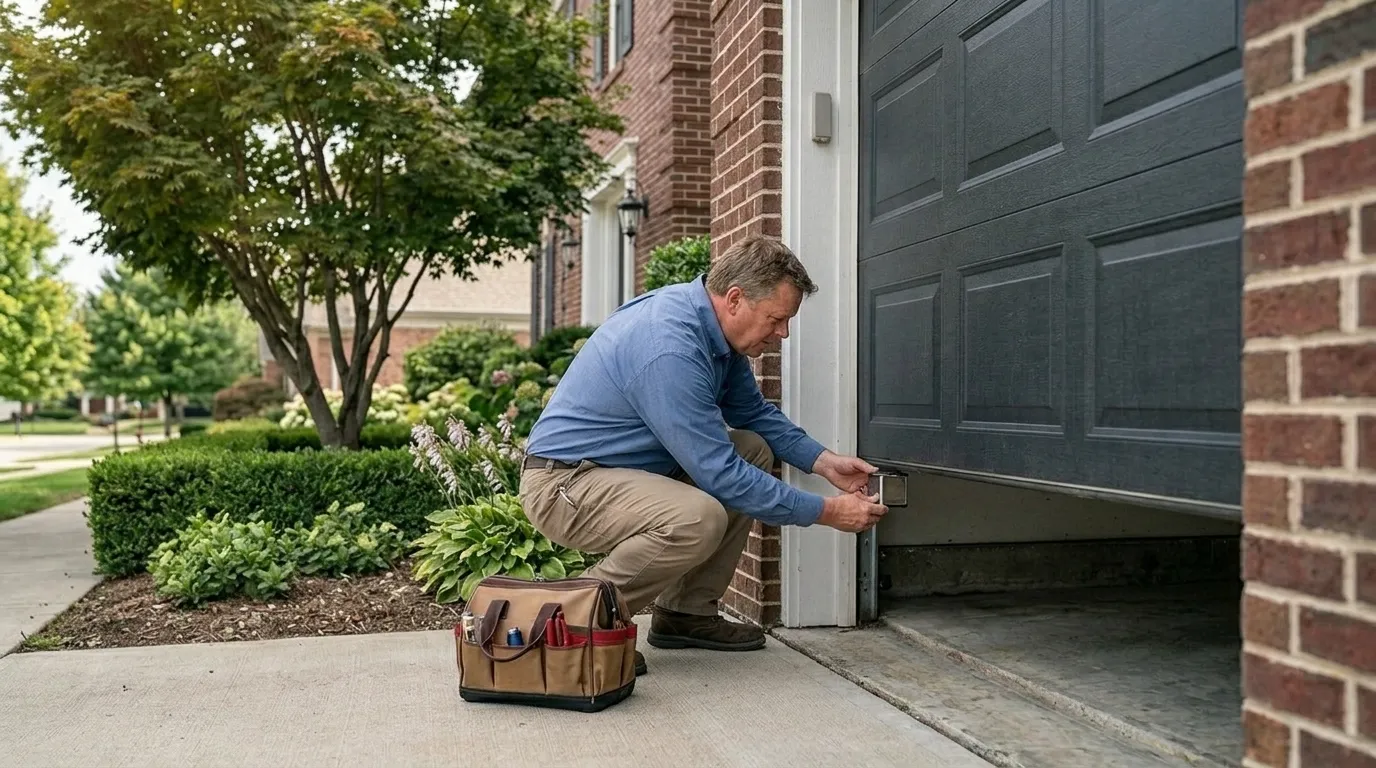
A lot of Boston homeowners want to know if this is a job they can handle with a Saturday and a socket set. Some of it is. Lubricating rollers, tightening loose bolts on the track, replacing weatherstripping around the bottom panel - that's reasonable DIY work on any door.
Where it stops being a good idea is the spring. Most of the housing in this service area went up between 1938 and 1985, with a lot of it clustered in the 1960s and 70s, which means a large share of doors are still running on the torsion or extension hardware that came with the house or was swapped in during a mid-century remodel.
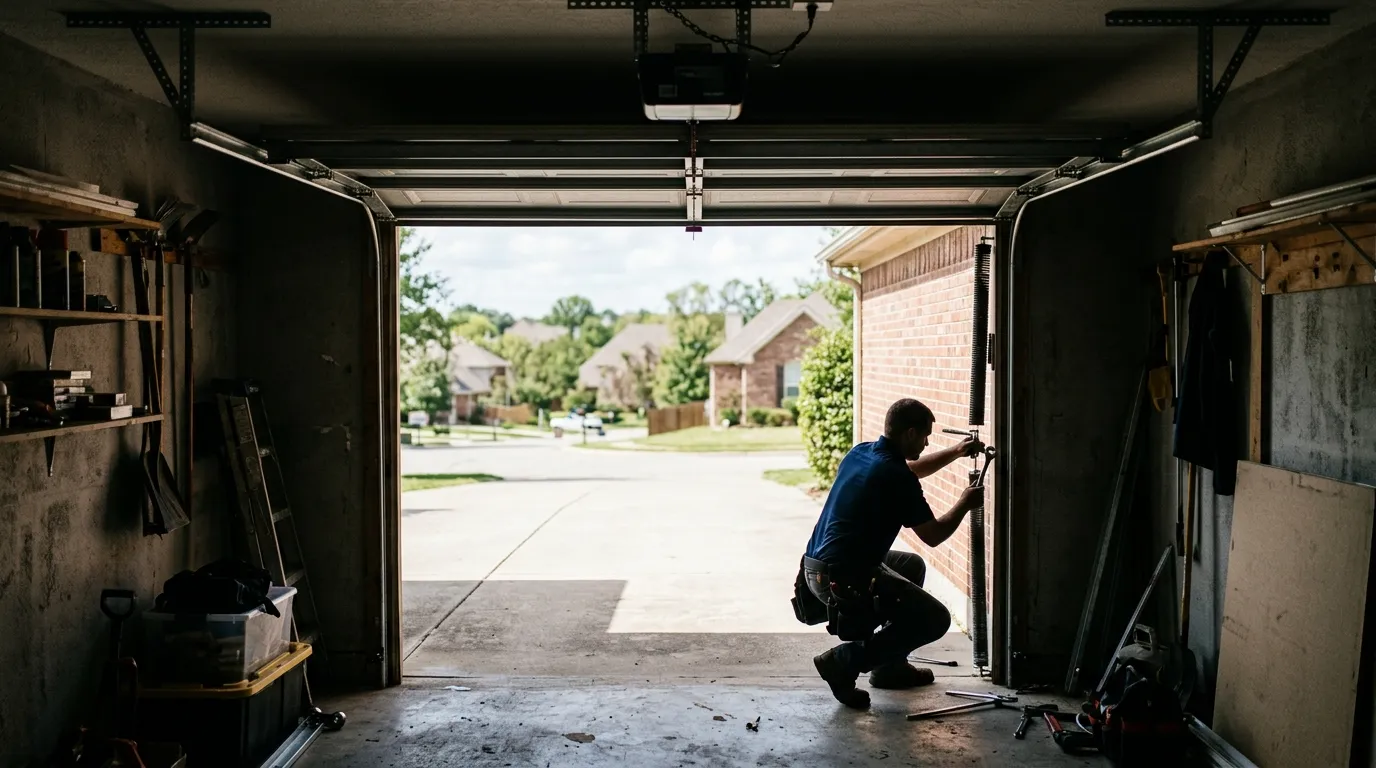
That hardware holds a huge amount of stored tension, and the winding bars needed to service it aren't something most people own or have used before. We've seen enough hand injuries from garage-owned spring jobs to say plainly: leave the spring, the cable, and anything attached to the torsion tube to someone who does it daily.
One honest limitation here - if your opener is a model we don't stock parts for, we may need a day or two to source the board or the logic circuit rather than fix it on the first visit. We'll tell you that up front instead of guessing at a same-day fix that doesn't happen.We're at /.
The Cost of This Job
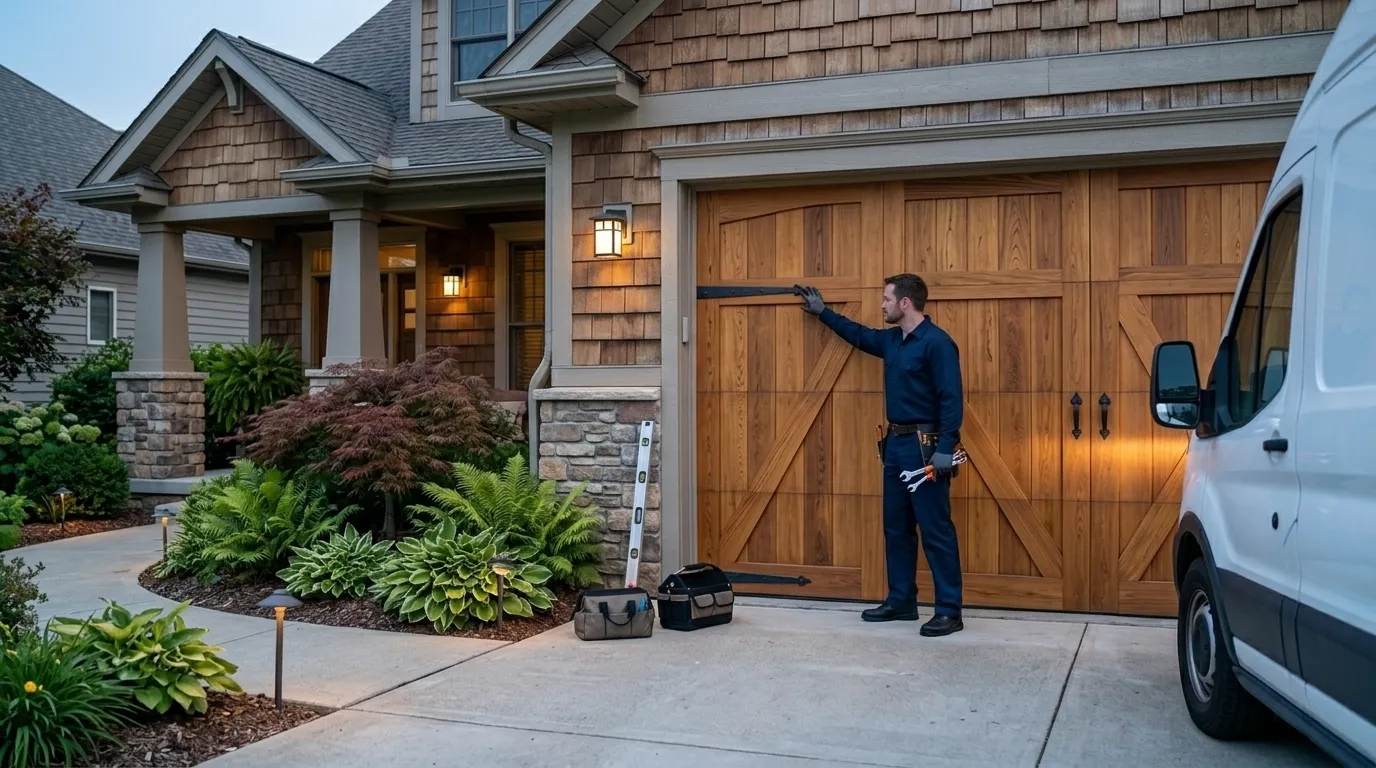
We don't publish flat prices here because the range on a garage door call is wide - a bent roller job is not the same call as a full torsion spring replacement on a double-wide door, and Boston's older housing throws both at us regularly. What we can tell you is what drives the number: the age and size of the door, whether the track is original 1960s-era steel or a newer aluminum retrofit, and whether the opener needs a part we carry on the truck or one we have to order.
Across the households we work in - the service area covers roughly 740,000 households and about 241,500 owner-occupied houses, with median household income near $135,000 - we see a mix of quick fixes and full hardware swaps in the same week, sometimes on the same street. A rowhouse garage in South Boston with a single narrow door is a different job than a two-car detached garage in Milton or Canton, and we price accordingly rather than guessing off a phone call.
Give us the make, the symptom, and roughly how old the door is, and we can usually narrow the range before a truck ever rolls.
How It Shows Up
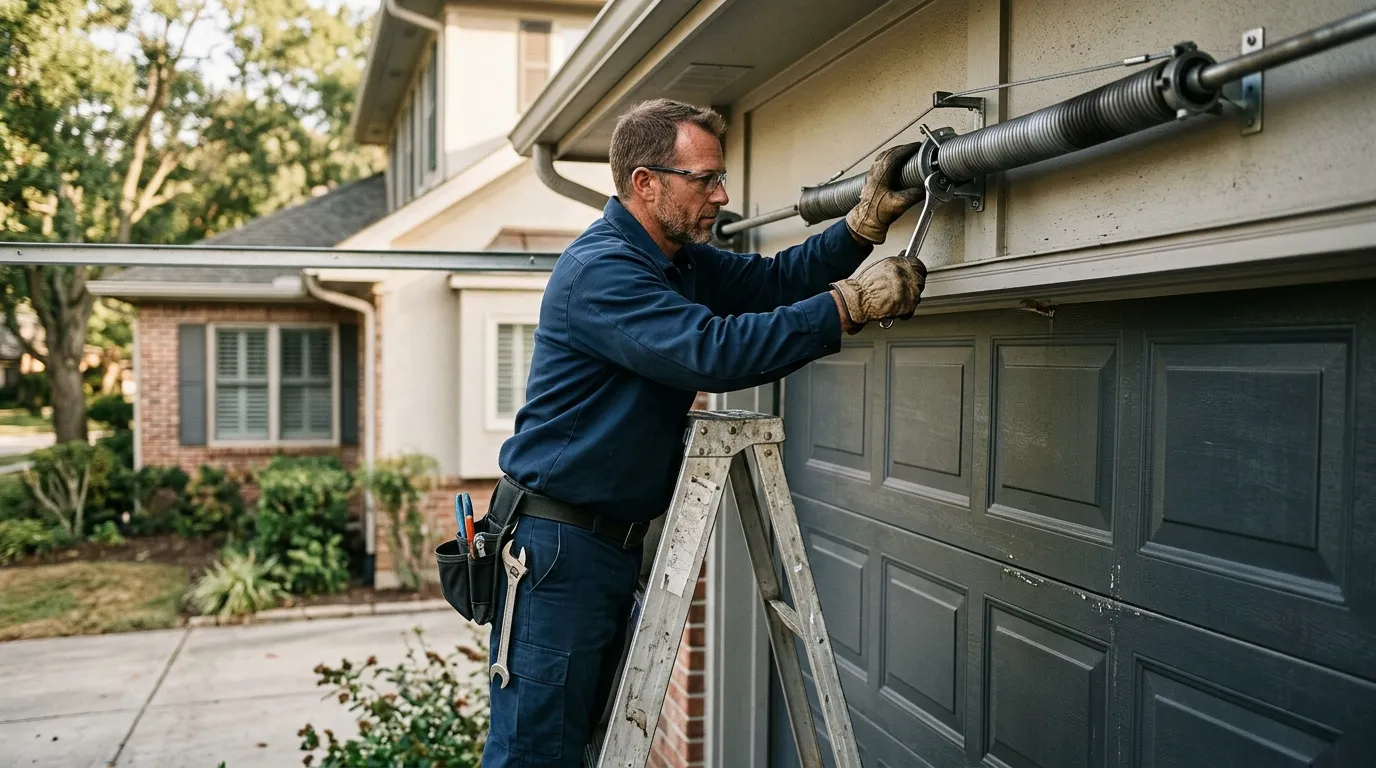
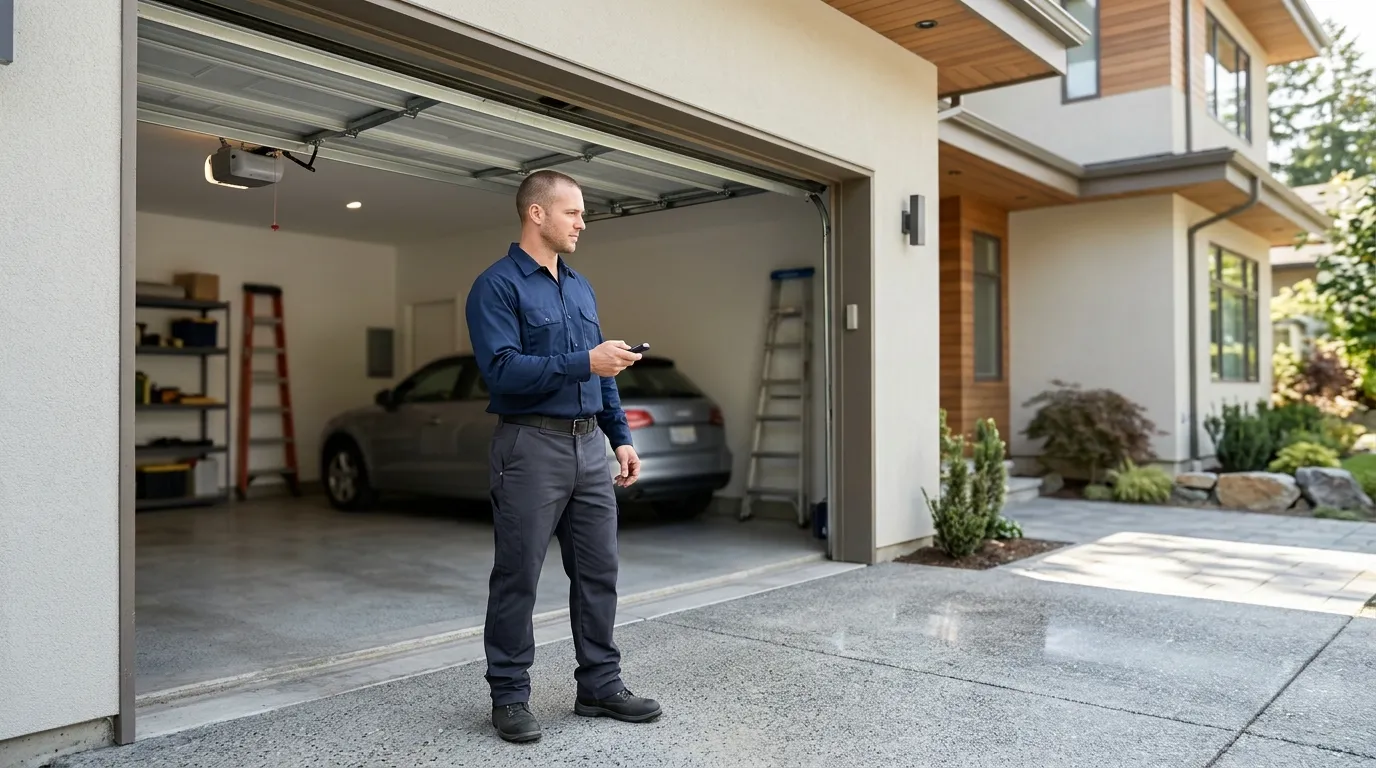
In a COLD-severe climate band like this one, the failure pattern is pretty consistent from one winter to the next. Torsion springs lose temper faster in cold swings, so a door that opened fine in October starts groaning, then hanging halfway, then not moving at all by January. Extension springs on older doors tend to sag and stretch rather than snap cleanly, which shows up as a door that closes crooked or drops the last foot instead of settling evenly.
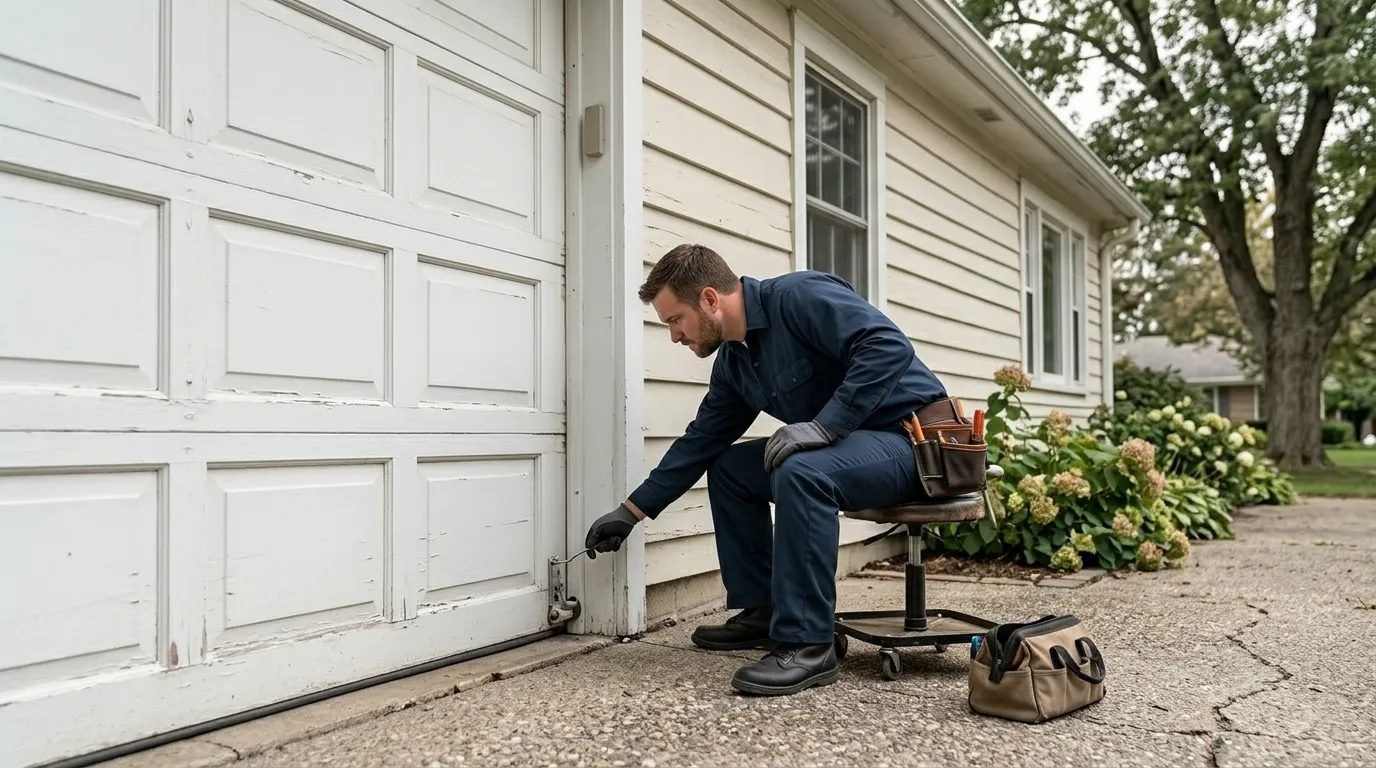
On houses built before the 1960s, we also see cables fraying where they wrap the drum - decades of expansion and contraction on original hardware does that. Panels on doors from that same era, especially wood or early steel, warp at the bottom where snowmelt and runoff sit against the panel edge through a Boston winter.
If your door is loud on the way up, sticks at the same spot every time, or the opener runs but the door doesn't move, that's usually the spring or the cable, not the opener itself - a distinction that matters because one is a $20 part and the other is not.
What Causes It Around Here
Two things converge in this service area and both trace back to facts about the housing itself, not bad luck. First, the age of the stock: with median construction around 1960 and a broad range from 1938 to 1985, a huge share of doors and their hardware are original or close to it, installed under building and wind-load codes from decades ago rather than current ones. That hardware wasn't built with today's spring cycle-life ratings in mind.
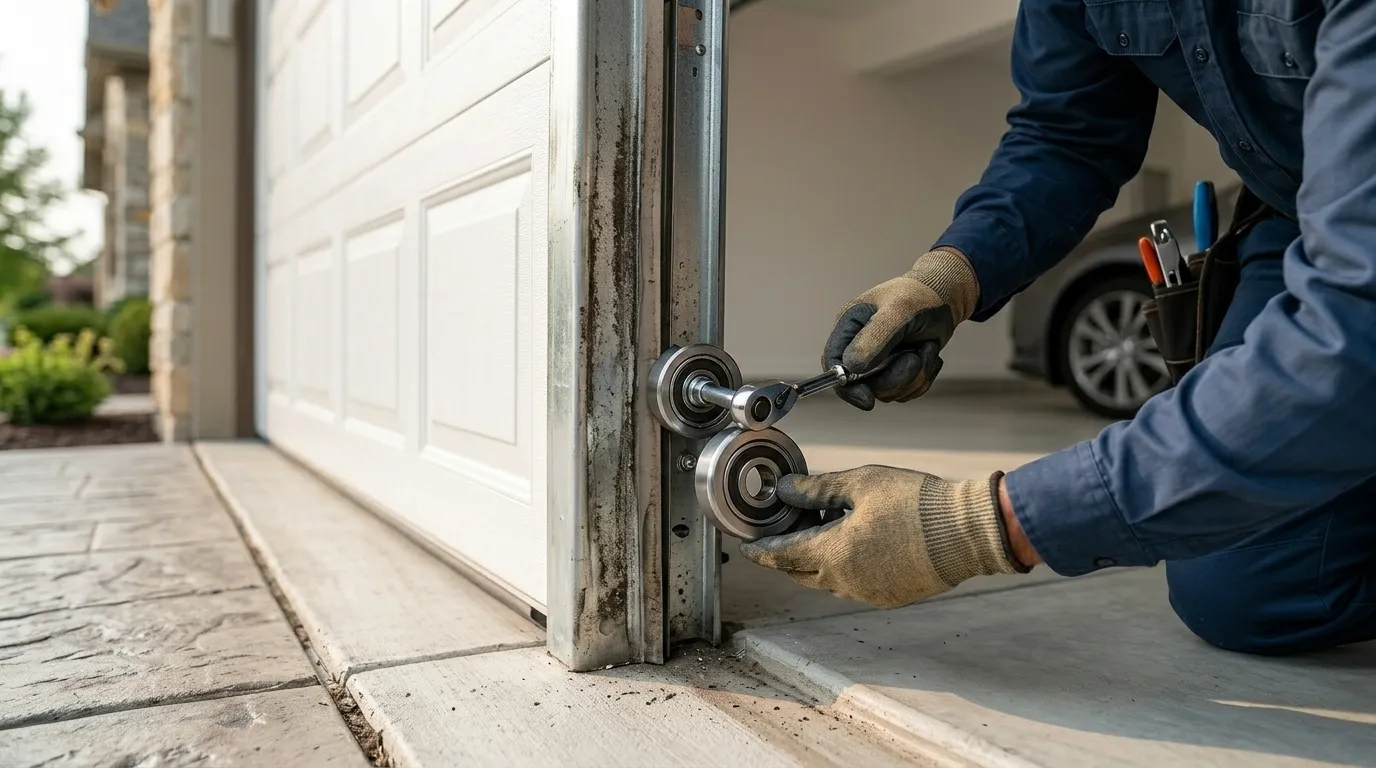
Second, the climate band itself. A COLD severe rating means real freeze-thaw cycling every winter, and that cycling is hard on galvanized spring coating, on cable strands, and on the grease inside older ball-bearing rollers. Doors in neighborhoods close to the water - East Boston, South Boston, Jeffries Point - see it compounded by salt air, which speeds corrosion on any exposed steel hardware faster than it would inland in Belmont or Lexington.
Put those two together and you get the pattern we actually see on service calls: hardware that's old enough to be tired, in a climate that's hard on metal, on a door that was never rated for either condition in the first place.
Why Boston Calls Us
What Happens When You Call
Call or Request a Quote
Tell us what the door is doing and roughly how old the house is - that alone points us toward the likely part before a truck leaves.
On-Site Diagnosis
A tech checks the spring, cables, tracks, and opener in person and tells you plainly what is actually wrong.
Straight Price, No Surprises
You get a number before any work starts. It covers parts and labor, nothing added after the fact.
Fixed the Same Visit
Most repairs are done in one trip. If a part needs sourcing, we tell you that upfront instead of guessing.
Talk to a Technician Before You Book
Describe what the door is doing and get a straight answer on what it likely needs.
Jobs Like Yours
Recent work from this service line.
Other Ways We Can Help
Frequently Asked Questions
Why does my garage door only act up in the winter?
Cold makes torsion springs lose tension faster and makes any grease inside rollers and bearings stiffen up. On a house with original hardware from the 1960s or 70s, that stiffness is often the tipping point between a door that's slow and a door that won't open at all until it warms up or gets serviced.
Is it worth repairing an original door from a 1960s house or should I replace it?
It depends on the panel condition more than the age. If the track and spring system are sound but worn, we can often service just the hardware. If the panels are warped or the door was never insulated for a cold-severe climate, replacement usually costs less over time than repeated repair calls.
Do you work on doors in East Boston and other neighborhoods near the water?
Yes, that's within our service area. Salt air near the harbor speeds up corrosion on exposed steel hardware, so we see more frequent spring and cable wear on doors in those spots compared to ones further inland.
How fast can you get to a stuck or broken door?
We don't quote a universal response time here since it depends on your location and what's on the truck that day. If a part needs to be ordered for an older or discontinued opener model, that adds time beyond the initial visit.
Need Garage Door Service Built for Boston's Older Housing Stock?
Call now for straight answers on cost and timing.