
Boston Garage Door Guide
Why Your Garage Door Jumps the Track
Boston homes built mostly 1960s-70s meet a cold, severe winter climate. Here's why that mix knocks garage doors off track and what a repair actually involves.
- Licensed & Insured
- Same-Area Service Calls
- Upfront Pricing
The Cost of This Job
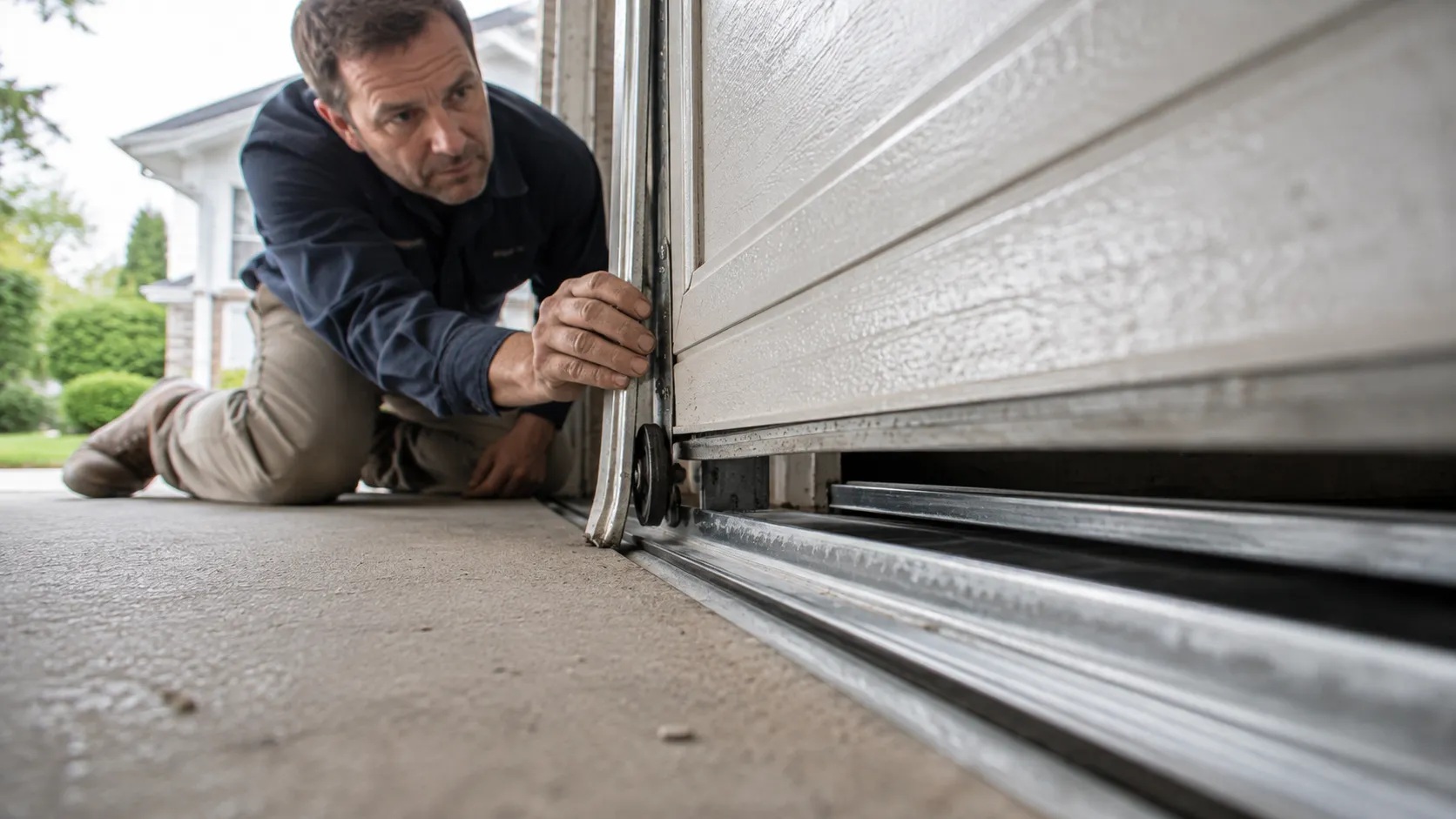
We're not going to hand you a number here, because a door off its track can mean three different jobs depending on what's actually wrong: a bent roller you can swap in twenty minutes, a track bracket pulled loose from the framing, or a bent track section that needs to come off the wall entirely. Bracket work on the older housing stock common across this service area - a lot of it built between 1938 and 1985, median around 1960 - often means dealing with original lag screws and wood framing that's shifted over sixty-plus years, which adds time a newer house wouldn't need.
We won't quote a price sight unseen, and if someone does, be skeptical. What we can tell you is that a track and roller repair is almost always cheaper than a door replacement, and most off-track calls don't need a new door at all - they need the track reset, squared, and re-anchored. If the door itself is bent or the panels are racked from being forced through a bad track, that changes the math, and we'll tell you straight if replacement makes more sense than another repair.
When to Get Help
Stop using the door the moment you notice it running crooked, or hear a grinding or popping sound as it travels. A door that's visibly leaning to one side in the opening, or that has a gap between the roller and the track you can see with the door partway up, is already off track or about to be. Don't keep hitting the opener button hoping it clears itself - that's how a track bracket gets torn all the way out of the wall instead of just loosened.
If the door came off the track because a cable snapped or a spring let go, leave it alone entirely. Those are under load and not a DIY fix. If it's just riding rough but hasn't jumped the track yet, that's the point to call, before a small alignment problem turns into a bent track or a cracked panel from being forced through a section it doesn't fit anymore.
The Situation
A lot of what we see on service calls across this area traces back to the housing stock itself. With most homes here built between 1938 and 1985 and a median build year around 1960, a large share of garages - across the 66 neighborhoods and towns we cover, from South Boston out to Winchester and Lynnfield - still have original or first-generation replacement track hardware.
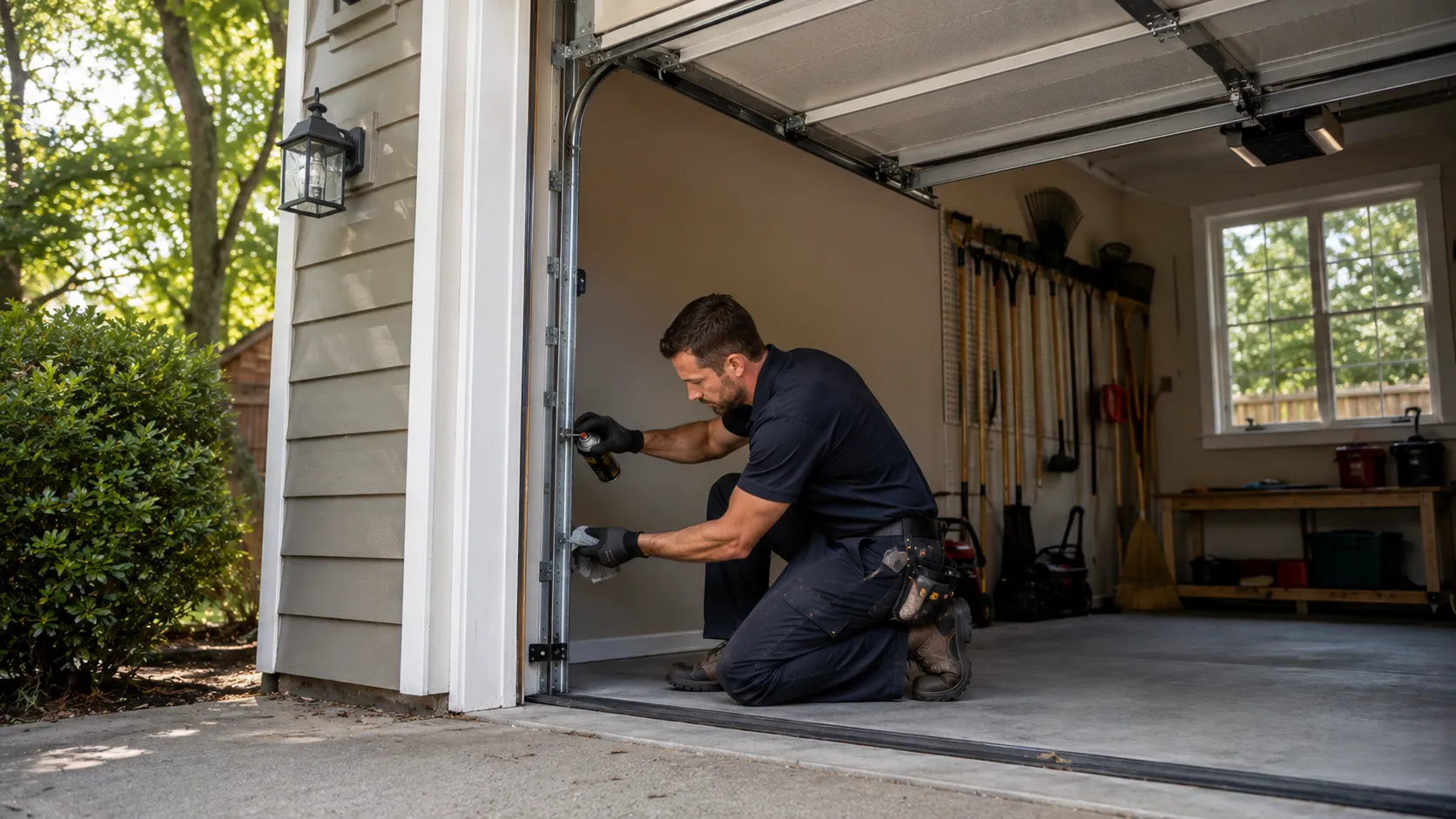
That hardware was sized for the doors and openers of its era, and decades of small settling in the slab or framing is enough to pull a bracket a quarter-inch out of square. A quarter-inch at the bracket is a couple of inches at the top of the track, and that's when a roller starts riding the edge instead of the channel.
We also see it on garages that got a new lightweight door installed on old track without anyone checking whether the track was still plumb. The door's fine, the opener's fine, but the track inherited whatever drift the house had already done. It's not a flashy diagnosis, but it's the one that holds up when we're standing in front of the actual bracket.
What the Weather Here Does to It
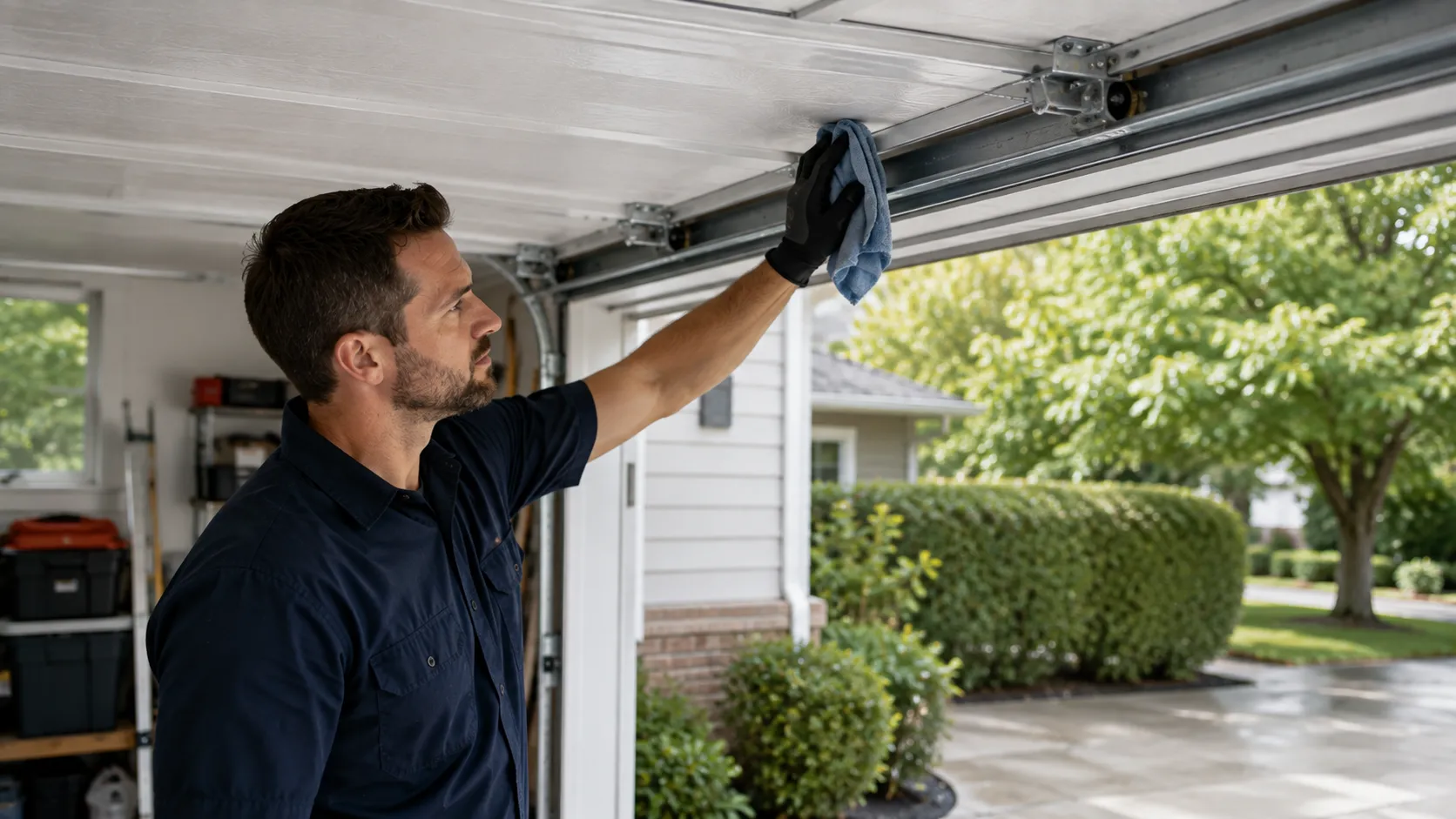
This is a cold-climate area with severe winter conditions, and that's not a minor detail for a track system - it's the other half of why doors go off track here more than they would somewhere milder. Steel track expands and contracts with temperature swings, and the brackets holding it to the framing don't move at exactly the same rate as the track itself. Over enough winters, that mismatch works the mounting screws loose, a little at a time, until one cold morning the door catches on a bracket that used to be flush.
Snow and ice melt off a warm garage ceiling and refreeze at the base of the track overnight, and a door run through even a thin layer of ice at the bottom roller can shove the whole track assembly outward. We see more off-track calls in the weeks after a hard freeze-thaw stretch than at almost any other time of year. If your door has been sluggish or slightly crooked all winter, the cold isn't going to fix that - it just finds the weak bracket for you.
How We Can Help
Garage Door Repair
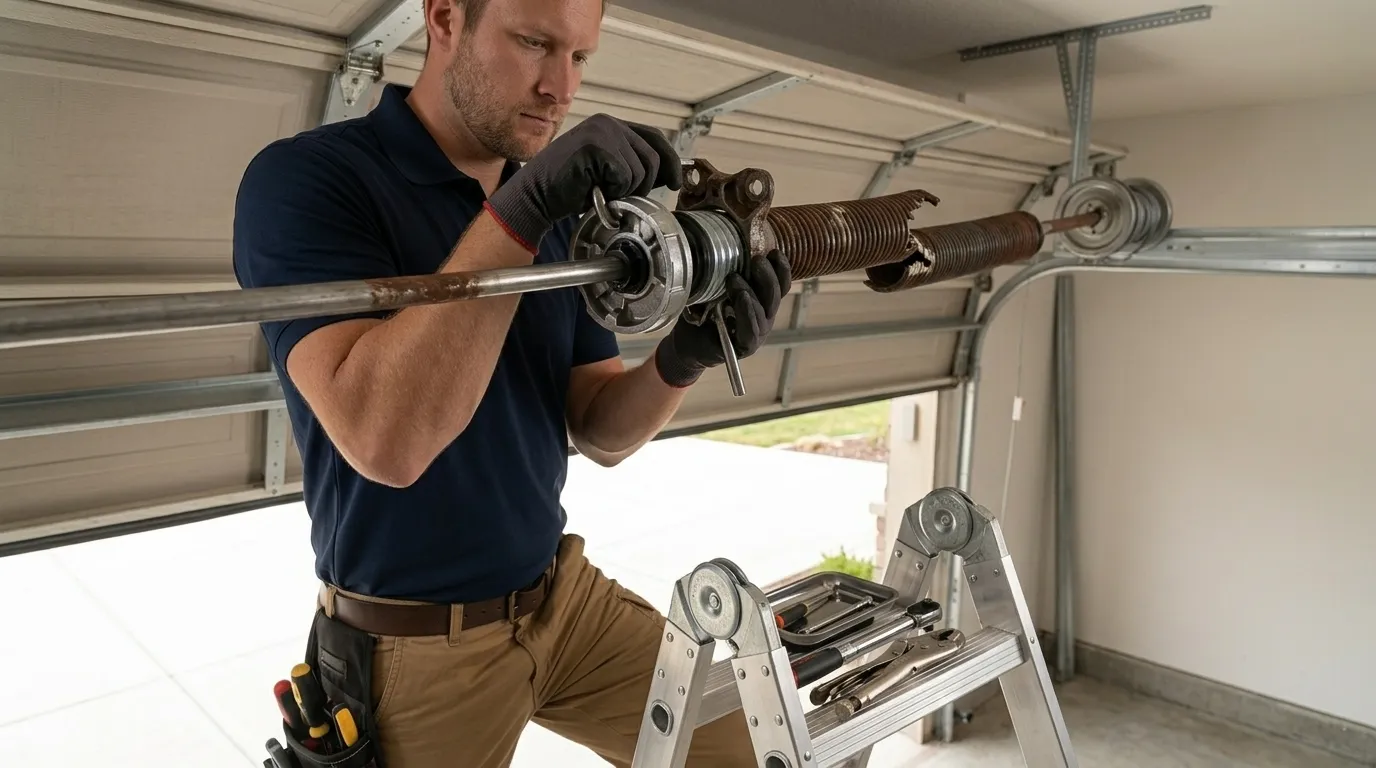
Springs, cables, tracks, rollers, and openers fixed by a tech who explains the problem before touching anything.
Learn more →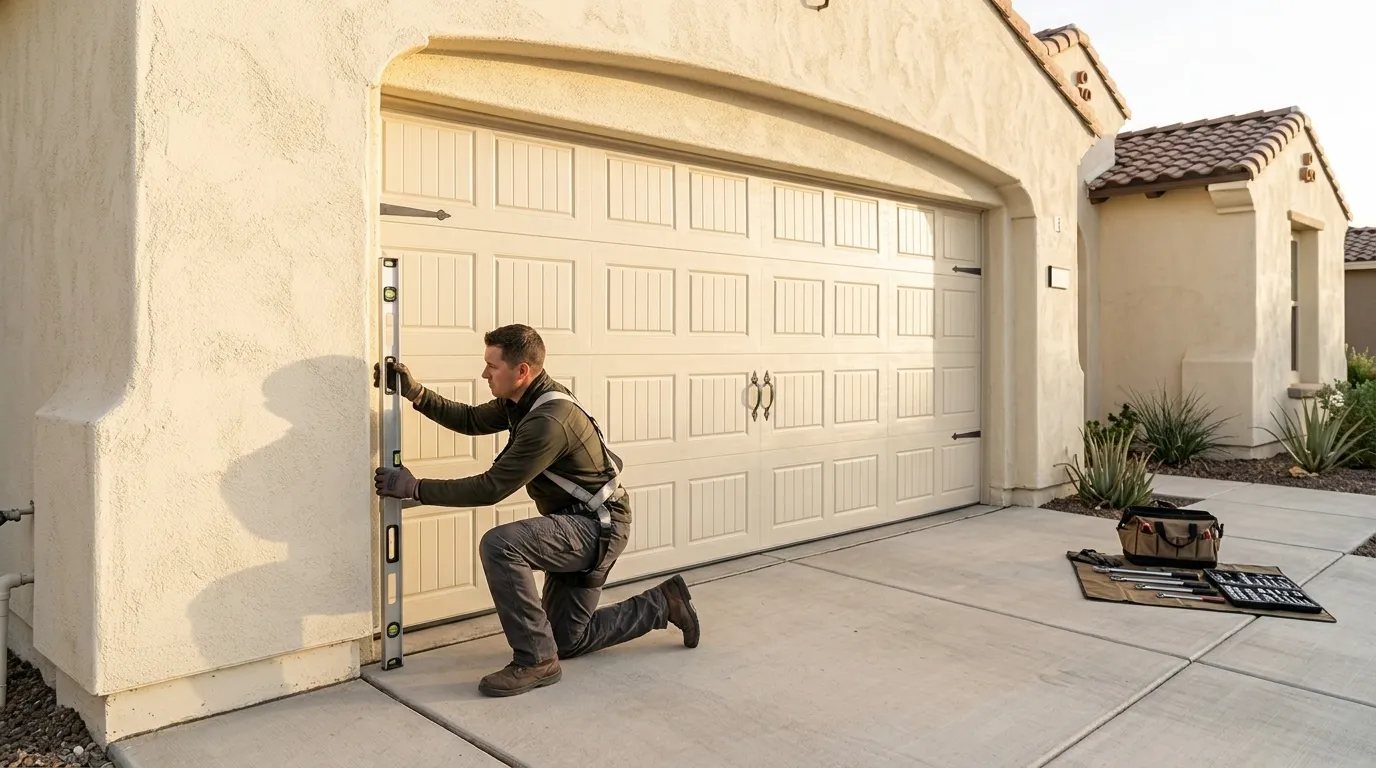
Garage Door Installation
New sectional doors sized and installed for the housing stock actually built in this area.
Learn more →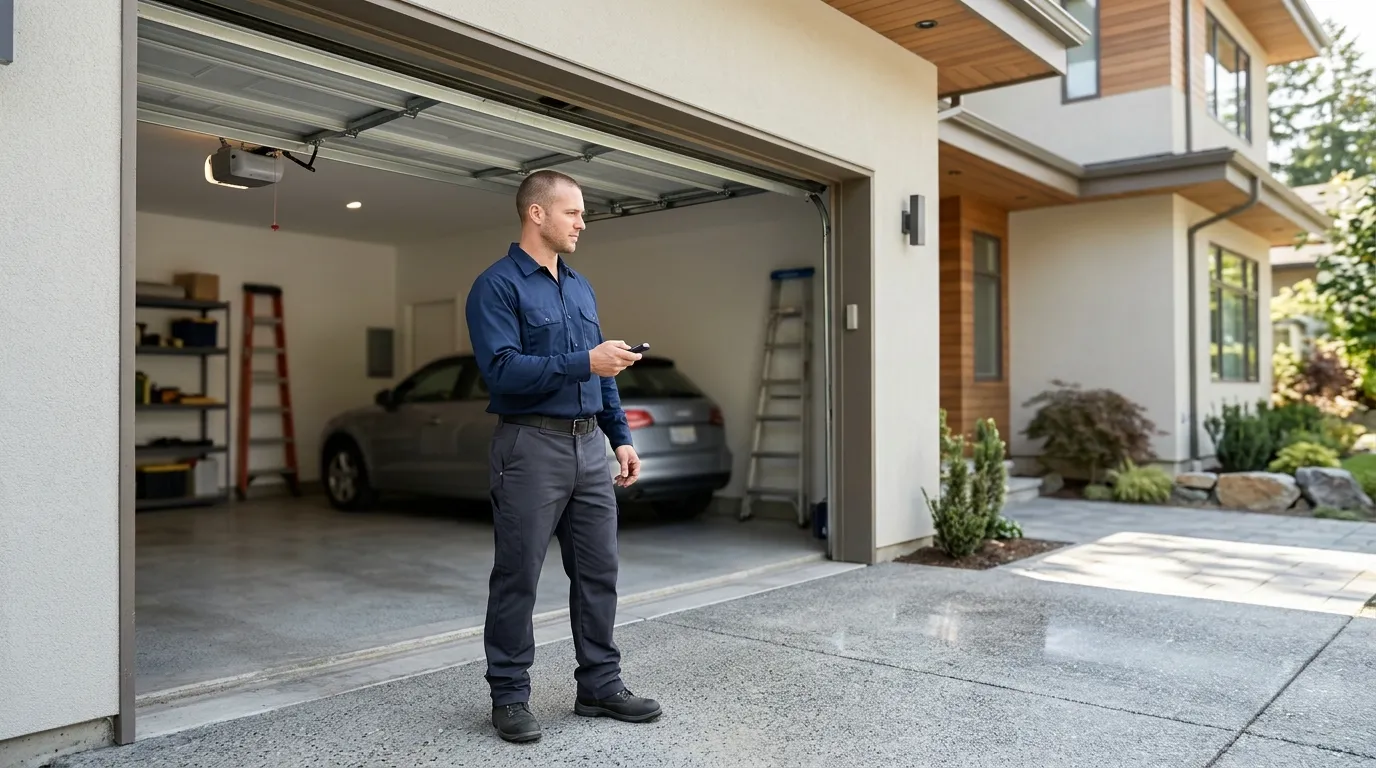
Garage Door Service
Tune-ups, lubrication, and safety checks that catch a small problem before it becomes a service call.
Learn more →Frequently Asked Questions
Can I push the door back onto the track myself?
No. Rollers under tension and a door partway on and off the track can come free suddenly, and torsion spring load doesn't go away just because the door looks stuck. Leave the door where it is and call - resetting a track safely usually takes clamping the door in place before any bracket work starts.
Why does this happen more in winter here?
Cold-climate freeze-thaw cycles work mounting screws loose over time, and refrozen meltwater at the base of the track can shove rollers off the rail. Boston's winters are classified as severe, which means more of these cycles per season than a milder climate sees.
Is a bent track always a full replacement?
Not always. A single bent section can sometimes be swapped without replacing the whole run, especially on the older track styles common in houses built here in the 1950s-70s. A track bent in more than one place, or torn loose from the bracket, usually isn't worth patching.
Have a Door That Needs a Second Opinion?
Call and describe what it is doing - we will tell you what it likely is.