
Boston Garage Door Guide
What That Sound From Your Garage Door Is Telling You
Boston's garage doors mostly date to 1938-1985 with original hardware. Here's what grinding, popping, and thudding mean on doors this old, in this cold.
- Licensed & Insured
- Same-Area Service Calls
- Upfront Pricing
The Cost of This Job
We can't quote a number here without knowing your door, but we can tell you what drives the cost in this city specifically. Median housing across our service area was built around 1960, and the housing stock generally runs 1938 to 1985. That means a lot of doors still have their original torsion hardware, and original hardware from that window doesn't match what's on the shelf at a supply house today.
Track brackets, drum sizes, spring wire gauges - the older the system, the more likely a repair turns into a hunt for a part instead of a straight swap. That hunt costs time, and time costs money.
Here's the honest limitation: sometimes it's not worth it. If a door is old enough that we're sourcing obsolete parts or adapting newer hardware to fit a frame that was never designed for it, full replacement usually beats nursing along a repair.
We'll tell you which situation you're in before we start, not after. A door with original 1960s hardware that's been maintained can still be repaired; one that's been fighting rust and stress for six decades on a coastal climate often can't be, economically.
When to Get Help
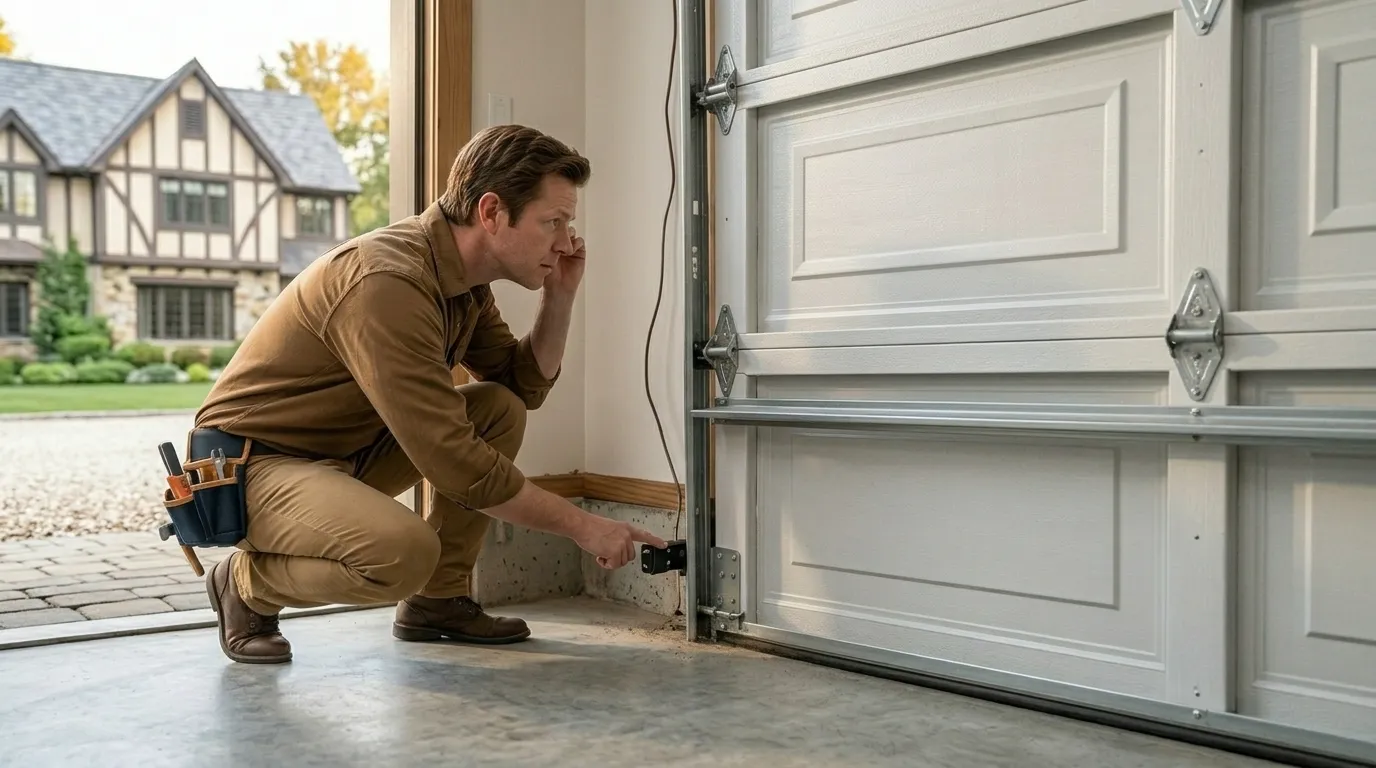
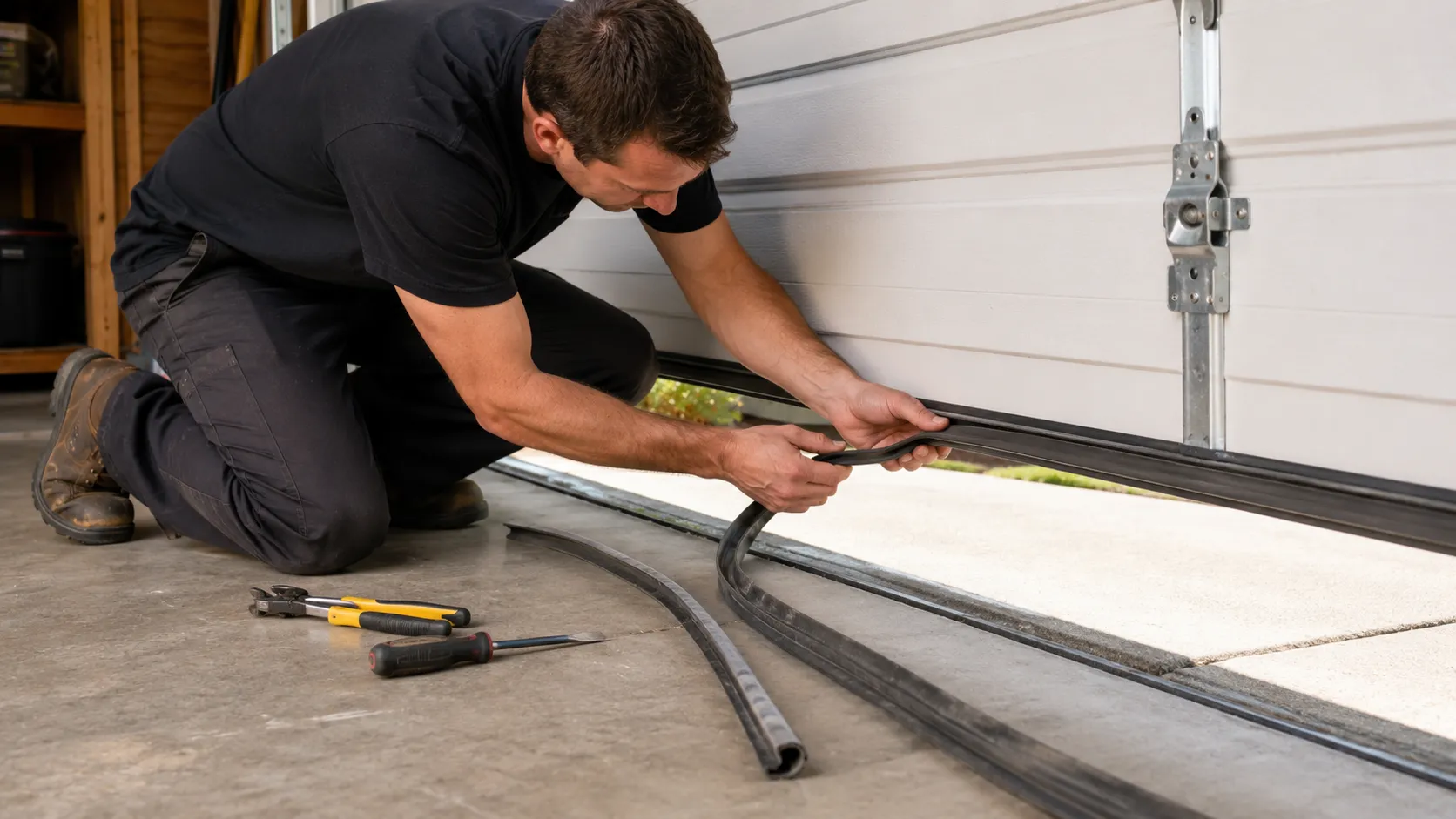
A grinding sound when the door moves usually means a roller that's worn flat or a track that's bent enough to bind. That's not a lubrication problem, and spraying it will just mask the sound for a week. A sharp bang followed by the door refusing to move is almost always a broken spring - on the older torsion setups common in houses built before 1985, that spring has usually been cycling for decades longer than it was rated for.
A rhythmic thump as the door travels often points to a section that's cracked or a hinge that's pulling loose from an original panel, which happens more on doors from the 1960s-70s stock still in place across this area. A high-pitched squeal that gets worse in the cold is frequently just a dry hinge pin, but if it's paired with the door hesitating partway through its cycle, that's the opener's drive gear working harder than it should.
None of these are worth waiting on. A door that's making noise is a door that's already failing in some part; the question is whether it fails on your schedule or its own, usually at the worst moment.
The Situation
Our service area covers 66 named neighborhoods and towns, from South Boston and East Boston out to Dedham, Lexington, and Hingham, and the housing underneath most of them tells the same story: built mostly between 1938 and 1985, with the median landing around 1960. That's not a small pocket - it's the pattern across nearly all of it, which means the doors we see aren't the newer steel-and-composite units going into new construction elsewhere. They're doors with a real amount of history on them.
With 241,531 owner-occupied houses among 740,033 households in this area, and a median household income of $135,498, we see plenty of owners who've kept a house long enough to know its garage door's quirks by sound alone before they ever call. That's part of why a noise complaint here is often specific - "it's the same thump as always, but louder" - rather than vague. People who've lived with a door for years notice when its voice changes, and in this housing stock, a changed voice usually means something has finally worn through.
What the Weather Here Does to It
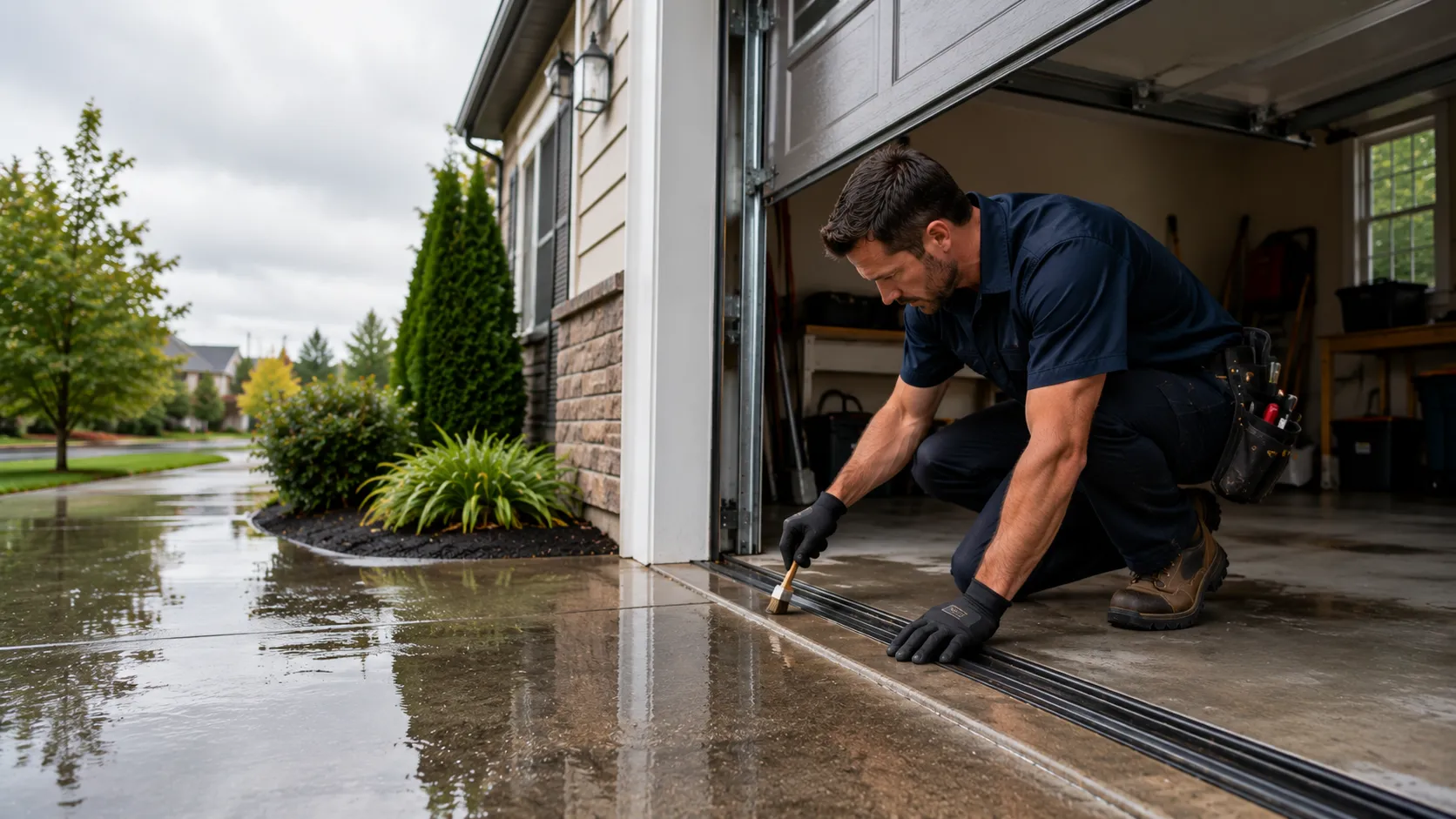
This area sits in a climate classified as cold and severe, and that matters more to a garage door than most owners think. Steel expands and contracts with temperature, and a door that swings from a warm afternoon to a hard freeze overnight is putting real stress on welds, panel seams, and spring coils every single cycle. On doors from the 1938-1985 stock that makes up most of this area, that stress has been happening for a long time already.
Cold also stiffens lubricant and shrinks metal-on-metal clearances, which is why a door that ran quiet in September starts squealing or catching by January. Torsion springs lose a bit of their working tension in deep cold too, so a spring that was already near the end of its life is more likely to let go in winter than in July. If your door's noise shows up or gets worse specifically when the temperature drops, that's not a coincidence - it's the cold finding whatever was already weak.
How We Can Help
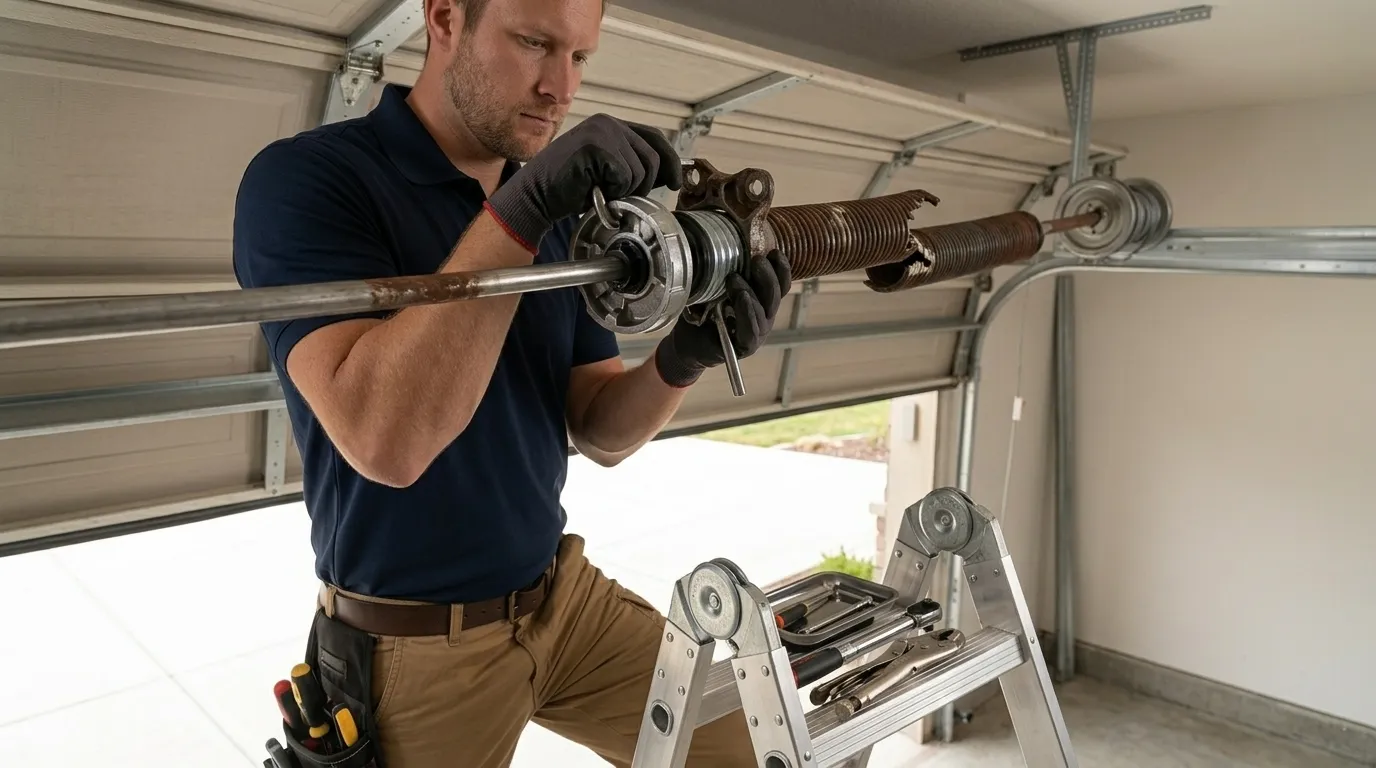
Garage Door Repair
Springs, cables, tracks, rollers, and openers fixed by a tech who explains the problem before touching anything.
Learn more →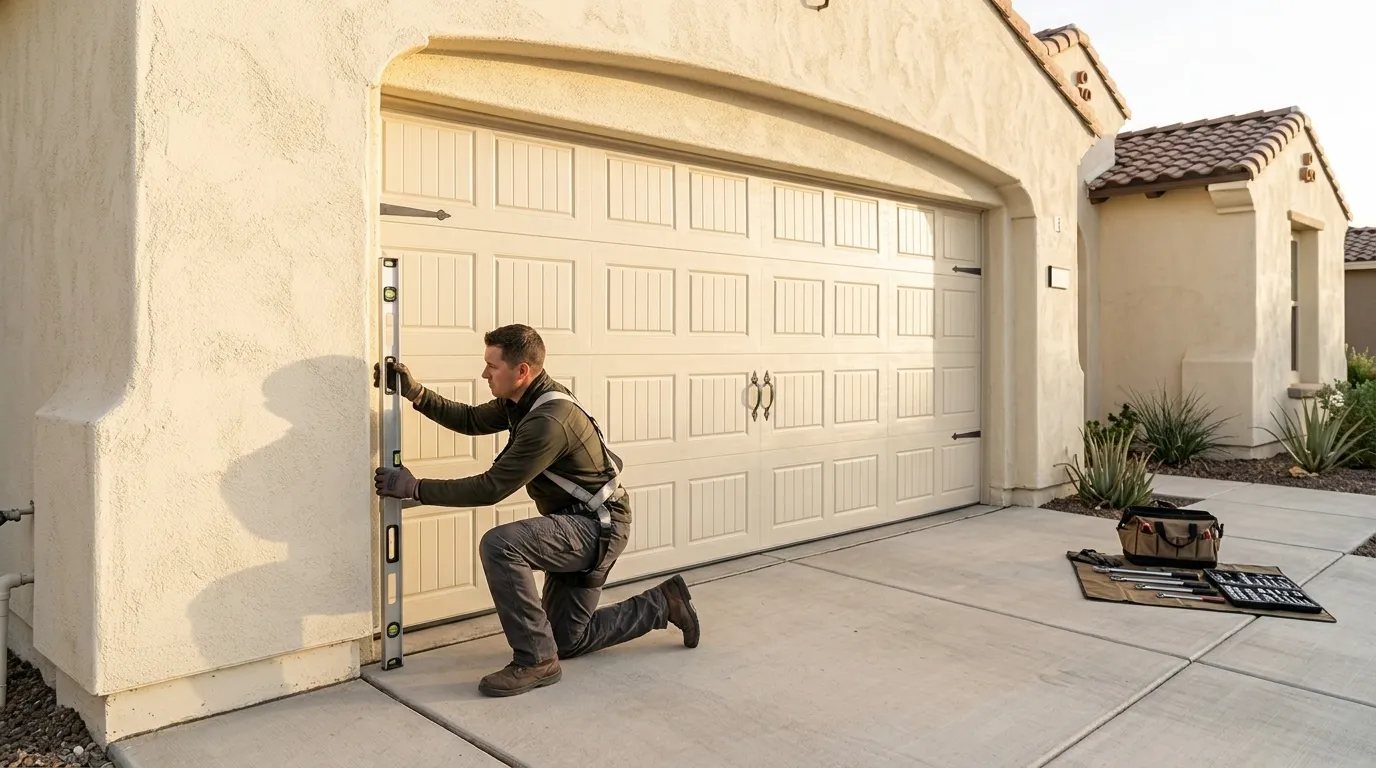
Garage Door Installation
New sectional doors sized and installed for the housing stock actually built in this area.
Learn more →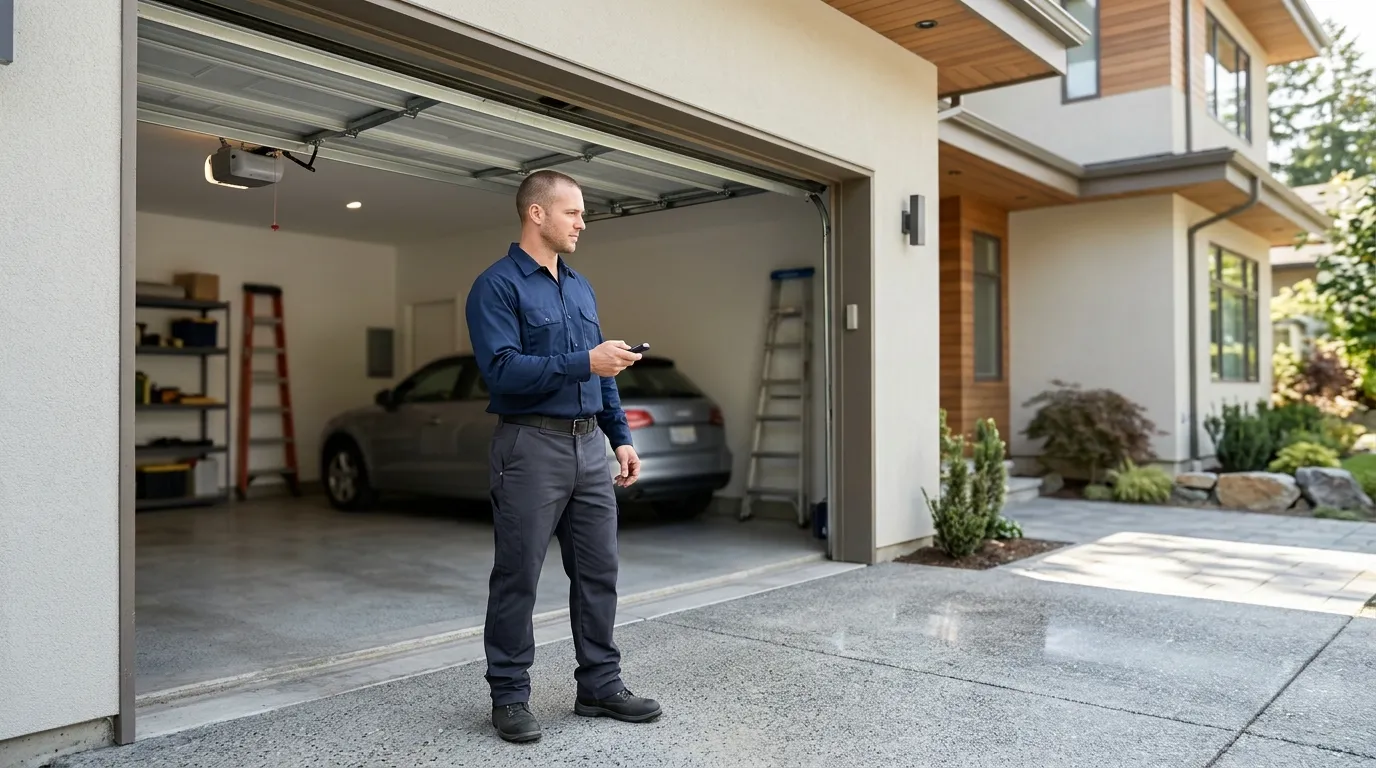
Garage Door Service
Tune-ups, lubrication, and safety checks that catch a small problem before it becomes a service call.
Learn more →Frequently Asked Questions
Why does my garage door only make noise in winter?
Cold stiffens lubricant and shrinks the clearances between moving parts, so a roller or hinge that was borderline in warm weather starts catching or squealing once temperatures drop. It's the cold exposing wear that was already there, not creating something new.
My house was built in the 1960s - is that why parts are hard to find?
Likely, yes. A lot of the housing in this area dates to that window, and original torsion hardware from then doesn't match current stock sizes. We can usually adapt or replace rather than special-order, but it's worth knowing going in.
Is a grinding noise always a broken part?
Not always broken yet, but it means something is under load it wasn't built for - usually a flat-spotted roller or a track that's slightly bent. Left alone, it tends to become a broken part.
Should I just replace the door instead of fixing the noise?
Depends on the door's age and what's failing. If it's original hardware from before 1985 and multiple parts are worn, replacement can cost less over time than chasing repairs on obsolete pieces. We'll tell you honestly which side of that line you're on.
Have a Door That Needs a Second Opinion?
Call and describe what it is doing - we will tell you what it likely is.