
Boston Garage Door Guide
Safety Sensors and Why They Drift in Boston Garages
Boston's 1938-1985 housing stock and cold winters push garage door safety sensors out of alignment. Here's why it happens here and what fixing it involves.
- Licensed & Insured
- Same-Area Service Calls
- Upfront Pricing
The Cost of This Job
There's no single number for this because the job depends on what's actually wrong, and in Boston that varies more than people expect. A lot of the housing here went up between 1938 and 1985, which means the opener could be a recent add to an old door, or the sensors could be original to a system that's been swapped out once already. If the brackets are bent or the wiring's been chewed by rodents in an unheated garage, that's a different job than a five-minute realignment.
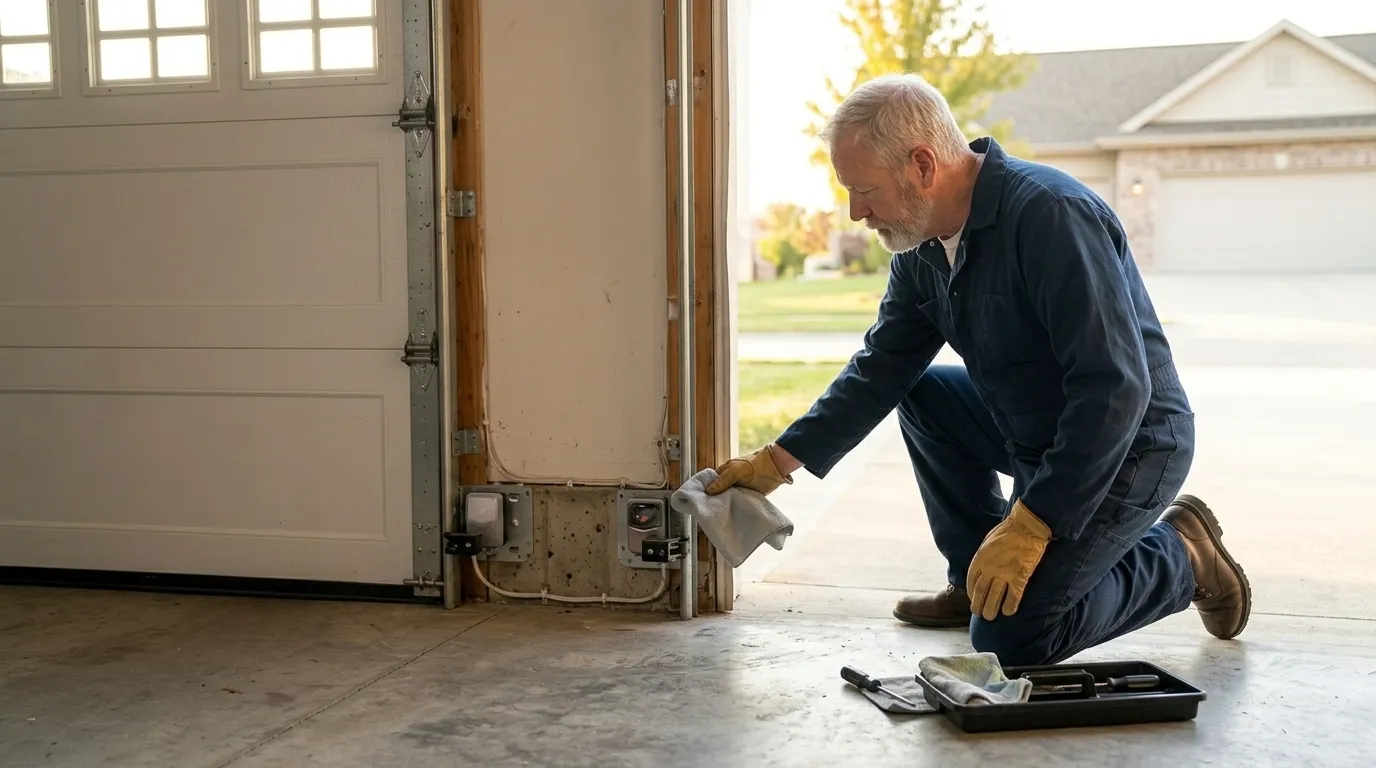
We check the bracket condition, the wire runs, and whether the lenses themselves are cracked or fogged before we say what it'll take. A straight realignment on a door where the slab hasn't shifted much is quick. A door where the jamb's settled unevenly - which happens more in the older triple-deckers around here than in newer construction - can mean remounting the brackets entirely, and that's more time on site.
We'd rather look at it in person than guess over the phone.
One honest limit: if the jamb itself is cracked or the wood's gone soft where the bracket mounts, we're not going to just re-screw a sensor into rotten wood and call it fixed. That's a carpentry repair first, sensor alignment second.
When to Get Help
The clearest sign is a door that won't close all the way - it starts down, stops, and reverses, or the opener light blinks a set number of times and won't do anything else. That blinking is the opener telling you the sensors aren't talking to each other.
Sometimes it's obvious: a bike leaning against one lens, a box blocking the beam. Sometimes it's not, and that's when it's worth a call rather than more guessing.
If you've wiped the lenses, made sure nothing's in the path, and it's still reversing, the alignment is off by more than the eye can catch - these sensors need to be within a few degrees of each other, and a small nudge from a car door or a broom handle is enough to throw that off. In neighborhoods like Dorchester or Roxbury, where a lot of garages sit at grade under older triple-deckers, we also see brackets that have loosened because the mounting surface itself has moved slightly over the decades.
If your door is closing on something - a car, a pet, a kid's bike - stop using the opener and call. That's not a wait-and-see situation.
The Situation
Boston's garage stock is old by national standards - most of it went up between 1938 and 1985, with the bulk from the 1960s and '70s, and that shows up in how these systems are installed. A lot of these openers and sensor pairs were retrofitted onto doors and garages that predate automatic openers entirely, which means the mounting points weren't built with sensor brackets in mind. Over the years, someone drilled into what was there - a wood jamb, a masonry pier, whatever the garage offered - and that mounting point moves with the building.
That's true whether you're near the water in South Boston or Jeffries Point, or further out toward Dorchester or Mission Hill. Foundations in structures this age settle unevenly, freeze-thaw cycles work at the mortar and framing, and a bracket that was dead-on when it went in ten or twenty years ago can be a quarter-inch off now.
A quarter-inch at the bracket is enough to throw the beam off at the far end of a two-car door. This isn't a defect in the sensor - it's the building moving underneath it, slowly, the way buildings this old do.
What the Weather Here Does to It
Boston sits in a cold-climate band with real winter severity, and that's the other half of why sensors drift. The freeze-thaw cycle isn't a one-time event here - it's a repeated push and pull on the slab and the framing around the garage door opening, all winter long.
Concrete expands and contracts, wood swells and shrinks with humidity, and every cycle nudges the sensor brackets a fraction more out of true. It's slow enough you don't notice week to week, but by February a bracket that was fine in October can be reversing the door on you.
Cold also affects the sensors directly. The lenses fog with condensation when a cold garage meets warm, humid air off a car or the house, and that fog reads to the sensor almost the same as an obstruction.
If you're in Chelsea, four miles from us, or out toward Quincy or Somerville, the same freeze-thaw problem shows up in garages of the same era - it's not particular to one street, it's particular to the building stock and the winters. We see the calls spike after the first hard cold snap and again after the spring thaw, when everything that moved over the winter settles back and shifts the alignment again.
How We Can Help
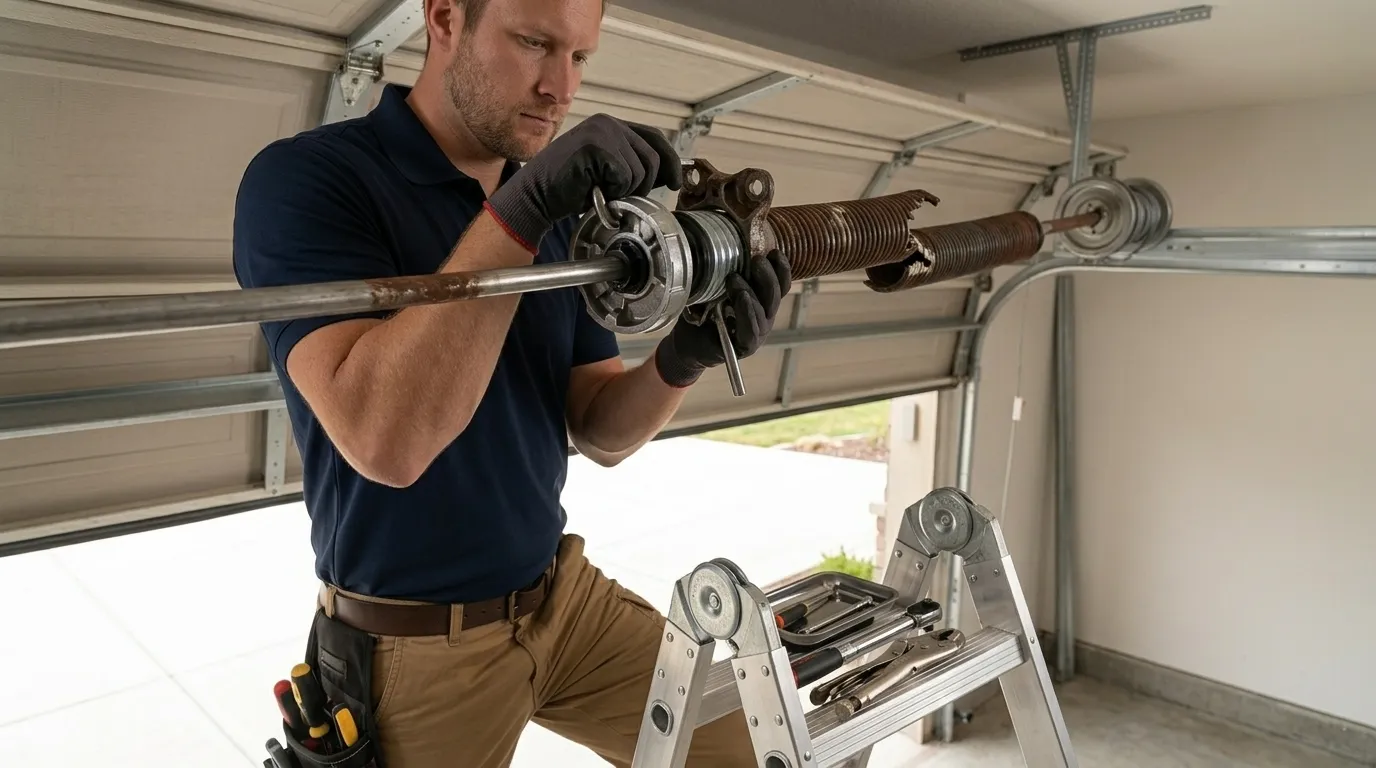
Garage Door Repair
Springs, cables, tracks, rollers, and openers fixed by a tech who explains the problem before touching anything.
Learn more →
Garage Door Installation
New sectional doors sized and installed for the housing stock actually built in this area.
Learn more →
Garage Door Service
Tune-ups, lubrication, and safety checks that catch a small problem before it becomes a service call.
Learn more →Frequently Asked Questions
Why does my garage door reverse every time it closes, even with nothing in the way?
That almost always means the safety sensors are misaligned, not broken. Even a slight bump or the building settling a little - common in Boston's older garage structures - can knock the beam off enough that the opener thinks something's blocking it and reverses as a safety measure.
Can I fix sensor alignment myself?
Sometimes, if it's a simple case of loosening the wing nuts and nudging the sensor until the light on it goes solid instead of blinking. If the bracket itself is loose, bent, or mounted into wood that's deteriorated, that's a repair job, not an adjustment - and we'd rather see it in person.
Does winter make sensor problems worse in Boston?
Yes. The freeze-thaw cycle here shifts slabs and jambs a little at a time all winter, and cold garages get condensation on the sensor lenses that can read as an obstruction. We get more sensor calls right after the first hard freeze and again in early spring.
Have a Door That Needs a Second Opinion?
Call and describe what it is doing - we will tell you what it likely is.