
Boston Garage Door Guide
Wide Doors and Wind: What Boston Homes Are Up Against
Boston's postwar housing stock and cold, gusty climate put real strain on wide double garage doors. Here's what that means for cost, repair, and when to call.
- Licensed & Insured
- Same-Area Service Calls
- Upfront Pricing
The Cost of This Job
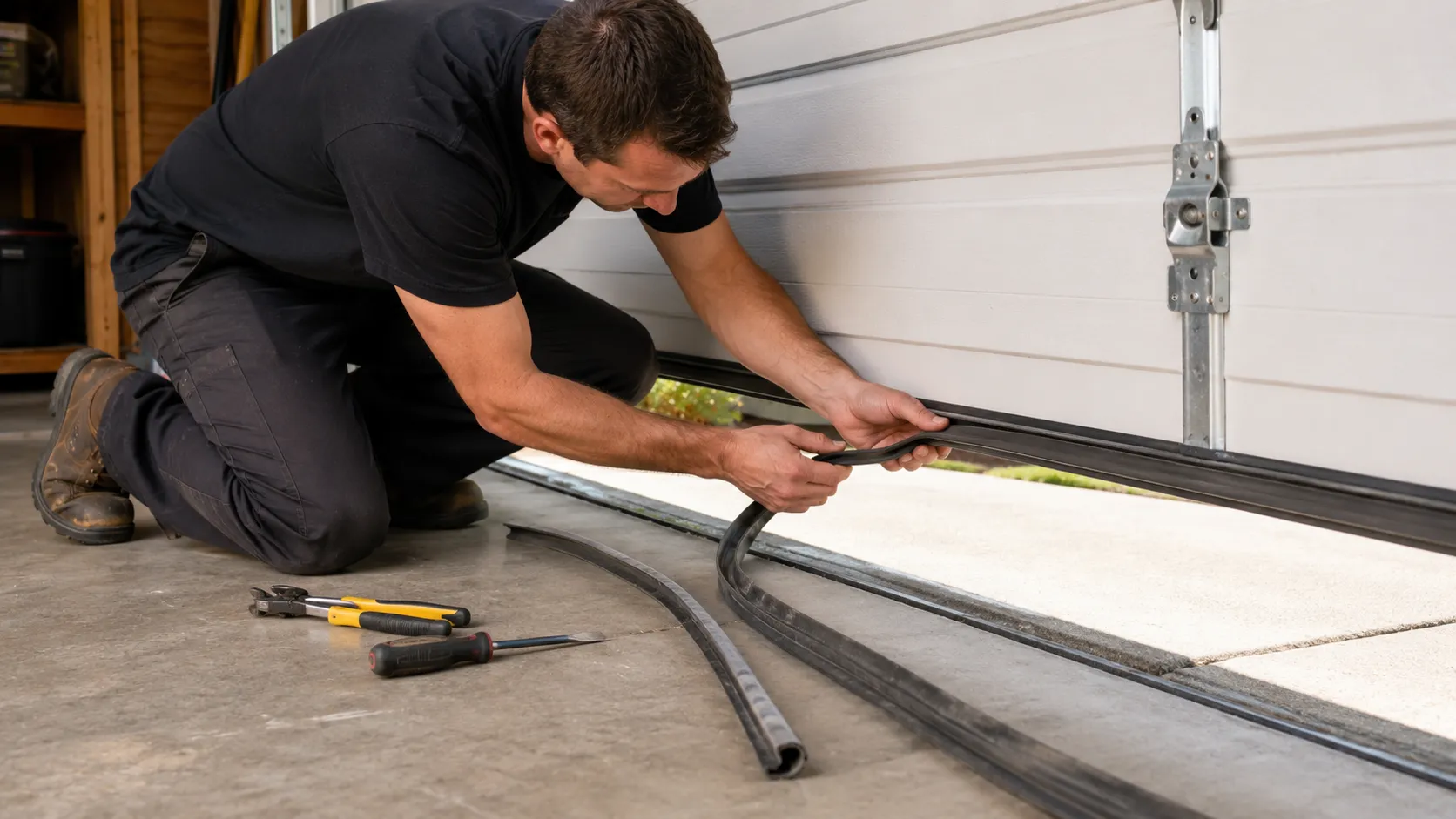
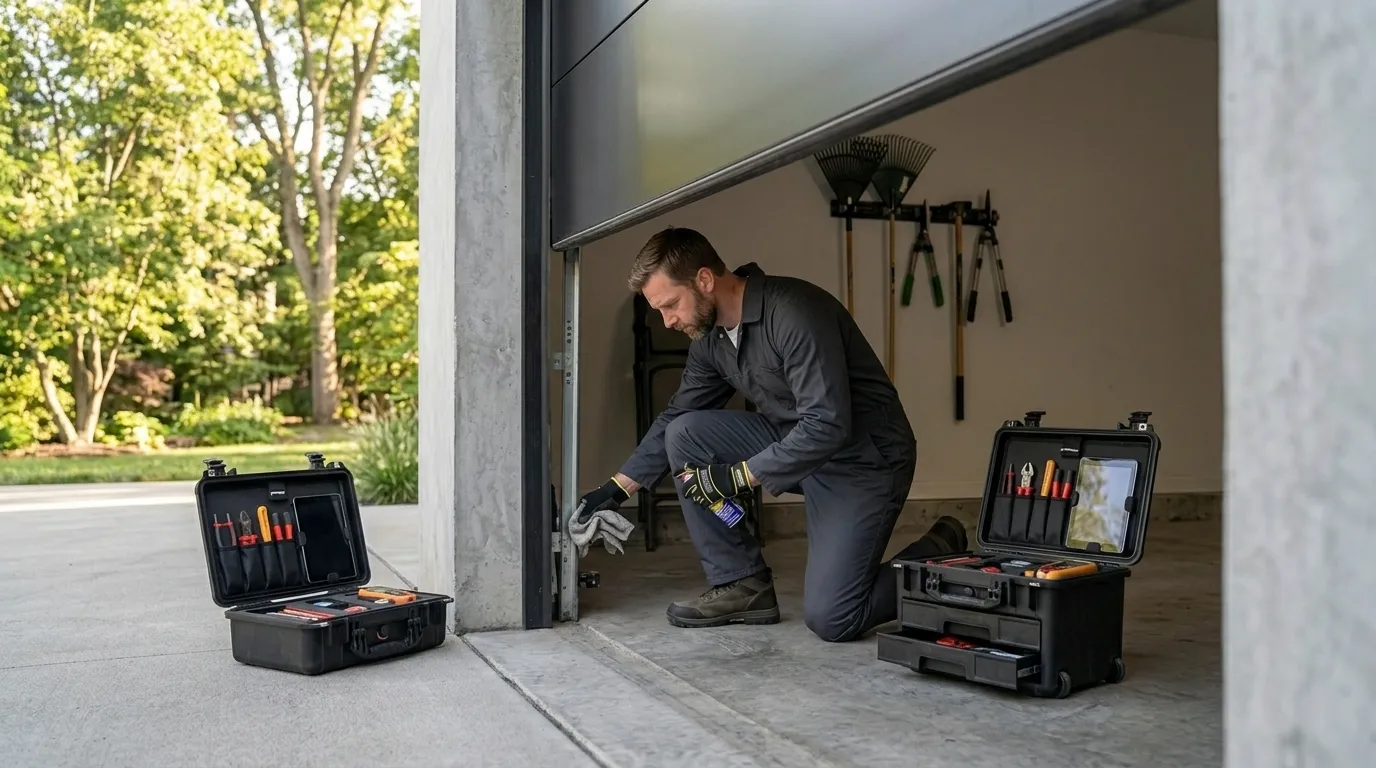
We don't post a flat number here because wind damage on a wide door isn't one job, it's three or four different ones depending on what actually gave first. A bent top panel is a different bill than a track pulled loose from the framing, and that's a different bill again from an opener rail torqued sideways because the door racked before the cables let go. Most of the houses in this service area went up between 1938 and 1985, with the bulk of that stock clustered around 1960 through the 70s, and a good number of those garages were framed for a single door, not the wide two-car openings owners have since put in.
That mismatch matters: a wide door hung on hardware sized for a narrower original opening has less margin before a gust starts working the track loose. We won't quote a repair over the phone without seeing whether the track, the header, or just the panel took the hit. ','A repair on a door that age can end up costing close to a new one once you add labor and struts, so we say that up front rather than let it surprise you.
When to Get Help
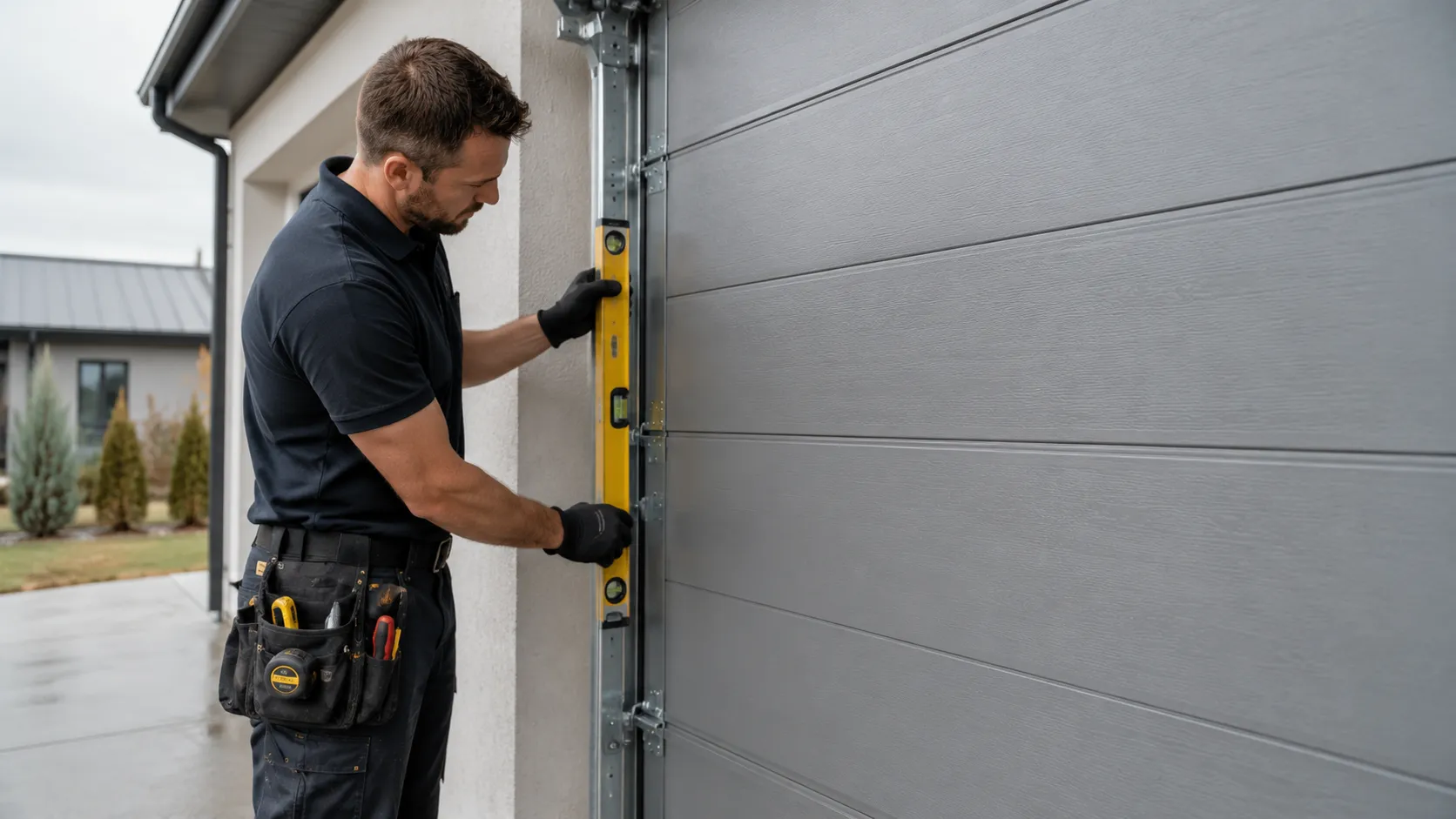
Call before the door comes off the track, not after. The tells are consistent: a top panel that's visibly bowed in or out, a horizontal track pulling away from the wall on one side more than the other, or a door that shudders and doesn't sit flush against the weatherstrip after a windy night. If you hear the door rattle in its frame during a gust, that's the panel flexing more than it should, and on a wide door that flex concentrates stress right at the center where the panels meet.
Don't run the opener if the door won't move freely by hand first, because a racked track under motor force is how a cable jumps its drum. If the garage sits on one of the more exposed sides of the neighborhood, closer to open water, treat any track separation as urgent rather than something to watch. One honest limit: we can shim and re-square a track, but if the framing itself has shifted or rotted where the track bolts in, that's carpentry, not garage door work, and we'll say so rather than bolt hardware into wood that won't hold it.
The Situation
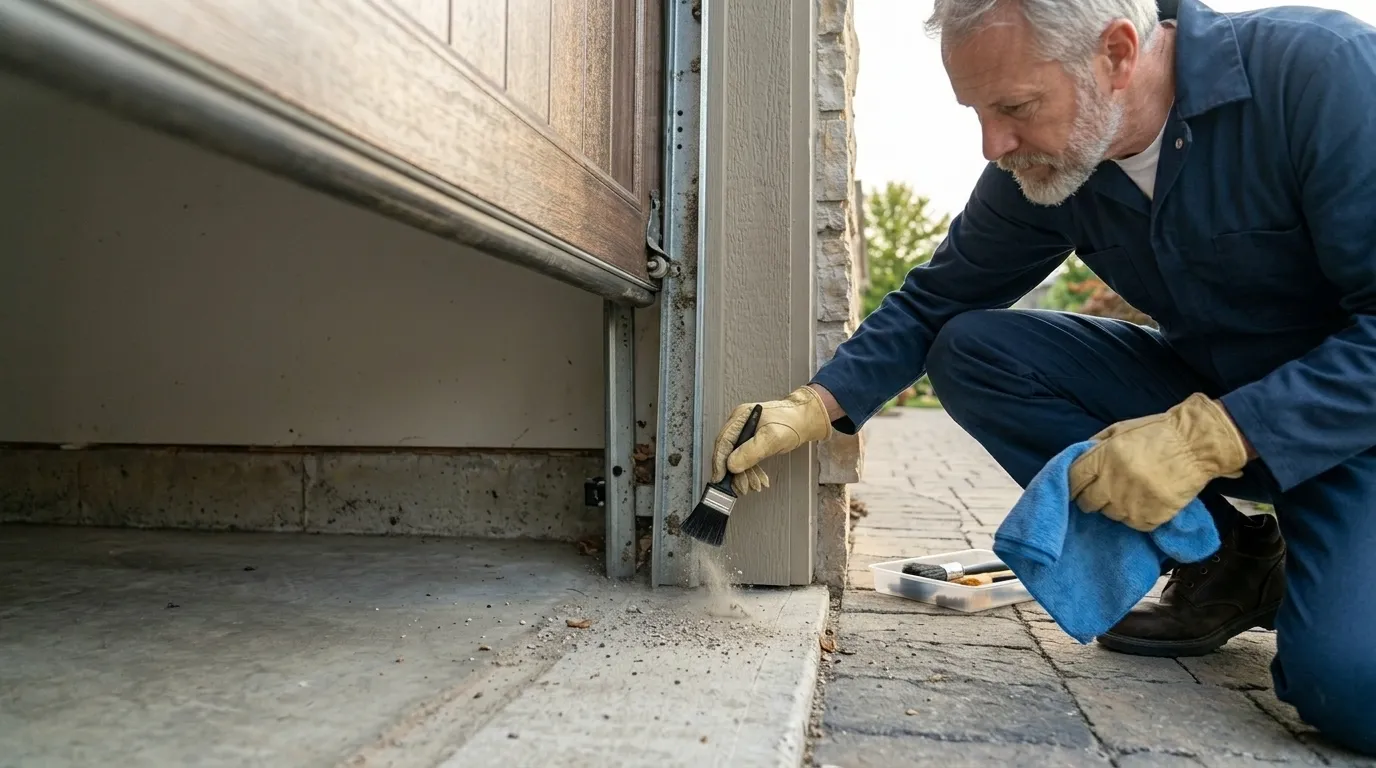
This service area runs across 66 named neighborhoods and towns, from South Boston a mile west and East Boston three miles north, out to places like Hull and Nahant seven miles off, most of them built up during the same postwar wave that put 740,033 households and 241,531 owner-occupied houses on the ground here. The housing is mostly 1960s and 70s construction, with a median build year around 1960, and that generation of house came with garages sized for the cars and doors of the time: narrower single openings, lighter panels, hardware that wasn't engineered for the wide two-car doors a lot of owners have since installed.
A wide door has more surface for wind to push against and more panel length to flex before the track catches it, so on a house built for a narrower original opening, the retrofit door is carrying more load than the framing was ever asked to handle. At a median household income of $135,498 across the area, most owners can afford to reinforce a door properly with struts and a heavier track, but plenty wait until a gust already bent something before they call.
What the Weather Here Does to It
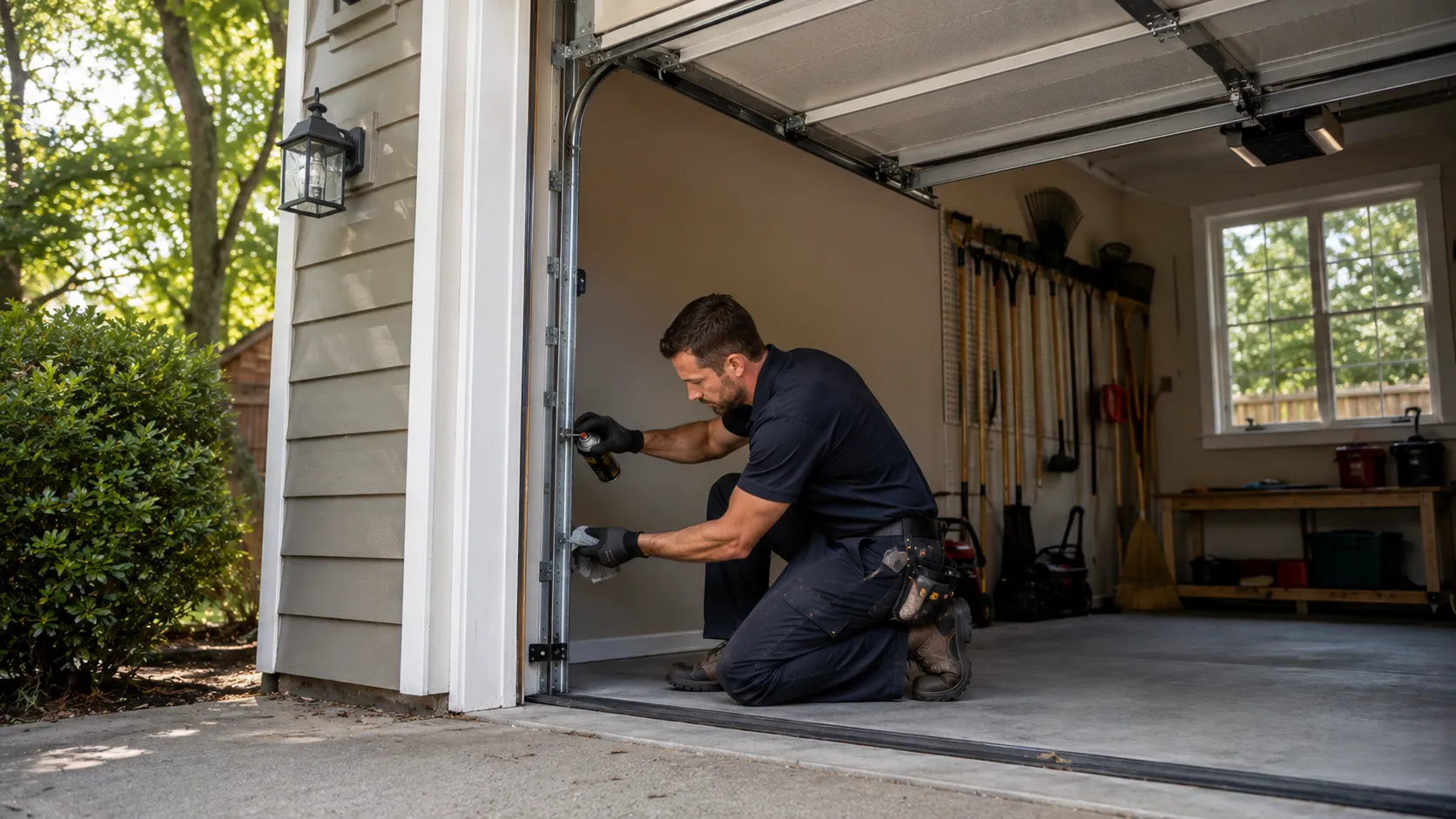
The climate here is rated cold and severe, which means the door hardware deals with two separate stresses over a winter, not one. Cold makes steel and the nylon rollers in older tracks stiffer and more brittle, so a gust that a door would ride out in October can crack a roller or spring a cable in January. Wind is the second half of it, and it hits harder on the neighborhoods sitting close to open water, like South Boston, East Boston, and the coastal towns further out toward Hull and Nahant, where a wide door catches more push with nothing to break the gust before it reaches the panel.
On an older wide door from that 1960s-70s housing stock, the combination shows up as a slightly bowed center panel, a track bolt working loose at the header, or a spring that snaps in cold weather under a load it handled fine all summer. None of that is dramatic on its own, which is exactly why it gets ignored until the door won't track straight anymore. Reinforcement struts and a properly torqued track help, but they don't turn a 60-year-old opening into one built for a modern wide door.
How We Can Help
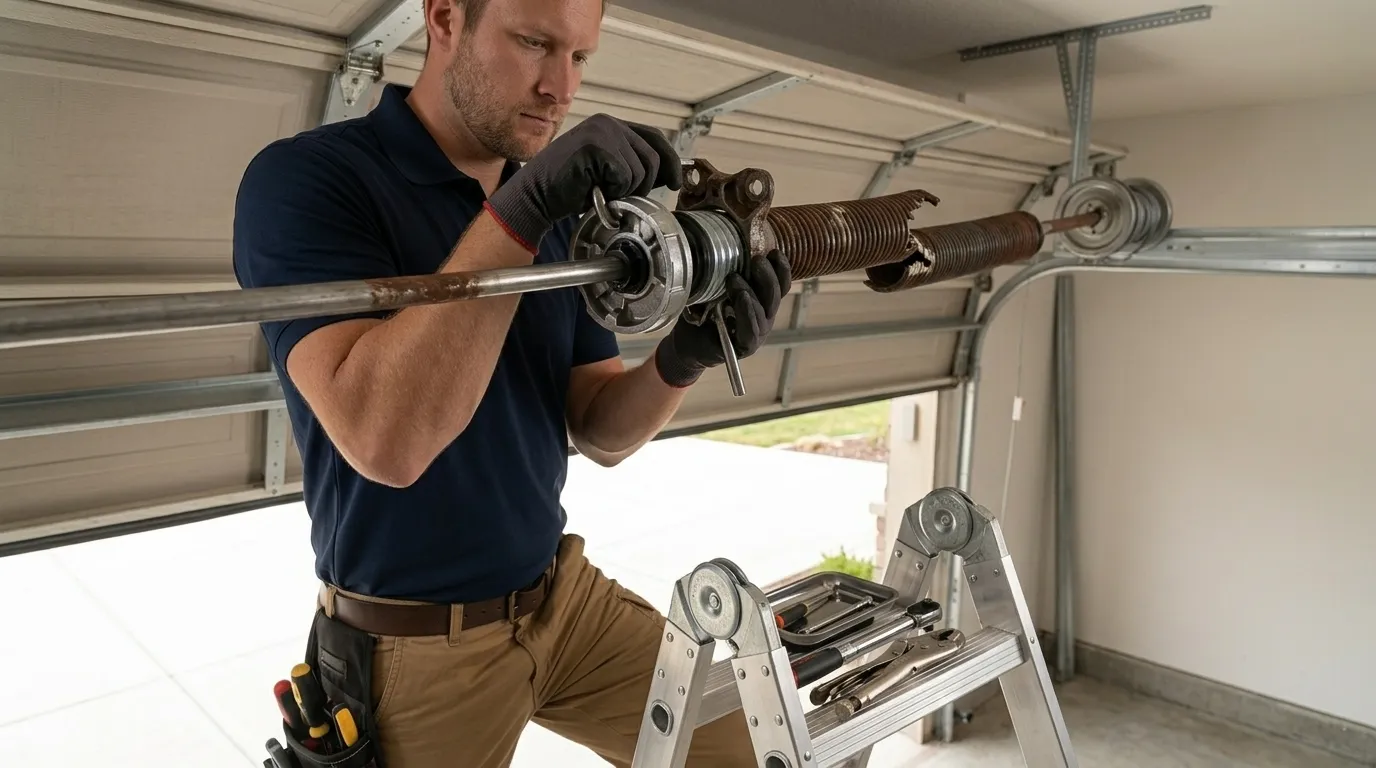
Garage Door Repair
Springs, cables, tracks, rollers, and openers fixed by a tech who explains the problem before touching anything.
Learn more →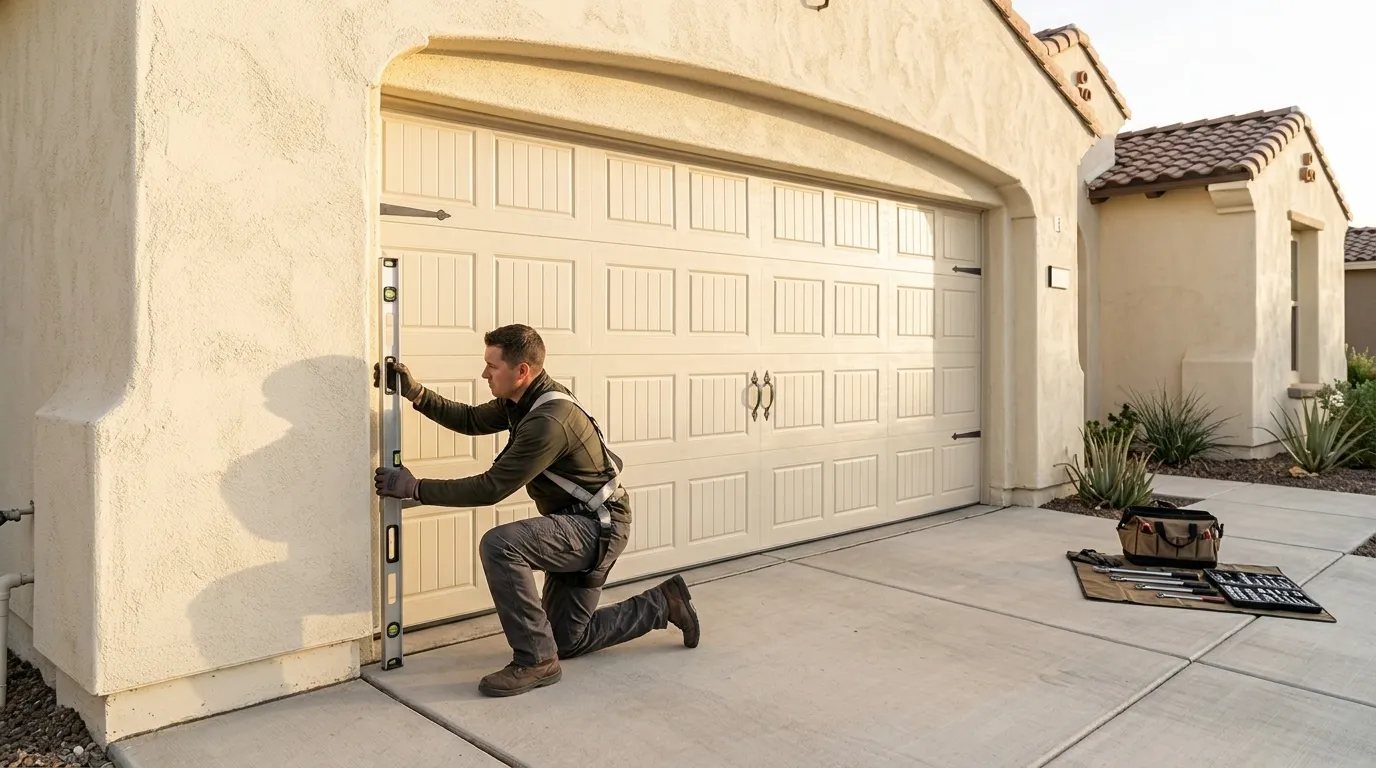
Garage Door Installation
New sectional doors sized and installed for the housing stock actually built in this area.
Learn more →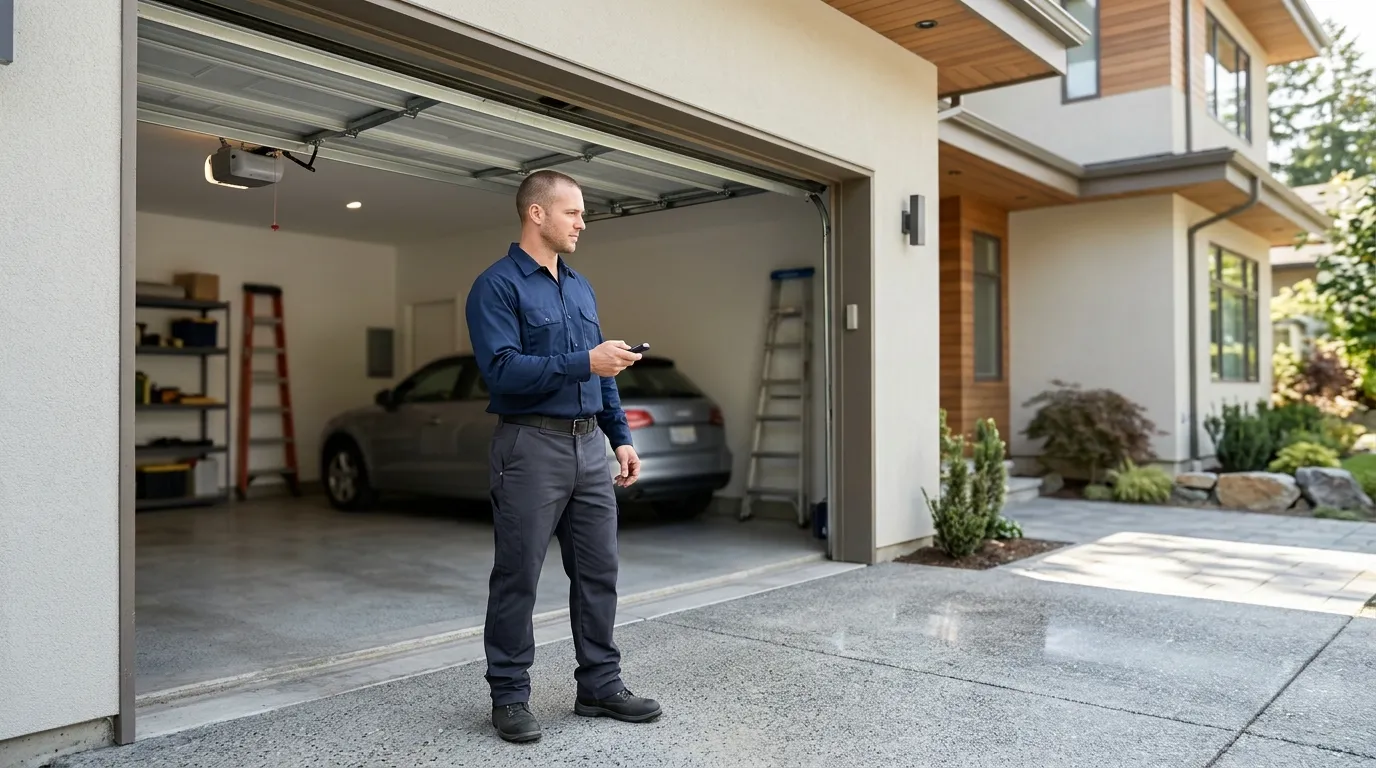
Garage Door Service
Tune-ups, lubrication, and safety checks that catch a small problem before it becomes a service call.
Learn more →Frequently Asked Questions
Why does my garage door shake more on windy nights than it used to?
Usually it's the panel flexing under wind load because the door is wider than what the original opening and hardware were built for. That's common in this area's 1960s-70s housing stock, where garages were often framed for narrower single doors before wider two-car doors got installed later.
Is it worth reinforcing an old door instead of replacing it?
Depends on the door. If it's original steel from the 1960s-70s building era, reinforcement parts are hard to source and the labor can approach the cost of a new door anyway. We'll look at the actual panel and track before recommending either way.
Does living near the water make wind damage worse?
Yes. Neighborhoods closer to open water, like South Boston and East Boston, see stronger sustained gusts than areas further inland, and a wide door catches more of that push across its full panel width.
Can I keep using the opener if the door rattles in wind?
Only if the door still moves freely by hand first. If the track has pulled away from the wall or the door racks when it moves, running the opener can pull a cable off its drum. Get it looked at before you keep cycling it.
Have a Door That Needs a Second Opinion?
Call and describe what it is doing - we will tell you what it likely is.